What Should You Do During a Used Car Test Drive?
Spend the first 5 minutes checking cold-start behavior, then drive 10 to 15 minutes through city and highway conditions, and finish with a quick walk-around before you leave. Walk away if the car has warning lights, strong pull, bad noises, or mismatched controls. Miss this routine, and you can buy a car with expensive mechanical faults, hidden accident damage, or paperwork problems. This guide gives you a timed test-drive checklist with pass/fail cues for each step.
Recommended drive length and initial inspection steps
A useful test drive should last about 20 to 30 minutes, and longer if the route still has not covered stop-and-go traffic, highway speed, rough pavement, and parking maneuvers. Consumer Reports says the test drive is your only chance to evaluate the vehicle before you buy it. Bumper says anything shorter than 20 minutes is not a test drive.
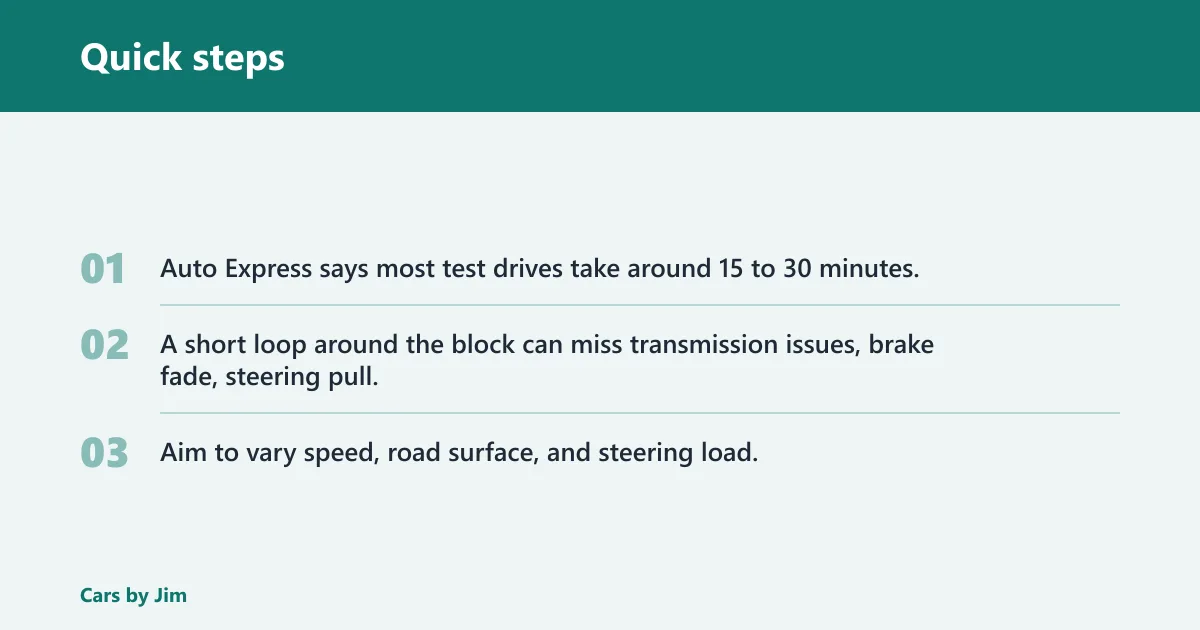
Auto Express says most test drives take around 15 to 30 minutes, but the route matters more than the clock. A short loop around the block can miss transmission issues, brake fade, steering pull, or highway vibration. Aim to vary speed, road surface, and steering load.
What during used car scorecard
| Test step | What to observe | Pass/fail symptom | Next action |
|---|---|---|---|
| Cold start | Engine starts cleanly, settles into a steady idle, and dash lights clear normally | Long crank, rough idle, smoke, warning light stays on | Fail: stop and ask questions; if the seller warmed the car, request a cold start |
| Idle | Listen with the radio off; note vibration through seat, wheel, or shifter | Misfire feel, shaking, ticking, whine, or repeated stumbling | Fail: treat as a mechanical concern and inspect further |
| Acceleration | Pulls smoothly from low speed and responds normally to firm throttle | Flat spot, hesitation, surge, stumble, or warning lamp | Fail: stop the drive or schedule a pre-purchase inspection |
| Braking | Pedal feels firm, stops are straight, and a hard stop is controlled | Mushy pedal, pull, squeal, grinding, vibration, or fade | Fail: walk away or budget for brake work and deeper inspection |
| Steering | Tracks straight with light, even effort and no odd resistance | Pull, drift, dead spot, vibration, or clicking at full lock | Fail: inspect alignment, tires, and steering parts |
| Suspension | Composed over bumps and rough pavement, with controlled rebound | Clunks, squeaks, bouncing, crashing over bumps, or excess noise | Fail: suspect worn suspension or past damage |
| Transmission | Engages from Park to Drive quickly and shifts cleanly | Delay, harsh shift, shudder, flare, or lazy kickdown response | Fail: treat as a major warning and inspect before buying |
| Electronics | Bluetooth, wired phone connection, infotainment, and warning icons behave normally | Pairing failure, frozen screen, dead controls, or persistent alerts | Fail: confirm repair cost and scan codes before proceeding |
| Comfort | Seat, mirrors, wheel, visibility, and blind spots work for a real drive | Poor fit, blocked view, awkward controls, or fatigue after a short drive | Fail: reconsider the car if the cabin does not suit you |
What should you check in the first 5 minutes?
Use the first few minutes to confirm the car starts cold, idles normally, and does not show warning lights that stay on. Adjust the seat, mirrors, steering wheel position, visibility, and basic controls before the road gets busy. Turn the radio off so you can hear engine, belt, and exhaust noise. If the seller already warmed it up, ask for a cold start.
The same source says the car must be cold for a proper test drive. A warm engine can hide idle problems, hard starting, and some warning-light behavior. That matters more than a polished sales pitch.
Start-up checks in order
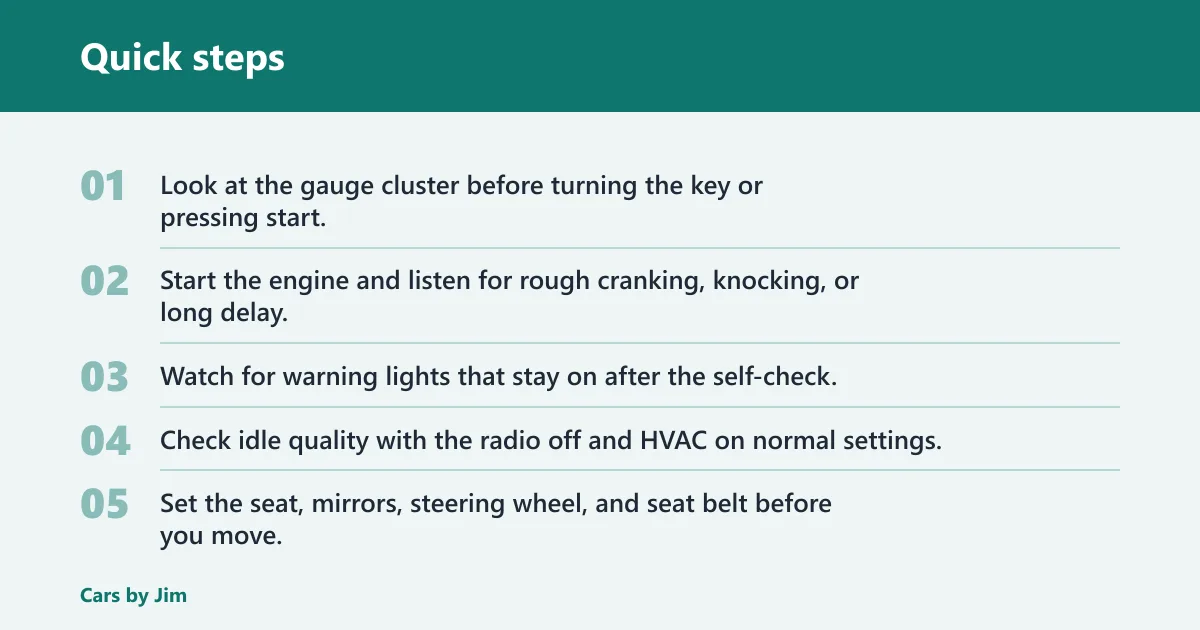
- Look at the gauge cluster before turning the key or pressing start.
- Start the engine and listen for rough cranking, knocking, or long delay.
- Watch for warning lights that stay on after the self-check.
- Check idle quality with the radio off and HVAC on normal settings.
- Set the seat, mirrors, steering wheel, and seat belt before you move.
- Pair your phone and confirm the main controls you will use on the road.
Say your compact sedan starts cleanly but the idle hunts between 700 and 1,100 rpm for the first minute. That is not a small detail to ignore. It can point to a throttle, vacuum, or ignition issue, and you should document it before the seller resets anything.
What route should you take?
Choose a route that is not just a short dealer-preferred loop. Start with neighborhood streets and stop-and-go traffic, then move to a highway or faster road, then add bumps, potholes, turns, and a safe place to park. The same source says you should test a car on as many road types as possible, and Bumper calls for highway speed, a rough surface, a sharp turn, and hard braking.
The route should force the car to show its behavior in real use. That means low-speed crawl, merging, lane changes, steady cruising, and a few parking maneuvers. If the seller pushes for a five-minute circle, keep your own plan.
Route order that catches more problems
- Leave on neighborhood streets and listen at low speed.
- Stop at lights and stop signs to test brake feel and creep control.
- Use a faster road or highway to check merge power and high-speed stability.
- Find rough pavement, speed humps, or potholes for suspension noise.
- Make a few turns, including a full-lock parking lot turn.
- Park, reverse, and pull out again so you can judge visibility and controls.
Suppose a midsize SUV feels fine in town but starts to shudder between 45 and 55 mph on the highway. That symptom matters because it can point to alignment or balance issues, especially if the steering wheel also trembles.
How do you check brakes, steering, and suspension?
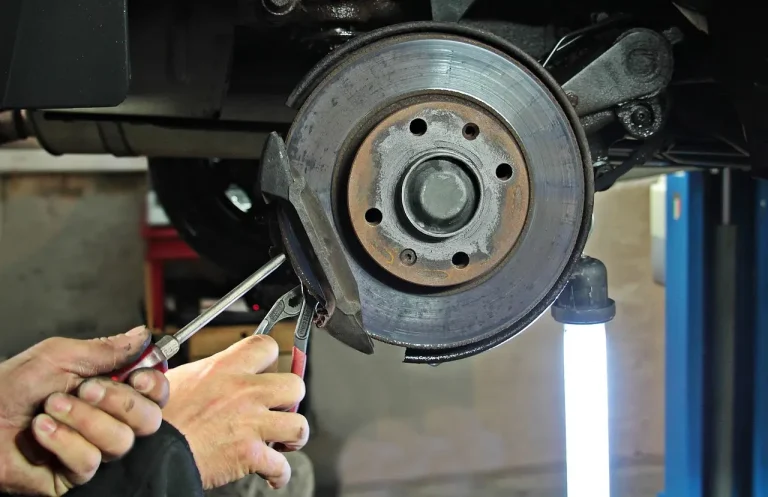
Test the brakes at stop signs, traffic lights, and one firmer stop in a safe place. The pedal should not feel mushy, and the car should stop straight with no pull, vibration, squeal, or grinding. Then check steering and alignment by seeing whether the car tracks straight, pulls, or drifts. Use full-lock turns to catch resistance or clicking.
For suspension, drive over speed bumps, potholes, and rough pavement at different speeds. Listen for clunks, squeaks, or excess bounce. iSeeCars says vibrations at moderate and high speeds often indicate alignment or balance issues. A hard stop should test the car’s most important safety mechanism.
Brake, steering, and suspension cues
- Pass: firm pedal, straight stops, predictable steering, controlled body motion.
- Brake fail: mushy pedal, grinding, squeaking, pull to one side, steering wheel shake.
- Steering fail: drift, heavy resistance, off-center wheel, clicking at full lock.
- Suspension fail: clunks over bumps, repeated bouncing, loose feel, harsh impact noise.
iSeeCars says to test the brakes before entering public streets. That first slow stop in a lot or driveway area can tell you a lot before traffic adds pressure. If the pedal sinks far or the car veers, do not treat it as normal wear.
How do you spot transmission problems?
Move from Park to Drive and note whether engagement is quick and smooth or delayed and thumpy. In traffic, watch for hesitation, harsh shifts, shudder, or a flare in engine speed. Under firm acceleration, test kickdown response. On a manual, check clutch take-up, shudder, and gear engagement instead of automatic shift quality.
Automatic and manual problems show up differently. An automatic may hesitate, bang into gear, or hunt between ratios. A manual may grab late, slip, grind, or vibrate on launch. Either way, do not ignore a delay that repeats.
Automatic versus manual checks
- Automatic: from Park to Drive should be immediate, not delayed.
- Automatic: shifts should be smooth, not harsh or lazy.
- Automatic: firm throttle should produce a clean kickdown, not a pause.
- Manual: clutch engagement should be predictable, not shuddery.
- Manual: gears should enter cleanly without grinding or resistance.
How do you judge tech, comfort, and safety?
Pair a phone by Bluetooth and, if equipped, test the wired connection, Apple CarPlay, and Android Auto. The same source recommends trying both cable and Bluetooth phone connections. Check seat adjustment, mirror range, steering wheel movement, visibility, and blind spots. Then confirm key driver aids work and are easy to understand, including automatic emergency braking, blind spot warning, and rear cross traffic warning.
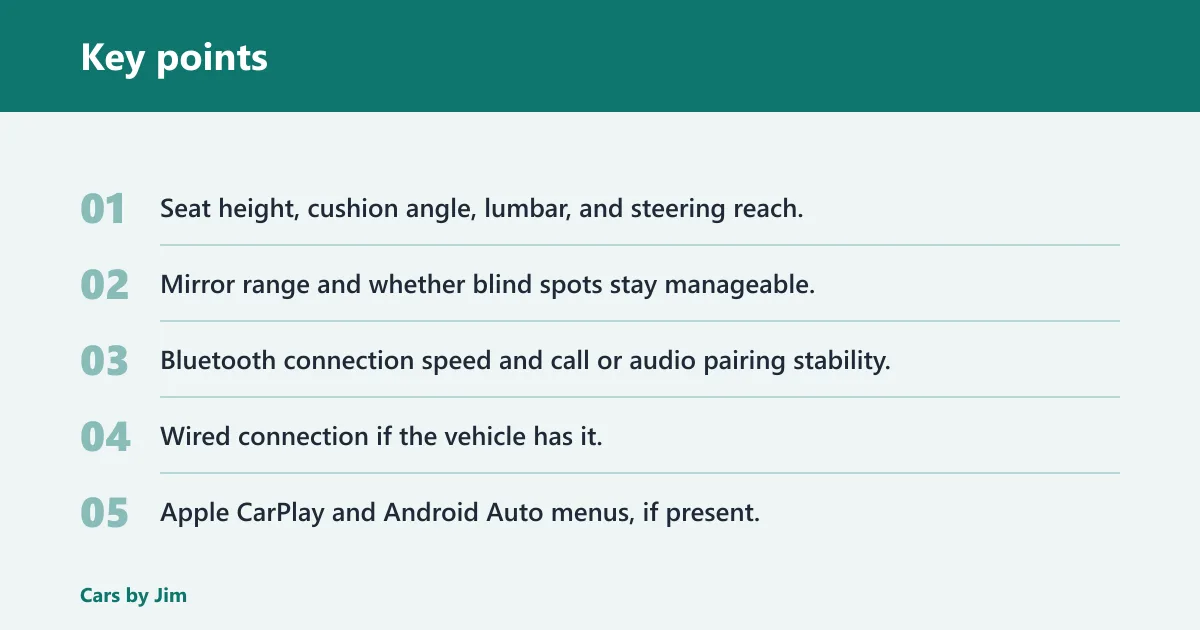
Comfort matters because it affects whether the vehicle works for you over a real driving period. If the seat cannot fit your body, the mirrors cannot cover blind spots, or the screen is hard to use on the move, that is a real problem. A good car that is hard to use may still be the wrong car.
What to test on the cabin and tech side
- Seat height, cushion angle, lumbar, and steering reach.
- Mirror range and whether blind spots stay manageable.
- Bluetooth connection speed and call or audio pairing stability.
- Wired connection if the vehicle has it.
- Apple CarPlay and Android Auto menus, if present.
- Automatic emergency braking, blind spot warning, and rear cross traffic warning.
A common first-timer mistake is to judge comfort from a 2-minute idle in the parking lot. That misses lower-back pressure, seat padding, and mirror fatigue that show up only after a longer drive. Give the cabin enough time to prove itself.
What noises should you listen for on a used car test drive?
Listen with the radio off and windows up, then down if needed. Pay attention to clunks, whines, squeaks, grinding, road noise, wind noise, and vibration at idle, braking, and highway speed. Noise is most useful when you can tie it to a condition. A clunk over bumps, for example, points in a different direction than a whine under acceleration.
Do not dismiss repeated sounds as old-car character. A single squeak can be a trim issue, but grinding under braking or whine with speed can point to larger problems. Note when the sound happens, not only what it sounds like.
Noise clues by condition
- Idle: ticking, rattling, or vibration through the seat or steering wheel.
- Braking: squeal, grinding, pulse, or vibration.
- Acceleration: whine, growl, or shudder.
- Rough roads: clunk, knock, or squeak from suspension or trim.
- Highway speed: wind roar or humming that changes with speed.
What should you do after the used car test drive?
Take notes immediately after the drive so details do not blur together. iSeeCars recommends making notes and sharing them with the mechanic after the drive. Compare the car against others you drove the same day, then decide whether the right next step is to walk away, negotiate, or schedule a pre-purchase inspection.
Use the same note format every time: start quality, idle, brake feel, steering, suspension, transmission, noise, tech, comfort, and warning lights. That makes side-by-side comparison much easier when several cars seem acceptable at first glance.
Decision tree after the drive
- Walk away: warning light stays on, hard pull, grinding brakes, major transmission delay, or repeated overheating concern.
- Inspect further: vibration, clunks, shudder, or intermittent electronics fault that needs diagnosis.
- Negotiate: minor noise, worn tires, aging brakes, or small comfort issue with clear repair cost.
- Continue consideration: clean start, stable idle, straight braking, smooth shifts, and no major noise.
Frequently asked questions
What should you pay attention to during a used car test drive?
Focus on how the car starts, idles, accelerates, brakes, steers, and rides over rough pavement. Also check the cabin fit, visibility, phone integration, and warning lights. The best clues are symptoms tied to a condition, such as vibration at speed, pull under braking, or hesitation when shifting.
How long should a used car test drive be?
A good target is about 20 to 30 minutes, with enough time for city streets, highway speed, bumps, and parking maneuvers. The same source says anything shorter than 20 minutes is not a test drive. The same source says the route should last at least 30 minutes. (Consumerreports)
Should you test drive a used car from a cold start?
Yes. A cold start can reveal rough idle, hard starting, smoke, and warning lights that a warm engine may hide. If the seller already warmed the vehicle, ask to wait for a cold start before you judge it. That is a fair request, not a nuisance.
How do you check the brakes and steering on a test drive?
Test braking at stop signs, traffic lights, and one firmer stop in a safe area. The pedal should feel firm, the car should stop straight, and there should be no squeal, grinding, or shake. For steering, check straight tracking and use a full-lock turn to catch clicking or resistance.
How do you spot transmission problems while test driving a used car?
Watch the shift from Park to Drive, then pay attention to delay, harsh shifts, shudder, or hesitation in traffic. Under firm throttle, the transmission should kick down cleanly. On a manual, look for clutch shudder, poor take-up, or difficult gear engagement.
Can you test drive a used car alone?
Yes, if the seller allows it and the insurance and permission situation is clear. A companion can help you watch controls or take notes, but it is not required. For private-seller cars, confirm who is covered by insurance and who may legally drive before you leave the property.
What route should you take on a used car test drive?
Use a route with city streets, highway speed, rough pavement, turns, and parking maneuvers. Avoid a dealer-preferred short loop. The goal is to force the car into the conditions where brake feel, steering, suspension, transmission, and noise problems are easier to spot.
Can I test drive a car?
Yes, if the seller agrees and the paperwork is in order. Bring your license, confirm insurance and permission, and set a route that lets you check the car in real conditions. A proper test drive is not a five-minute lap around the block.
How to test drive a vehicle
Check the vehicle in order: start-up, idle, city driving, highway merging, braking, steering, suspension, transmission, tech, and comfort. Use the same route and note format for each car you drive. That gives you a fair comparison and a cleaner decision afterward.