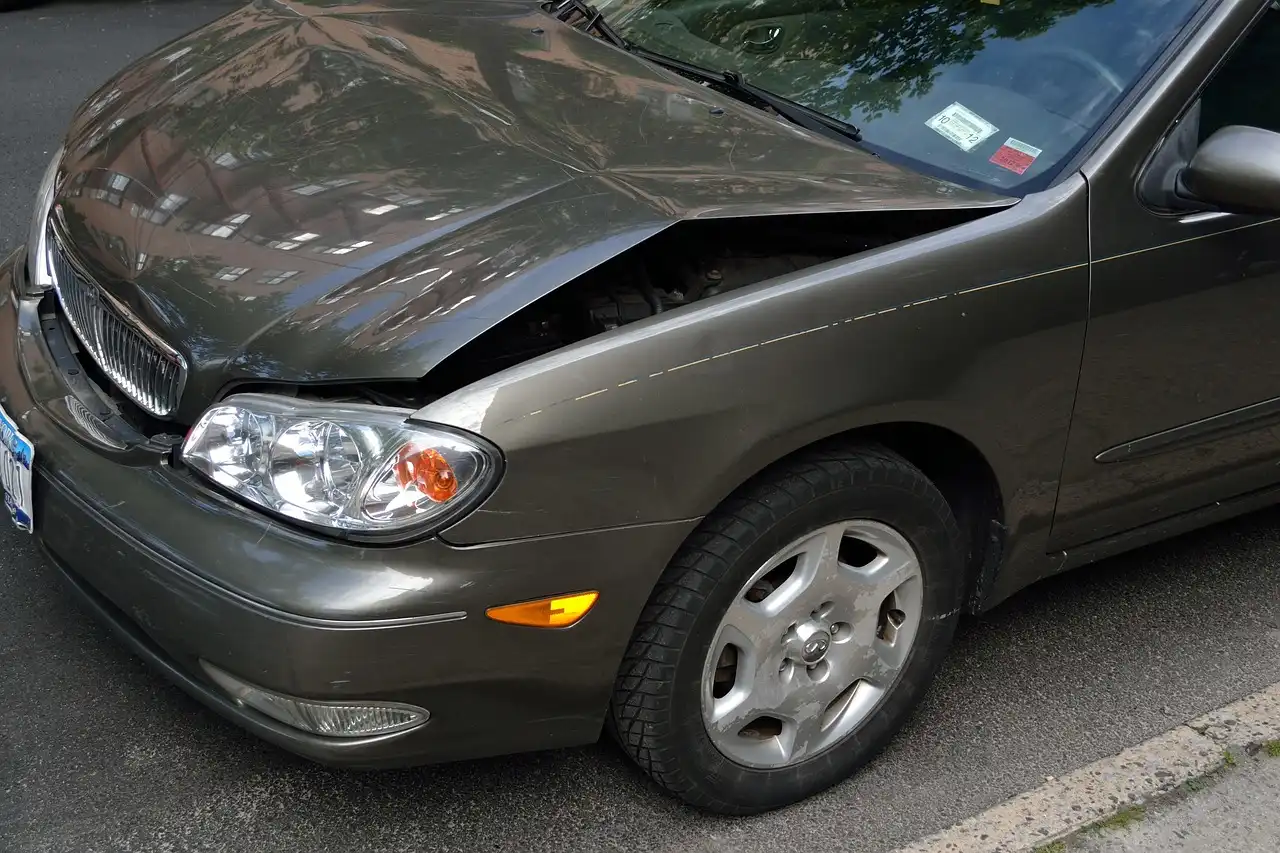
What Does Accident History Mean on a Used Car Report?
Accident history on a used car report means the vehicle has one or more recorded claims, police reports, auction notes, or repair records tied to a crash; it signals a reported event, not proof of major damage or current safety problems. Misreading that line can make you walk away from a good car or overpay for a bad one. This guide explains what the entry means, what it does not prove, and how to judge the car before you buy.
How a recorded event is documented
On a vehicle history report, accident history is a reported record tied to a specific VIN. It usually points to a collision or damage event that was captured by an insurer, police file, auction listing, repair estimate, or another source in the report network. It does not mean every crash ever happened or that the car is unsafe.
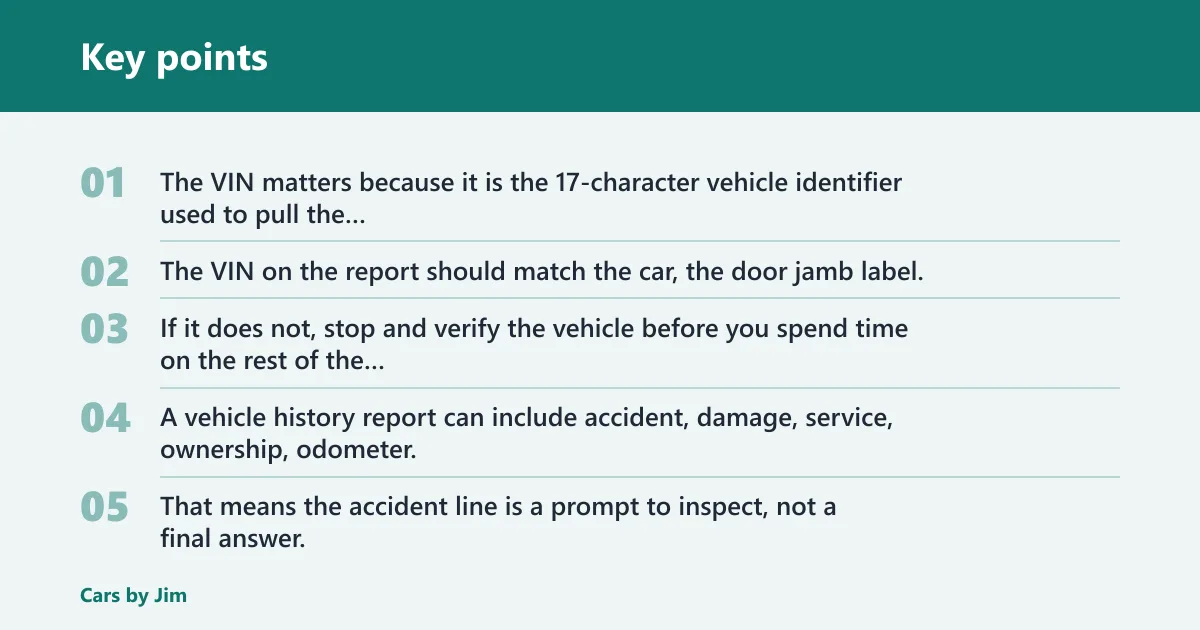
The VIN matters because it is the 17-character vehicle identifier used to pull the report data. The VIN on the report should match the car, the door jamb label, and the seller’s paperwork. If it does not, stop and verify the vehicle before you spend time on the rest of the report.
A vehicle history report can include accident, damage, service, ownership, odometer, theft, and import records, though coverage can vary by source and by how recently the report was updated. That means the accident line is a prompt to inspect, not a final answer.
What a report entry usually signals
An accident entry often means some third party recorded a crash-related event. CARFAX says accident history can include damages from collisions or extreme weather conditions, and it can show the number of incidents, dates, point of impact, and dollar amounts for repairs on U.S. cars where available.
Those details help you judge severity. A note about a rear bumper repair is different from a line that mentions frame damage or airbag deployment.
What it does not prove
An accident line does not prove the car was wrecked, unsafe, or poorly repaired. It also does not prove the event was minor. The same entry can range from a parking-lot scrape to a major collision, and the report may not include enough detail to tell which one without documents or an inspection.
What the accident section can show
The accident history section is a summary of reported incidents or damage tied to the VIN. Depending on the source, it may list the date, the number of incidents, the area struck, and repair amounts. It may also include short language such as front impact, rear impact, or other damage notes.
That summary is useful because it gives you a starting point. It is limited because report data depends on who reported the event and when the system received it.
How source and timing affect the record
Insurance claims are a common source of reported accident data, and an insurance claim can trigger a record, estimate, or total loss entry. Cash repairs may never appear. A claim may also be filed weeks after the crash, so the report can lag behind the real event.
The same source says not every damage event is reported to it. That is why a report with no accident entry is not the same as proof of no accident history.
Accident history decision table
| report clue | likely meaning | risk level | next verification step |
|---|---|---|---|
| Minor damage | Often cosmetic repair, such as a bumper, fender, or panel repaint | Low to moderate | Ask for repair receipts and inspect paint match, panel gaps, and trim alignment |
| Moderate or severe damage | May involve larger body repair, suspension work, or hidden damage behind exterior panels | Moderate to high | Get a pre-purchase inspection and ask what parts were replaced |
| Airbag deployment | Crash likely strong enough to trigger restraint systems | High | Request invoices for airbag, seat belt, and module replacement, plus scan and inspection results |
| Structural or frame clues | Possible frame rail, unibody, or alignment damage | Very high | Walk through a body shop or inspection report before any offer |
| Clean title plus accident entry | Reported crash without a state title brand | Moderate | Verify repair proof and inspect for uneven wear, overspray, or structural signs |
| Missing accident the seller discloses | Likely a cash repair, unreported claim, or source gap | Moderate | Ask for photos, estimates, and the repair shop name |
| Salvage or total-loss indicators | Insurer or state record suggests the vehicle was declared a total loss | Very high | Check title branding and NMVTIS details before considering the car |
Can a car have accident history and a clean title?
Yes. A car can have accident history and still carry a clean title because title brand and accident reporting are different systems. A clean title only means no state has branded the car salvage, rebuilt, or flood. It does not prove the car was never in an accident.
Title brand data and accident history can overlap, but they do not always move together. A collision can leave an insurance trail without any title brand. A title brand can also exist with little or no detail in the accident section.
Where salvage, junk, and flood brands fit
State-assigned title brands such as salvage, junk, or flood are separate warnings. They can remain on the title even when the accident section is sparse. NMVTIS matters here because it is administered by the U.S. Department of Justice and focuses on title date, brand history, odometer reading, total loss history, and salvage history.
NMVTIS is useful for title and loss checks, but it is not a complete accident database. Use it to confirm branding and loss history, then use the rest of the report and an inspection to judge repair quality.
Why an accident may be missing
An accident may never appear because no claim was filed, the insurer did not report it, the repair was paid in cash, or the source that usually captures the event never saw it. The absence of an entry is a coverage gap, not proof that the car never took damage.
That matters when a seller says the car “only had a small hit” but the report is blank. The gap may be real, or it may be a source issue.
What NMVTIS can and cannot tell you
NMVTIS can help identify title problems, total loss history, and salvage history. It can also show odometer and brand records. It cannot tell you every crash, every repaint, or every bumper repair, so it should sit beside the rest of the report, not replace it.
Suppose a sedan shows a front bumper repaint, but no accident entry. A body shop receipt for paint work may confirm a repair that never made it into a claims database. Another car may show a reported accident with no visible body damage because the repair was completed correctly and documented. The point is to verify, not guess.
Should you avoid a used car with accident history?
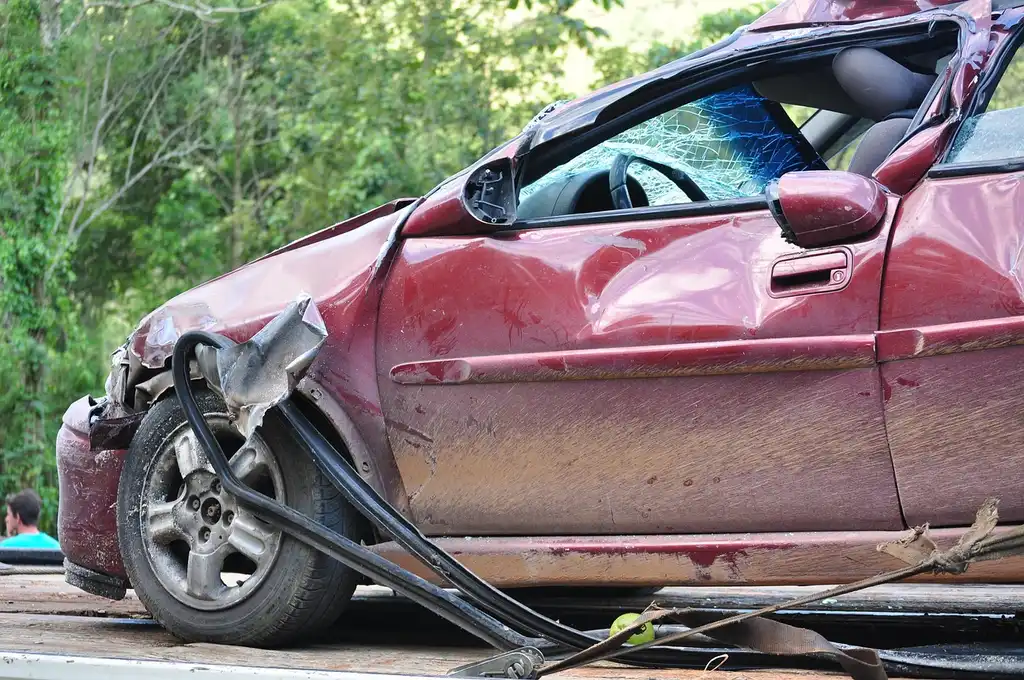
Not automatically. Whether to pass or proceed depends on the type of damage, the repair proof, the asking price, and the inspection. Cosmetic damage can be acceptable if the work was done well and the price reflects the history. Structural damage, airbag deployment, or total-loss clues deserve much more caution.
Use the report as a filter, then verify the condition in person. The same source recommends a three-part buyer workflow: test drive, report, and mechanic inspection.
Cosmetic damage versus structural damage
Cosmetic damage usually affects appearance more than safety, such as a scratched panel, dented door, or replaced bumper cover. Structural damage affects the frame or unibody and can change alignment, tire wear, crash performance, and long-term durability. Those are not the same kind of risk.
Airbag deployment is another strong warning sign. It often means the crash was hard enough to activate restraint systems, which raises the need for careful review of repair records and scan data.
Say your report shows one rear-impact claim with a modest repair amount, and the seller has invoices for a bumper cover and tail lamp replacement. That may be a manageable history if the inspection finds even panel gaps and no structural signs. A similar claim with no paperwork and a crooked trunk lid is a different case.
What to ask the seller and inspector
Ask for repair invoices, body shop receipts, photos from before and after the repair, and any estimate or supplement paperwork. If the report is vague, those records help confirm what was fixed and whether the repair was limited to cosmetics or reached deeper into the car.
Also ask which body shop handled the work and whether any airbags, seat belts, suspension parts, cooling parts, or structural pieces were replaced. If the seller cannot produce documents, treat the history as incomplete.
- Compare the VIN on the report with the VIN on the car and documents.
- Read the accident section for dates, impact notes, and incident count.
- Ask for invoices, receipts, photos, and written repair estimates.
- Check body lines, tire wear, paint match, glass dates, and fastener condition.
- Book a pre-purchase inspection with a mechanic who can look for hidden damage.
A pre-purchase inspection should check frame and suspension alignment, steering, tire wear, underbody damage, fluid leaks, warning lights, and evidence of poor repair work. This step matters because reports can miss repairs or hidden damage.
Use the VIN to pull the report from a vehicle history source, then compare the report with the car in person. The VIN is the key that ties the report to the exact vehicle, so a mismatch is a red flag before you go any further.
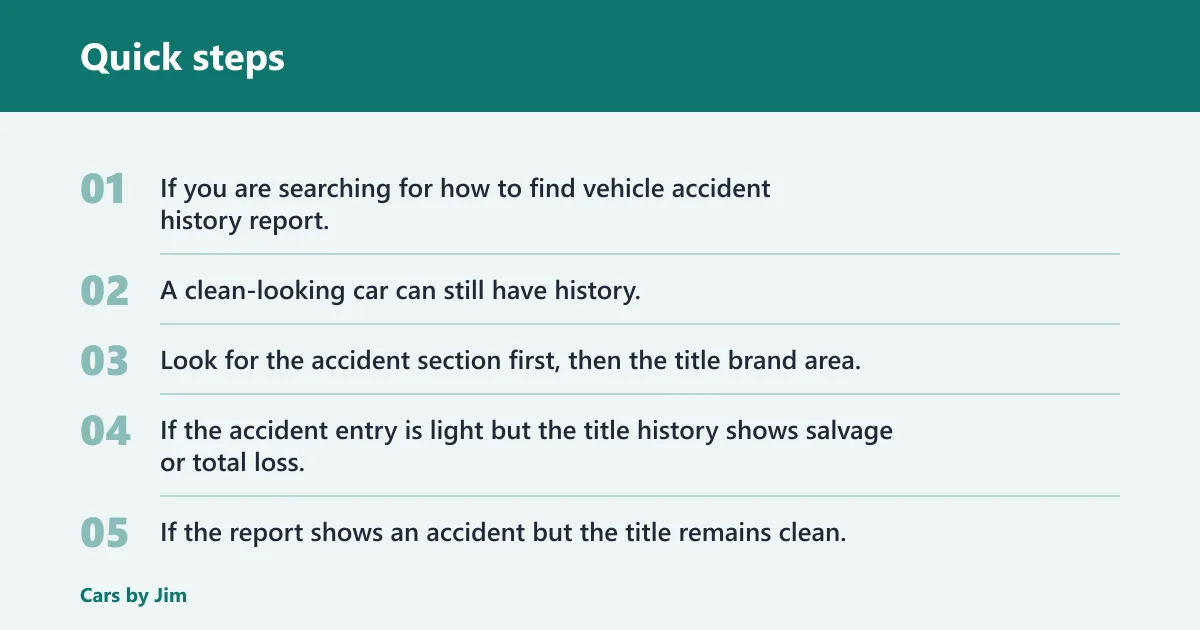
If you are searching for how to find vehicle accident history report, start with the VIN and then move through the report line by line. A clean-looking car can still have history, and a rough-looking car can sometimes have a modest, well-documented repair record.
How to read the result
Look for the accident section first, then the title brand area, then the odometer and ownership trail. If the accident entry is light but the title history shows salvage or total loss, that is a major warning. If the report shows an accident but the title remains clean, the next question is how the car was repaired and whether the repair is documented.
Ask whether the price reflects the history. A car with one minor repair and strong records may still be worth considering. A car with structural clues, airbag deployment, or missing paperwork should usually stay on the hard-no side unless a thorough inspection and proof of repair change the picture.
Frequently asked questions
What does accident history mean on a used car report?
It means the report shows one or more recorded crash-related or damage-related events tied to the VIN. The entry is a signal, not a verdict. It may come from an insurance claim, police report, auction note, or repair record, and it can be incomplete.
Does accident history mean the car was in a serious crash?
No. The entry can reflect anything from light cosmetic damage to a serious collision. Without repair records, photos, or an inspection, the report alone does not tell you how severe the event was or whether the car was repaired correctly.
Can a car have accident history and still have a clean title?
Yes. A clean title only means the state has not branded the car salvage, rebuilt, or flood. A crash can still appear in the accident section even when the title remains clean, so both parts of the report need to be checked separately.
What information is usually shown in the accident history section?
Where data is available, the section may show the date, number of incidents, point of impact, and repair amount. Some reports also mention damage type or a brief summary from the reporting source. The amount of detail depends on the source and timing.
Why might an accident not appear on a vehicle history report?
Common reasons include no insurance claim, cash repairs, delayed reporting, or a source that never captured the event. The same source says not every damage event is reported to it. A missing entry should not be read as proof that no accident happened.
Should I avoid a used car just because it has accident history?
Not always. Minor cosmetic damage with clear repair invoices and a clean inspection may be acceptable at the right price. Structural damage, airbag deployment, or total-loss clues are much more serious and usually deserve a hard pass unless the proof is unusually strong.