Are Old Cars Reliable If They Have Low Mileage?
Yes, an older car with low mileage can be reliable, but only if age-sensitive parts, fluids, tyres, brakes, and service records all check out before you buy. Ignore age, and you can face dried seals, weak batteries, cracked tyres, rusty brakes, and repair bills that wipe out the low-mileage advantage. This guide shows the checks that matter most and the red flags that should send you walking.
Inspecting hidden age wear on low mileage cars
Sometimes. Low mileage on an older car can mean short-trip use or long storage, and both can hide wear that the odometer will not show. Mileage alone does not prove reliability, because age can damage rubber, fluids, brakes, and wiring even when the car has barely moved.
A car can look preserved and still be mechanically tired. A garage-kept body does not guarantee fresh coolant, healthy brake fluid, or flexible hoses. That is why service history and a proper inspection matter more than the odometer number alone.
Low-mileage car checklist
| Component | What age does to it | How to inspect it quickly | Walk-away or budget item? | Purchase score |
|---|---|---|---|---|
| Tyres | Rubber hardens after five to six years; cracks and loss of grip can appear before the tread is worn down. | Read the DOT date code, inspect sidewalls for cracking, and check for flat spots or uneven aging. | Tyres that are over about six years old are usually a budget item; visible cracking or mismatched age can be a walk-away issue. | Red if over six years old or cracked; yellow if near that age; green if recent and sound. |
| Brake lines | Moisture and inactivity can corrode steel lines from the inside or outside. | Look for rust, wet spots, flaky coating, and bulges along the hard lines. | Rust pitting or leaks are a walk-away issue. | Red if corroded or leaking; yellow if surface rust only; green if clean. |
| Brake calipers | Seals dry out and sliding parts can seize after long periods of inactivity. | Check for uneven pad wear, a wheel that drags, or a piston that does not retract cleanly. | Seized or leaking calipers are usually a budget item, but severe brake drag is a walk-away issue. | Red if seized or leaking; yellow if sticking lightly; green if free and dry. |
| Battery | Battery condition can decline without use, especially after storage. | Check the date label, look for swelling or corrosion, and confirm it starts the car strongly after sitting. | A weak battery is a budget item, not usually a deal-breaker on its own. | Red if it cannot hold charge; yellow if old or weak; green if strong. |
| Hoses | Rubber dries out, hardens, and can split. | Squeeze gently for softness, inspect bends and clamps, and look for bulges or surface cracks. | Cracked or swollen hoses are a budget item now and a failure risk soon. | Red if cracked or swollen; yellow if hardening starts; green if supple. |
| Belts | Belts lose flexibility and can crack with age, even with few miles. | Inspect ribs and edges for glazing, cracking, fraying, or missing material. | Visible cracking is a budget item; heavy wear or noise can be a walk-away issue. | Red if cracked or frayed; yellow if aged but intact; green if clean. |
| Seals | Oil seals and gaskets harden and shrink, which can lead to leaks. | Look under the engine, transmission, and differential for dampness, residue, or drips. | Active leaks are a budget item; widespread leakage can be a walk-away issue. | Red if leaking; yellow if weeping; green if dry. |
| Fluids | Oil, coolant, brake fluid, transmission fluid, and fuel can degrade while a car sits. | Check colour, smell, level, and service dates; look for stale, dark, milky, or rusty fluid. | Old fluids are usually a budget item, but contaminated coolant or brake fluid can be serious. | Red if contaminated or neglected; yellow if overdue; green if fresh and documented. |
| Suspension bushings | Rubber bushings dry out, crack, and lose compliance. | Look for splitting, clunks over bumps, wandering steering, or excessive play. | Worn bushings are a budget item unless the car feels unstable or unsafe. | Red if torn or loose; yellow if aged; green if sound. |
| Fuel system | Gasoline can go bad in a matter of months and leave varnish in the fuel system. (Thedrive) | Ask about storage, sniff for stale fuel, and watch for hard starting, surging, or fuel-pump noise. | Stale fuel and varnish are usually a budget item, but heavy contamination can be a walk-away issue. | Red if varnish or contamination is likely; yellow if storage is uncertain; green if recent and clean. |
What low mileage can hide
Low mileage can hide two very different histories: short-trip use and long storage. Short trips often leave oil, exhaust, and charging systems below full operating temperature, while storage creates dry rubber, stale fluids, and corrosion. Both patterns can leave a car looking fresher than it is.
Short-trip cars may have changed oil on time but still suffer condensation inside the engine and exhaust. Stored cars may start cleanly yet have tyres that age out, brake parts that stick, and fuel systems that varnish internally. The odometer does not tell you which story applies.
Short trips versus storage
Short-trip use often shows up as low average mileage, repeated cold starts, and service records that cover routine oil changes but not deeper age-related care. Long storage leaves a different trace: flat spots, battery weakness, stale fuel, and dry rubber. The same odometer reading can mean very different risks.
Suppose an older saloon shows very low mileage and a clean body. If the tyres are 11 years old, the brake fluid has no recent record, and the battery has been replaced twice, the mileage is not the main issue. The age-related parts are.
Low mileage can also create false confidence because the car may look tidy under bright paint and clean upholstery. Cosmetic preservation is not mechanical proof. A clean cabin does not tell you whether calipers are free, hoses are supple, or coolant has been changed on schedule.
Does service history matter more than mileage?
Yes. Maintenance records tell you more about long-term reliability than age or mileage, and a well-maintained older vehicle with high mileage can be a better option than a low-mileage car with no service history. Records show whether the car was exercised, serviced, and repaired when it needed it.
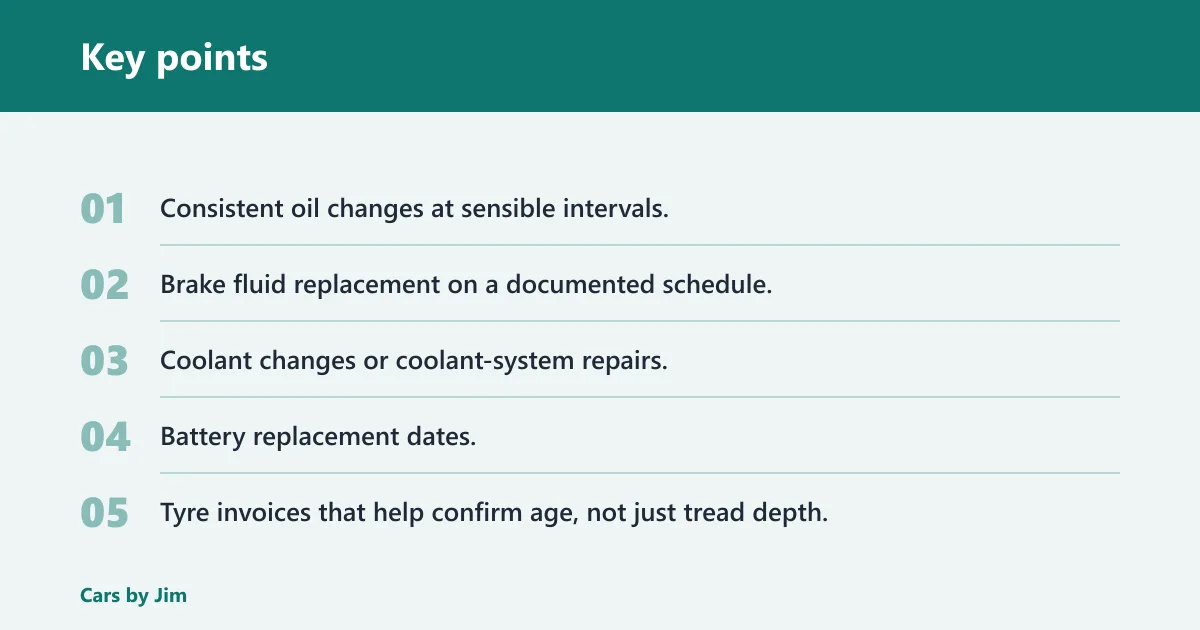
Look for regular oil changes, coolant replacement, brake fluid changes, tyre replacement, and any record that shows the car was kept active during storage. Gaps matter because they can mean neglect, long inactivity, or a seller who cannot explain what was done and when.
Records that support the car’s story
- Consistent oil changes at sensible intervals.
- Brake fluid replacement on a documented schedule.
- Coolant changes or coolant-system repairs.
- Battery replacement dates.
- Tyre invoices that help confirm age, not just tread depth.
- Evidence of seasonal storage prep, such as fuel stabiliser or periodic starts.
Ask whether the car was driven enough to reach normal temperature regularly. Ask whether the seller has invoices, not just vague memory. A file that includes routine work and age-sensitive replacement parts is much more convincing than a low odometer reading by itself.
Gaps that should lower your confidence
Missing records do not always mean trouble, but they raise the odds that something important was delayed or ignored. If the seller cannot show when the brake fluid, coolant, battery, or tyres were last dealt with, budget for those items immediately or move on. With older cars, uncertainty is expensive.
What should you inspect before buying?
Start with a pre-purchase inspection. It is the best way to find hidden age-related faults before you commit, especially on a low-mileage older car that may have sat for long periods. A mechanic can check the systems that look fine to a casual buyer but fail under use.
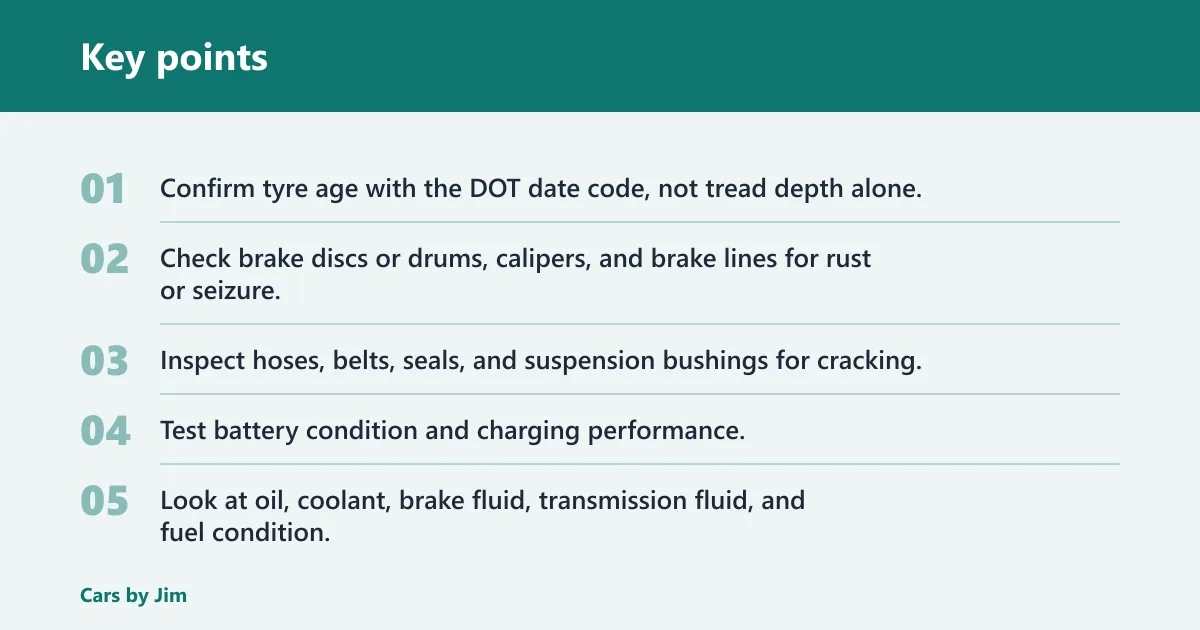
That inspection should focus on tyres, brakes, fluids, rubber parts, the battery, the fuel system, and signs of corrosion. A vehicle history report can support the story, but it cannot replace a mechanical check. It may explain owner count, accident history, and service record patterns, yet it will not show a seized caliper or acidic coolant.
Pre-purchase inspection priorities
- Confirm tyre age with the DOT date code, not tread depth alone.
- Check brake discs or drums, calipers, and brake lines for rust or seizure.
- Inspect hoses, belts, seals, and suspension bushings for cracking.
- Test battery condition and charging performance.
- Look at oil, coolant, brake fluid, transmission fluid, and fuel condition.
- Scan for leaks, smoke, warning lights, and irregular idle or shifting.
Old coolant can become acidic and damage metal, rubber, and gasket material. Brake fluid absorbs water and can corrode the master cylinder, brake lines, and calipers. Gasoline can go bad in a matter of months and leave varnish in the fuel system. Those are the quiet failures that low mileage can hide.
Picture an older coupé with low mileage and a glossy engine bay. The seller says it has “always been stored indoors.” If the rear brake lines are rusty, the tyres are older than six years, and the fuel smells stale, the clean presentation is not enough. The condition of the systems matters more than the shine.
Which findings should change your offer?
Use a simple colour code. Green means the item is sound and supported by records. Yellow means it needs near-term money but does not kill the deal. Red means the finding is serious enough to reduce your offer sharply or stop the purchase entirely. Safety-critical items deserve the hardest line.
Green, yellow, and red signals
- Green: tyres within date and condition, clean brake components, fresh fluids with records, flexible hoses, and a healthy battery.
- Yellow: aged but usable tyres, a weak battery, overdue fluids, mild surface rust, or rubber parts that are starting to harden.
- Red: tyres over six years old with cracking, corroded brake lines, seized calipers, contaminated fluids, or evidence of varnish and neglect.
Deal with yellow items as budget items. You can price them into the offer. Red items are different, especially on brakes and tyres, because they affect safety as well as cost. A car may still be worth buying, but only after the price reflects the work needed.
What should reduce the price immediately?
Any finding that requires same-week replacement should reduce the offer. That includes tyres over six years old, rusty brake lines, a weak battery on its last legs, and fluid service that has clearly been missed. If several yellow items stack up, the car is not a bargain anymore.
When low mileage is a genuine plus
Low mileage becomes a real advantage when the car has been maintained during storage or light use. Fresh fluids, documented servicing, intact rubber parts, healthy tyres, and free-moving brakes show that the car was preserved mechanically, not just cosmetically. That is the difference between a fair buy and a future repair bill.
A well-kept older car can still be a smart buy if the history fits the condition. The odometer then supports the story instead of misleading you. That is the key test: the mileage should match the wear you can verify in the records and under the car.
Ask the same question of every low-mileage older car: does the age-sensitive hardware match the story? If the answer is yes, the car can be a strong choice. If the answer is no, the low odometer reading is only part of the price tag.
Frequently asked questions
Are old cars reliable if they have low mileage?
They can be, but only if age-sensitive parts and maintenance records check out. Low mileage does not protect tyres, brake fluid, coolant, hoses, or battery health from time. A clean odometer reading is useful only when the car’s service history and inspection results support it.
Is a low-mileage old car better than a higher-mileage newer one?
Not automatically. A newer car with higher mileage may be the safer buy if it has regular maintenance, fresher consumables, and fewer age-related problems. Compare service history, tyre age, brake condition, and fluid changes before you compare odometer readings.
What can go wrong on a car that has been sitting for years?
Brake systems can corrode or seize, fuel can go stale, batteries can weaken, and rubber parts can dry out and crack. Long storage also increases the chance of acidic coolant, water-contaminated brake fluid, and varnish in the fuel system. The car may start poorly and need several repairs at once.
How do I tell if low mileage means a car was neglected?
Look for missing service records, old tyres, aged fluids, and signs that the car was stored without being prepared properly. A low odometer reading with rusty brakes, cracked hoses, or a weak battery suggests inactivity, not careful ownership. The condition should match the story.
Should I pay for a pre-purchase inspection on a low-mileage classic or older used car?
Yes. It is the best way to find hidden faults before you buy, especially when age can be the bigger risk than mileage. A good inspection checks tyres, brakes, rubber parts, fluids, battery condition, and corrosion that a casual walk-around will miss.
Can old tyres be unsafe even if they still have tread?
Yes. Tyre rubber starts to harden after five to six years, and tyres over six years old should be replaced regardless of tread. Check the DOT date code, because tread depth alone does not tell you whether the tyre has aged past its safe working life.