How Many Photos Should a Car Listing Have?
Most used-car listings should use 12 to 20 photos, with about 12 as the minimum practical set. Under about 10 photos often reads as incomplete or suspicious. Add photos until the gallery shows the car’s condition, features, and flaws. After that, near-duplicate shots usually add clutter, not trust.
Minimum useful photo count
Why 12 photos is the practical floor
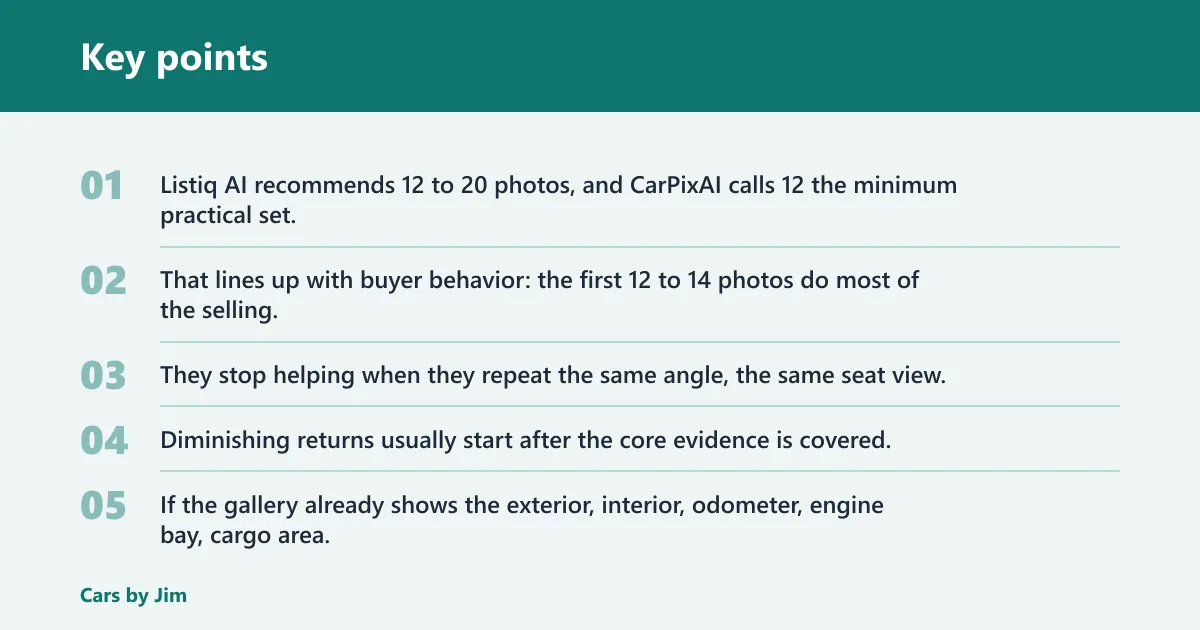
Listiq AI recommends 12 to 20 photos, and CarPixAI calls 12 the minimum practical set. That lines up with buyer behavior: the first 12 to 14 photos do most of the selling, so a listing with 12 solid images can answer the main questions without turning into a slideshow.
More photos help when they add proof. They stop helping when they repeat the same angle, the same seat view, or the same bumper shot with a slightly different zoom.
When extra photos stop helping
Diminishing returns usually start after the core evidence is covered. If the gallery already shows the exterior, interior, odometer, engine bay, cargo area, and any flaws, extra images should only appear when they answer a real buyer question. More can improve trust and reduce lowball offers, but duplicate angles can do the opposite.
A clean sedan with mileage around 78,000 may only need about 12 to 15 photos. Twelve to fifteen photos may be enough. Suppose the same car has hail dings, curb rash, and a torn driver seat bolster. Then about 18 to 20 photos may make more sense because the listing needs proof, not polish.
Car listing photo matrix
| Vehicle type or condition | Minimum recommended photo count | Must-have shots | When to add extra shots |
|---|---|---|---|
| Clean commuter car | 12–15 | Front three-quarter hero, front, rear, driver side, passenger side, front seats, rear seats, dashboard, steering wheel, odometer, engine bay, cargo area | Add close-ups only if there is wear, a scratch, or optional equipment worth proving |
| High-mileage car | 15–18 | All core exterior and interior shots, readable odometer, engine bay, tire tread or wear proof, any visible scuffs | Add more proof when the mileage raises skepticism, especially for seat wear, trim wear, or maintenance clues |
| Premium car | 18–20 | All core shots, close-ups of wheels, infotainment, leather, trim, and any option packages | Add extra detail when the buyer pool expects careful presentation and condition proof |
| Truck or SUV | 15–20 | All core shots, bed or cargo area, tow hitch if fitted, rear cargo space, second row, third row if present | Add photos for bed liners, toolboxes, 4×4 hardware, tow equipment, or third-row packaging |
| EV | 15–20 | All core shots, charge port, screen display, cargo space, tires, cable storage, odometer, battery or charging status if visible | Add more shots when range, charging gear, or battery-related condition needs proof |
| Damaged car | 18–20+ | All core shots plus every flaw: dents, scratches, rust, tears, chips, warning lights, broken trim, damaged panels | Add close-ups and wider context shots so buyers can judge repair scope before messaging |
Which photo should come first?
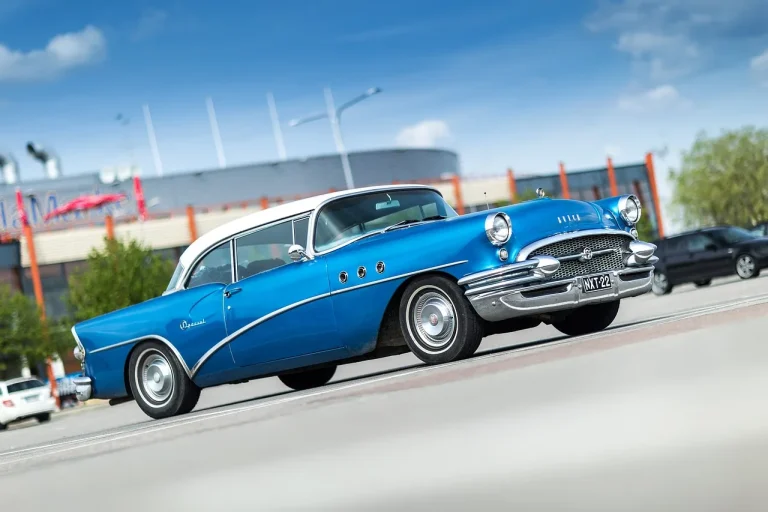
The first image should be a front three-quarter hero photo taken at about 45 degrees. It is the main thumbnail that drives clicks and usually the first thing buyers see on mobile. If the opener is dark, badly cropped, or shot from a flat side angle, the listing loses attention before the rest of the gallery can help.
Why the front three-quarter shot leads
CarPixAI recommends the front three-quarter angle because it shows the nose, side profile, wheels, and general stance in one frame. That makes it useful as a thumbnail and as a quick condition check. It also avoids the flat look that a straight-on front shot can create.
What makes a strong thumbnail on mobile
Mobile-first viewing changes the job of the first photo. Thumbnail readability matters, square crops matter, and the image needs to communicate the car in one glance. Car Background AI reports that 53% of automotive internet shoppers use mobile devices, so the gallery should work when space is tight and the image is small.
How to avoid a weak first image
Do not start with the interior, the engine bay, or a close-up of a wheel unless the car’s main selling point is hidden damage on that exact panel. Avoid parking-lot clutter, harsh shadows, and duplicate hero angles. The first image should make buyers want to open the gallery, not solve a puzzle.
What photos should a listing include?
A serious listing should cover exterior condition, interior condition, mileage, mechanical presentation, cargo space, and any flaws. The goal is simple: let a buyer verify what the ad says before they message. A complete gallery usually reduces back-and-forth, lowball offers, and no-shows.
Exterior proof shots
Start with the front three-quarter hero image, then add front, rear, driver side, and passenger side shots. Include enough coverage to show panel alignment and paint consistency across the body. If one panel looks duller, mismatched, or repaired, a buyer will notice eventually, so it is better to show it clearly.
- Front three-quarter hero shot.
- Front view.
- Rear view.
- Driver side.
- Passenger side.
- One or two shots that show panel and paint consistency.
Interior proof shots
Show the front seats, rear seats, dashboard, steering wheel, and visible cabin wear. Buyers want to see if the photos match the description, especially on seat bolsters, armrests, carpets, and trim. Clean upholstery helps, but honest wear matters more than staged perfection.
Odometer, engine bay, and cargo area
Include a readable odometer photo with the dashboard visible. Buyers use it to verify mileage and to compare the listing against the ad text. Add an engine bay photo with the hood open, clean but honest, so the mechanical presentation is not a mystery. If the car has a trunk, bed, or cargo area, show that too.
Damage and flaw close-ups
Yes, include damage photos. Scratches, dings, rust, seat tears, windshield chips, cracked trim, and warning lights should appear in close-up and, when useful, in a wider context shot. Honest defects beat surprise renegotiation later, and they often attract buyers who can handle the repair or want a better price.
A common first-timer mistake is hiding a torn seat bolster because it seems minor. The buyer notices the tear during inspection anyway, then assumes other issues are hidden too. One clear close-up can prevent that shift in trust.
How platform limits change your count
Marketplace limits affect the final count, but they do not change the order of priorities. Facebook Marketplace allows 20 vehicle photos, Craigslist 24, eBay Motors 24, AutoTrader US 30, and 50 on Premium. If your listing package is tighter than your shot list, protect proof shots first and cut repeats.
| Platform | Photo limit | Drop first when space is tight |
|---|---|---|
| Facebook Marketplace | 20 | Duplicate angles, extra wheel shots, extra dashboard angles |
| Craigslist | 24 | Repeated exterior views, decorative detail shots, redundant cargo photos |
| eBay Motors | 24 | Near-identical cabin shots, duplicate badges, extra glamour angles |
| AutoTrader US | 30, 50 on Premium | Keep proof first, then trim duplicate close-ups and repeated feature shots |
What to drop first when slots are tight
Keep the hero shot, all four sides, the odometer, the engine bay, the main cabin shots, and every defect shot that matters. Drop the second version of the same angle first. Then drop ornamental detail photos, such as a second wheel close-up or a repeated dash shot from a slightly different position.
When paying for more slots makes sense
Pay for more photo slots when the vehicle is expensive, heavily optioned, modified, or damaged enough to need proof. For a basic commuter car in clean shape, 12 to 15 well-chosen photos usually do the job. For a premium model or a vehicle with visible wear, the extra slots can reduce confusion and filter out unserious buyers.
Does more than 20 photos help?
Sometimes, yes. More than 20 photos helps when the vehicle has details buyers care about, such as premium trim, 4×4 hardware, EV charging gear, visible wear, or body damage. Past the core set, though, the benefit flattens fast. Extra near-duplicates can make the gallery feel long without making it more useful.
Where diminishing returns start
The same source reports that listings with 11 or more photos saw more detail-page views and leads, which supports the idea that a fuller gallery helps. The gain is front-loaded, though. The first dozen images do most of the work, and each added shot should earn its place.
Which vehicles benefit from extra shots?
Premium cars often benefit from more photos because buyers expect proof of condition, trim, and equipment. Trucks and SUVs often need extra cargo, bed, tow, or third-row coverage. Damaged vehicles need the most because the listing has to explain the condition, not hide it.
When too many near-duplicates hurt clarity
Too many photos can slow the buyer down. If three front angles, four wheel shots, and two similar rear-seat images repeat the same information, the gallery starts to feel padded. That can look like filler, and filler is a problem when the buyer is trying to decide whether the listing is honest.
Frequently asked questions
Is 5 photos enough to sell a car?
Usually no. Cars.com sell-yourself packages allow 5, 10, or 15 photos, but five photos is still below the practical minimum for a serious used-car listing. Under 10 photos often reads as hiding something, and buyers will ask for more pictures before they trust the ad.
How many car listing photos is too many?
Too many is any count that adds repetition instead of information. For most listings, 12 to 20 photos is the useful zone. Above that, only add shots that answer a specific question about condition, equipment, or defects. Once the gallery repeats the same message, it gets harder to scan.
What photos should a car listing include?
Include the front three-quarter hero shot, front, rear, both sides, front seats, rear seats, dashboard, steering wheel, odometer, engine bay, cargo area, and any damage or flaw close-ups. That mix gives buyers proof of condition and helps the listing feel complete rather than staged.
Should I include damage photos in my listing?
Yes. Damage photos are part of a complete listing, especially for scratches, dings, rust, tears, chips, and warning lights. Clear defect shots reduce surprises, cut wasted messages, and help buyers judge the car on real condition instead of assumptions. Hidden flaws tend to come back as lower offers later.
Do buyers want odometer and engine photos?
Yes. A readable odometer photo supports mileage verification, and an engine bay photo helps buyers judge mechanical presentation. These are trust shots, not decoration. If the dashboard is visible and the hood shot is clean but honest, the listing feels more credible and usually gets fewer basic questions.
Which photo should be first in a car listing?
The first photo should be a front three-quarter shot at about 45 degrees. It works best as the main thumbnail because it shows the body shape, front fascia, and side profile in one frame. On mobile, that angle usually reads faster than a straight-on or interior shot.