How to Inspect a Used Car Before Buying It
Inspect a used car in three passes, then sort every problem into one of three verdicts: safe to buy, negotiate with proof, or walk away if repair risk, rust, title trouble, or a leak points to major hidden cost. Skip this step and you can buy a car that needs thousands in repairs within weeks. This guide shows what to check, what each finding means, and how to decide fast.
What should you check first?
Start with the seller, the paperwork, and the VIN before you inspect the body or drive the car. Ask why the car is for sale, how long the seller has owned it, whether there are maintenance receipts, whether it has been in a crash, and whether the seller will allow an independent inspection. If any answer feels incomplete, your risk rises.
Screen the seller before you see the car
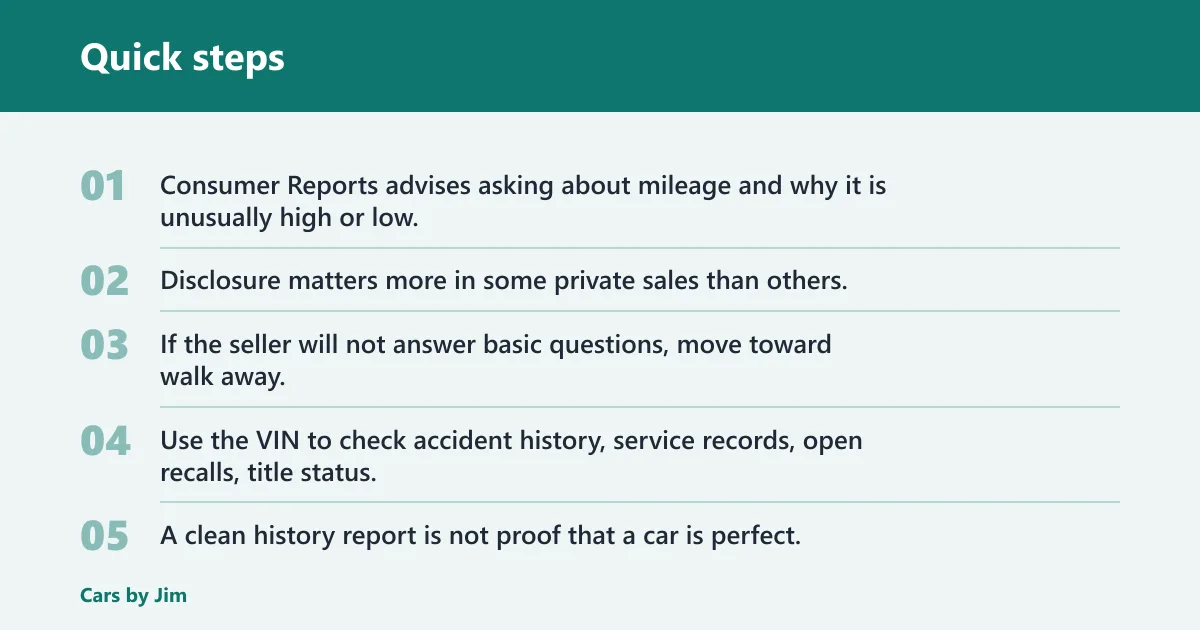
Consumer Reports advises asking about mileage and why it is unusually high or low, whether the car has been in a crash, and whether open recalls need to be done. Disclosure matters more in some private sales than others, so a vague answer is a warning sign, not a detail to ignore. If the seller will not answer basic questions, move toward walk away.
Run the VIN and history report
Use the VIN to check accident history, service records, open recalls, title status, and ownership red flags such as salvage, flood, or branded title language. A clean history report is not proof that a car is perfect, but a bad report can save you from hidden damage. A title issue is often a walk-away finding, especially if repair history is unclear.
Ask for maintenance records and disclosure
Receipts help you separate normal wear from neglect. Oil changes, brake work, coolant service, and timing-related repairs tell you whether the car was maintained on time or only fixed when it broke. If the seller has no records at all, that usually belongs in the negotiate bucket unless the price already reflects the added risk.
How do you inspect a used car before buying it?
A practical approach is to inspect a used car in about three passes: first screen the seller and history, then inspect the car in daylight, then test-drive and, if possible, confirm with a mechanic. That order matters because hidden problems show up in paperwork, body details, and driving behavior differently. A minor scratch is negotiable. Rust, flood signs, or a refusal to inspect can justify walking away.
Check the exterior for bodywork clues
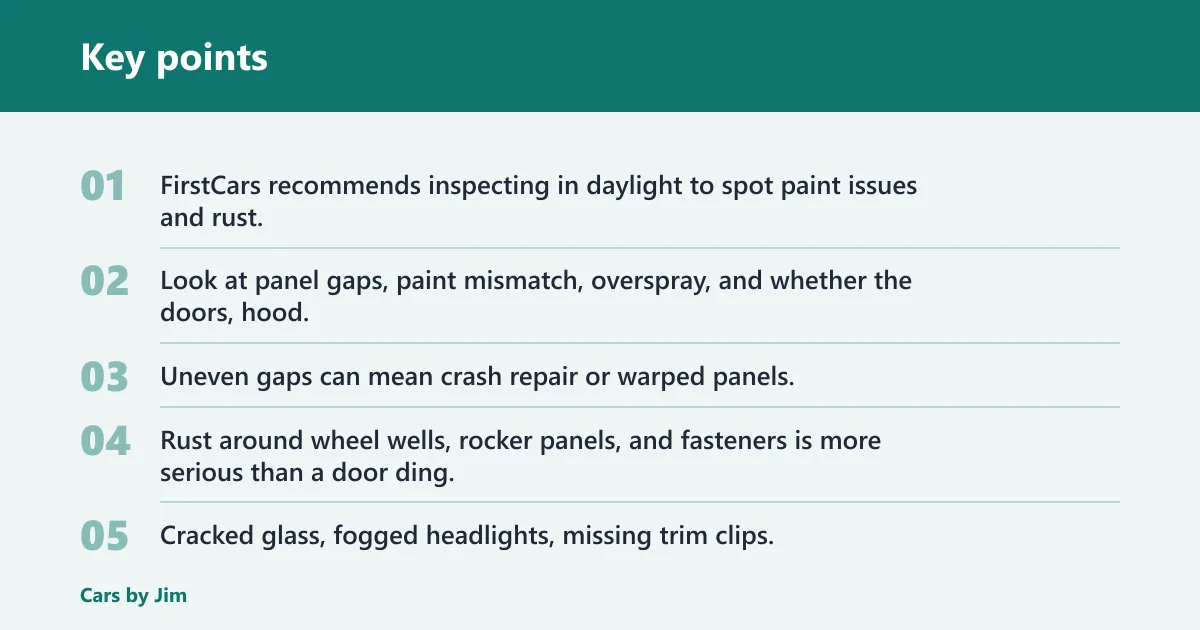
FirstCars recommends inspecting in daylight to spot paint issues and rust. Look at panel gaps, paint mismatch, overspray, and whether the doors, hood, and trunk line up evenly. Uneven gaps can mean crash repair or warped panels. Rust around wheel wells, rocker panels, and fasteners is more serious than a door ding, and iSeeCars notes rust can signal serious bodywork issues.
Inspect glass, lights, and trim
Cracked glass, fogged headlights, missing trim clips, and loose bumper corners are often repair items rather than deal-breakers. But if the car shows fresh paint near a light, mismatched fasteners, or overspray on rubber seals, that points to bodywork that should be documented before you buy. A magnet and flashlight help expose filler and hidden spray edges.
Look for rust and bodywork clues
Rust that stays on the surface is different from rust that has reached seams, brackets, or structural points. Surface rust on an old exhaust shield may be a negotiate item. Rust at the rocker panel, suspension mount, or wheel well can point to deeper corrosion and higher repair cost. The more rust appears in multiple places, the less “small” it is.
How do I inspect a used car checklist
Use a checklist that turns each finding into a decision, not just a note. A good checklist covers body, tires, fluids, underside, interior, warning lights, and the test drive. The goal is simple: safe to buy, negotiate with proof, or walk away. If a checklist item exposes safety or structural risk, do not file it under cosmetic damage.
Used car checklist
- Panel gaps even on both sides
- Paint color matches from panel to panel
- No overspray on rubber, glass, or trim
- No rust at wheel wells, rocker panels, or fasteners
- Tires show even wear and enough tread
- No sidewall cracks or bulges
- DOT date code is not excessively old
- All four tires match in brand and size, or the seller explains why they do not
Used car checklist
- Power windows and locks work from every switch
- Infotainment boots normally
- Bluetooth pairs and holds a connection
- A/C blows cold and heater gets hot
- No warning lights stay on after startup
- Seat wear fits the odometer reading
What should I check on a used car before I buy it?
Check the body, tires, fluids, underside, and cabin, then confirm the way the car drives. Cosmetic flaws usually belong in negotiation. Structural damage, flood evidence, or active warning lights can mean walk away. The key is to separate repairable inconvenience from hidden damage that can become a large bill soon after purchase.
Measure tread and look for uneven wear
iSeeCars recommends checking tire tread with a penny test. Uneven wear across the inner or outer edge can point to alignment, suspension, or crash issues. Feathering can suggest steering or alignment problems. Tires with cracks, bulges, or very old rubber are a safety issue. The same source says tires over 6 years old should be replaced, even if tread remains.
Check sidewalls, date codes, and matching sets
A tire with a bulge or deep sidewall crack is not a small issue. That is a walk-away or immediate-repair item depending on price and safety. Mismatched brand and size are usually negotiable if the car otherwise checks out, but they can also hint at uneven maintenance. Check the DOT date code and compare all four tires so age and replacement needs are clear.
Inspect wheels and brakes
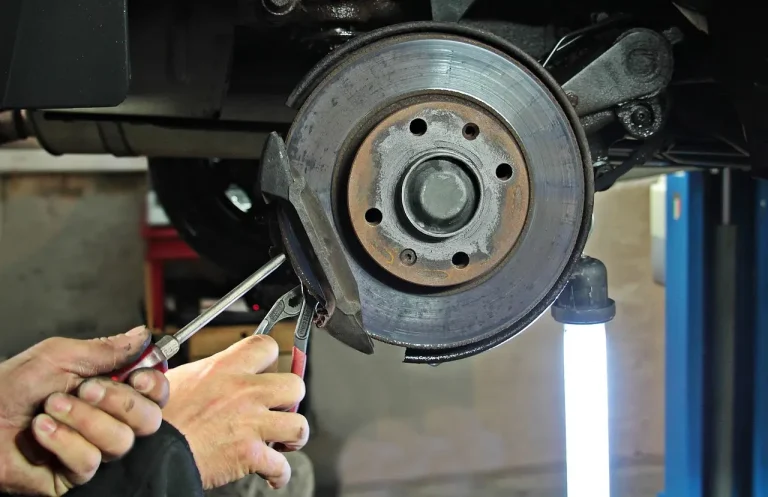
Scuffed wheels are usually cosmetic. Bent rims, missing lug nuts, or brake rotors with heavy grooves point to higher repair risk. If the car pulls during braking, has a pulsation in the pedal, or shows uneven pad wear, ask for a written estimate and use that in the negotiation. Brake issues are not the place to guess.
What do fluid checks tell you?
Fluid checks show maintenance quality, leak risk, and possible internal damage. Clean oil, correct fluid levels, and clear coolant are good signs. Milky, burnt, or dirty fluids point in the opposite direction. A car can look clean and still have neglected mechanicals, so this step matters before you decide whether the price is fair.
Check oil, coolant, brake fluid, and transmission fluid
Engine oil should be at the proper level and not thick, gritty, or milky. Coolant should look clear and appropriate for the system, not rusty or oily. Brake fluid should not be dark and contaminated. Transmission fluid, where accessible, should not smell burnt or look like sludge. One bad fluid may be a negotiate item. Multiple bad fluids raise the risk quickly.
Look for leaks and contamination
Look under the engine bay and beneath the car for fresh drips, wet spots, or crusted residue at hose ends and around seals. Red, brown, green, or black stains can point to transmission, oil, coolant, or brake fluid leaks. Small seepage can be a negotiate point. Active dripping, especially near brakes or the cooling system, can push the car into walk-away territory.
Check belts, hoses, battery, and warning lights
Cracked belts, swollen hoses, corroded battery terminals, or a weak battery add repair cost and reveal neglect. On hybrids and EVs, pay attention to charging system warnings, battery alerts, and any message tied to the high-voltage system. Those faults can be expensive to diagnose, so they deserve more caution than a basic bulb failure.
How can I tell if a used car has hidden problems?
Hidden problems often show up as mismatched clues. Fresh paint near old rust, a low odometer with worn seats, a clean engine bay but wet underbody, or seller answers that change from one minute to the next. The car does not need to fail every check to be risky. A pattern of small inconsistencies is the warning.
Suppose a sedan shows 62,000 miles, but the driver’s seat bolster is flattened, the steering wheel is shiny, and the pedals are worn smooth. That mismatch does not prove fraud, but it does justify more questions, a closer history check, and a stronger push for an independent inspection. If the seller cannot explain the wear, negotiate or walk.
What should I look for under the hood of a used car?
Look for leaks, contamination, worn belts and hoses, battery issues, and warning lights. Under the hood, you are checking for signs that the car was maintained, repaired, or ignored. Cleanliness alone means little. You want evidence that the engine has been cared for and that no critical system is hiding a problem.
Check the engine bay for leaks and repairs
Fresh sealant, non-factory clamps, missing clips, and oily residue can point to recent work or a recurring fault. That does not always mean walk away, but it should change the price conversation. A tidy bay with no receipts is less convincing than a slightly dirty one with documented service.
Watch for warning lights at startup
Every warning lamp should illuminate briefly during key-on and then go out if the system is normal. If the check engine light, airbag light, ABS light, or battery light stays on, treat that as a real fault until proven otherwise. Some faults are minor. Others are linked to safety or emissions systems and should be checked by a mechanic before money changes hands. (Caranddriver)
What should I check during a used car test drive?
Use the drive to confirm starting behavior, braking, steering, vibration, noise, acceleration, shifting, and warning lights under load. A car can look fine parked and still fail once it is warm and moving. If a problem appears only on the road, that is exactly why the test drive matters before you commit.
Listen and feel for drivability issues
Cold starts that crank too long, hesitate, or stumble deserve attention. During the drive, brake hard enough to feel whether the car stops straight, steer through gentle turns, and note clunks, shakes, or humming sounds. Transmission hesitation, rough shifting, or delayed engagement can become a major repair bill, so use those symptoms to negotiate or walk.
Check driver-assistance warnings on modern cars
Modern vehicles can store expensive faults in lane-keeping, radar, parking sensors, and camera systems without making the car undriveable. If the dash shows ADAS warnings, or if cruise control and lane alerts do not behave normally, get that scanned before buying. Hybrid and EV drivetrains add another layer: battery health indicators and charging warnings need extra scrutiny because diagnosis can cost more.
Use a simple test-drive route
- Start the car cold if possible.
- Drive at low speed to catch noises and brake feel.
- Reach highway speed for vibration and shifting checks.
- Test a tight turn and a parking maneuver.
- Recheck the dash for warning lights after the drive.
Where should I take a used car for inspection before buying it?
Take the car to an independent mechanic, not the seller’s preferred shop. Consumer Reports says to take any used car to a mechanic before finalizing the deal. Ask for a written pre-purchase inspection that commonly includes diagnostics, a test drive, and notes on body, underbody, brakes, fluids, and any stored trouble codes. If the seller refuses, that refusal changes the deal.
What a good written report should include
A useful report should list the systems checked, visible leaks, tire condition, brake life, rust severity, scan-tool findings, and whether the car is safe to buy, needs negotiation, or should be avoided. Automato advertises inspections with over 320 checkpoints, and it includes diagnostics, test drive, and paint measurement in its inspection. The exact number matters less than whether the report is specific enough to support a price decision.
Will a seller let me get a pre-purchase inspection?
Many will. Some will not. A seller who refuses, delays, limits the route, or insists on a vague “recent check” instead of an independent inspection increases your risk. In private-party deals, refusal often points to hidden problems. In dealer sales, a refusal or strict limitation should still make you pause hard and reassess the price or the car.
Used car inspection decision matrix
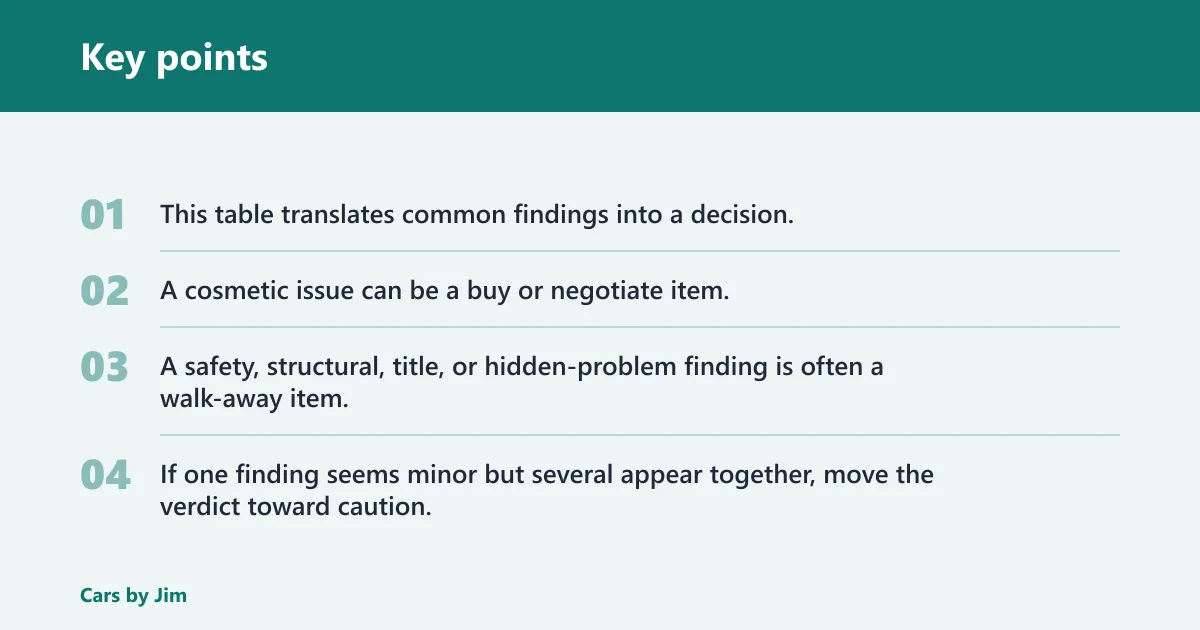
This table translates common findings into a decision. Use it as a fast filter. A cosmetic issue can be a buy or negotiate item. A safety, structural, title, or hidden-problem finding is often a walk-away item. If one finding seems minor but several appear together, move the verdict toward caution.
| Finding | Action | Repair-risk note | Urgency |
|---|---|---|---|
| Even panel gaps | Buy | Normal if other checks are clean. | Low |
| Small paint chip or scratch | Buy | Cosmetic only. | Low |
| Minor curb rash on one wheel | Negotiate | Usually cosmetic, but price should reflect it. | Low |
| Paint mismatch on one panel | Negotiate | Could be body repair or panel swap. | Medium |
| Overspray on trim or seals | Negotiate | Suggests repaint work that needs explanation. | Medium |
| Rust on wheel well lip | Negotiate | May be surface corrosion; inspect deeper. | Medium |
| Rust on rocker panel seam | Walk away | Can indicate deeper corrosion and structural risk. | High |
| Rust on suspension mount or fastener cluster | Walk away | Higher chance of hidden structural damage. | High |
| Tread low but even | Negotiate | Replacement cost is predictable. | Medium |
| Uneven tire wear | Negotiate | May need alignment or suspension work. | Medium |
| Sidewall crack | Walk away | Safety risk, especially at speed. | High |
| Tire bulge | Walk away | Potential failure risk. | High |
| Mismatched tire brand or size | Negotiate | Could be maintenance drift or prior damage. | Low |
| Tires over 6 years old | Negotiate | Age alone can justify replacement. | Medium |
| Clean oil, proper level | Buy | Good sign, not a guarantee. | Low |
| Dirty but normal oil | Negotiate | Suggests deferred maintenance. | Low |
| Milky oil or coolant contamination | Walk away | Possible internal engine damage. | High |
| Active fluid leak | Negotiate | Cost depends on source and severity. | Medium |
| Burnt transmission fluid | Walk away | May signal major drivetrain wear. | High |
| Warning light stays on | Walk away | Needs scan and repair confirmation. | High |
| Power window or lock failure | Negotiate | Usually electrical and manageable. | Low |
| Infotainment or Bluetooth failure | Negotiate | Convenience issue unless tied to other faults. | Low |
| Brake pull or pulsation | Negotiate | May be pads, rotors, or alignment. | Medium |
| Clunk, shake, or vibration on drive | Walk away | Could mean suspension, axle, or bearing damage. | High |
| Seller refuses independent inspection | Walk away | Risk stays unknown. | High |
Frequently asked questions
How much does a pre-purchase used car inspection cost?
Costs vary by market, vehicle type, and whether diagnostics are included. A basic inspection is usually less than the cost of a major repair, which is why it pays for itself when it finds a hidden fault. Ask what the inspection covers in writing before you book it, especially for hybrids and EVs.
Does a certified used car still need an independent inspection?
Yes. Certified does not mean perfect. It often means the dealer performed a specific process, but that is not the same as an independent pre-purchase check focused on your risk. A separate mechanic can still find worn tires, body repair clues, leaks, or scan-code issues that certification did not solve.