What Are Title Problems on a Car?
A title problem is any ownership, lien, branding, or fraud issue that can stop a DMV transfer. If the seller cannot provide a clean, transferable title in their name, do not pay. Bad paperwork can block registration, limit repairs, or expose you to a stolen or rebuilt vehicle. This guide covers the main title problems, how to separate a blocked transfer from a branded title, and what to check before money changes hands.
What a car title
A car title is the state-issued legal ownership document. It is separate from registration, which only makes the car road-legal. The title must match the vehicle’s VIN and the owner details before the DMV or other titling authority can move ownership to you.
Title vs. registration
Registration and title are different documents with different jobs. A car can be registered and still have a title problem, and a title may still exist even if the car is not currently registered. That matters because registration does not prove ownership.
The VIN is a unique 17-character code for every car, truck, and motorcycle. You should make sure the VIN on the title and the vehicle match. If the numbers do not line up, stop and verify before you spend money.
What a clean transfer normally requires
A normal transfer usually needs a title in the seller’s name, an exact VIN match, a completed assignment section, and any required lien release. Some states also require an odometer reading on the issue date of a new title when the owner changes. Title procedures vary by state, and car titles vary in color depending on the state.
Do not use a bill of sale as ownership proof. It can support the transfer, but it does not replace a proper title.
What are title problems?
Title problems are issues that interrupt a legal transfer, or issues that change the car’s legal history in a way buyers need to price in. Some are clerical. Some are legal. Some may point to fraud. The seller’s explanation may sound reasonable and still not solve the transfer problem.
Transfer blockers vs. value-only problems
A missing title or an active lien can block transfer until the paperwork is corrected. A branded title may still be transferable, but it can reduce value and complicate insurance or financing. Those are different risks, and buyers should react differently to each one.
Think of title triage as four actions: stop, verify, renegotiate, or walk away. If the title cannot be transferred now, stop. If the issue is clerical and fixable, verify the fix before paying. If the car is branded but transferable, renegotiate. If the documents do not add up, walk away.
Clerical, legal, and fraud-related issues
Clerical problems include missing signatures, an incomplete owner chain, or a wrong address on older paperwork. Legal problems include a lien that still appears on the title or a court issue that prevents a normal transfer. Fraud-related problems include a suspected fake or altered title, VIN tampering, or inconsistent ownership records.
Say the seller hands you a title with a clean front page, but the assignment section is blank and the name on the title does not match the name on the ID. That is not a small detail. It is a transfer problem until the chain of ownership is corrected.
Title problem triage table
| Symptom | Likely cause | Buyer risk | Next step |
|---|---|---|---|
| Missing title | The seller cannot produce the state title, or the title was lost and not replaced | You may not be able to register the car or prove ownership | Stop payment. Ask for a replacement title from the DMV or titling authority, or a valid legal path such as a court order title or surety bond title |
| Lien still on title | The vehicle was financed and the lienholder has not released interest | The lender may still have a claim, which can block transfer | Request a lien release before signing anything. Confirm the lienholder has cleared the record with the DMV if needed |
| Branded title | The state attached a permanent brand for accident, flood, salvage, taxi use, fake mileage, or another disclosure | The car may still transfer, but value, insurance, and resale can all take a hit | Verify the exact brand and price the car as a branded vehicle, not as clean title inventory |
| Salvage or rebuilt title | The car had major damage and was later retitled under a salvage or rebuilt status | Higher repair uncertainty, possible lender or insurer limits, and lower resale value | Get the brand history, repair records, and inspection documents before you decide |
| Suspected fake or altered title | Fonts look wrong, fields appear altered, or the document chain does not make sense | Potential fraud, stolen vehicle risk, or a title that cannot be accepted | Stop the deal. Compare the title to DMV records and inspect for tampering signs such as scratches or misaligned letters |
| Mismatched VIN or owner name | The title, the vehicle, and the seller’s identity do not line up | You may be looking at a stolen car, a clerical error, or an invalid transfer | Do not pay until the VIN and owner chain are corrected by the proper authority |
What does a branded title mean?
A branded title has a permanent status mark from the state. It can result from accident damage, flood exposure, salvage history, taxi use, fake mileage, or other disclosures. There are close to 100 different title brands, and they vary by state. A brand does not always make a car illegal to sell.
How brands vary by state
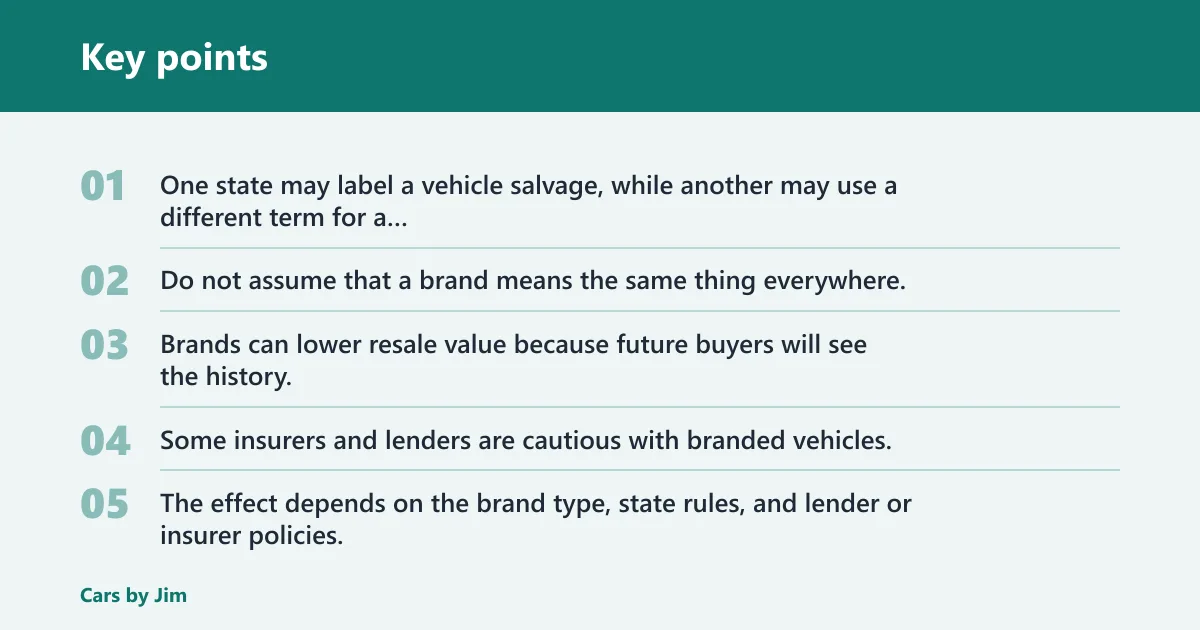
One state may label a vehicle salvage, while another may use a different term for a similar history. That makes the exact wording matter. Do not assume that a brand means the same thing everywhere, and do not assume a clean-looking title has no hidden history.
How branding affects price, insurance, and resale
Brands can lower resale value because future buyers will see the history. Some insurers and lenders are cautious with branded vehicles, especially if the brand points to flood damage, major collision damage, or odometer fraud. The effect depends on the brand type, state rules, and lender or insurer policies.
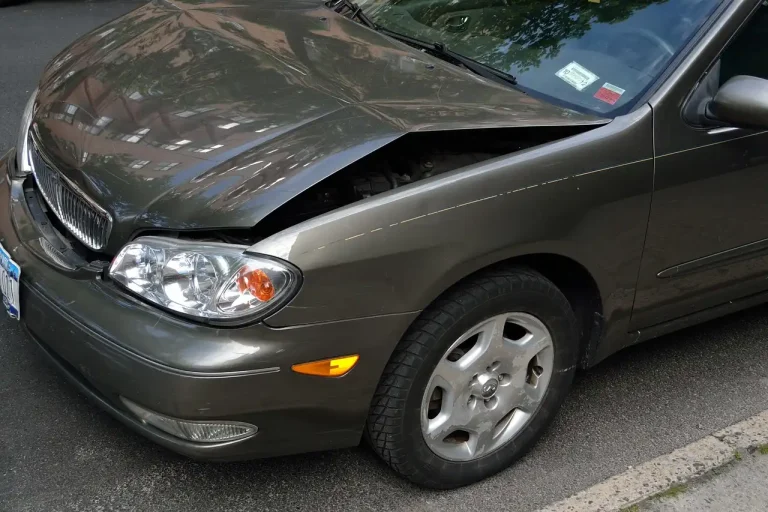
Suppose a sedan has a rebuilt brand after front-end crash damage. It may still run well and still transfer. But you should expect harder financing, more questions from an insurer, and a resale price below a clean-title version with the same mileage.
Can you buy a car with a title problem?
Sometimes, yes. But the right answer depends on the problem. If the title cannot be transferred now, do not buy the car. If the issue is only a brand and the paperwork is complete, you may still buy it after you verify the risk and price it accordingly.
When to stop the deal
Stop the deal if the seller cannot provide the title, if the VIN does not match, if the lien is unresolved, or if the title looks altered. Those are transfer-risk problems first, and price problems second. A cheap car is not cheap if you cannot own or insure it.
When verification may be enough
Verification may be enough when the title is branded but valid, the seller’s name matches the title, and the DMV record confirms the status. In that case, you are not fixing ownership. You are deciding whether the brand is worth the price and the downstream friction.
When to renegotiate or walk away
Renegotiate when the car is transferable but the brand or history lowers market value. Walk away when the title story changes from one document to the next, or when the seller can only offer verbal promises. Informal promises do not cure title defects.
How title problems get fixed
Most fixes run through the DMV or titling authority. Some require the seller to clear a lien or sign corrected paperwork. Others need a court order title or a surety bond title. A title problem must be addressed before the government issues a new one.
DMV or titling authority corrections
The DMV may correct clerical mistakes, issue a replacement title, or process an updated ownership record if the paperwork is complete. It usually requires proper documentation, and it is not always quick or automatic. That is why buyers should verify the timeline before paying.
Lien release and prior-owner signatures
If a lienholder is listed, the release may need to be recorded before transfer. If the owner name or assignment chain is incomplete, a prior owner may need to sign. The lienholder section is filled if the vehicle was bought using a loan, so that section matters more than many buyers expect.
Court order title
A court order title may be used when paperwork cannot be resolved normally. It requires a petition or judgment process and is used to establish ownership. This path can be necessary after estate issues, abandoned-vehicle disputes, or other situations where normal title transfer fails.
Surety bond title
A surety bond title is a bond-backed path to obtain a title. It usually involves forms, affidavits, and a state submission. It can solve some missing-title cases, but it costs money and still depends on the state’s rules and proof requirements.
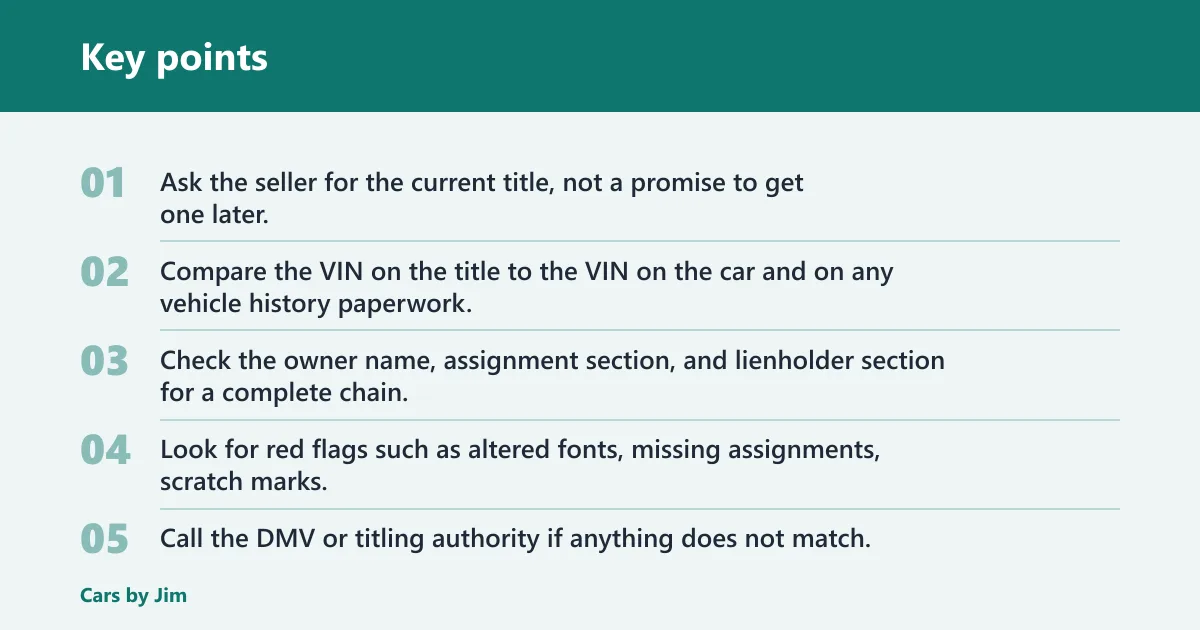
- Ask the seller for the current title, not a promise to get one later.
- Compare the VIN on the title to the VIN on the car and on any vehicle history paperwork.
- Check the owner name, assignment section, and lienholder section for a complete chain.
- Look for red flags such as altered fonts, missing assignments, scratch marks, or misaligned letters.
- Call the DMV or titling authority if anything does not match.
- Do not pay until the transfer path is clear.
What should you ask the seller?
Ask for the title, any lien release, repair records if the car is branded, and every signed transfer form required in that state. If the seller cannot produce these documents, or the story changes partway through the conversation, treat that as a warning, not a small paperwork issue.
Documents to request
Request the title itself, the lien release if there was a loan, prior registration if it helps confirm the chain, and any salvage or rebuilt inspection paperwork. If the seller claims a court order title or surety bond title path was used, ask for the court papers or bond documents that support it.
Red flags in the paperwork chain
Watch for a title in a different name from the seller, blank or overwritten assignments, inconsistent owner history, and VIN differences between documents. A mismatched VIN/owner name pair is not a small clerical hiccup. It can indicate fraud, a stolen car, or a title that will not transfer.
When to contact the DMV directly
Contact the DMV when the seller cannot explain the brand, when the title looks altered, when the lien release is missing, or when the chain of ownership is incomplete. The titling authority can confirm what the state record shows and what proof is required next.
A common buyer mistake is to assume a title is fine because the seller has a signed bill of sale and no obvious warning signs. That is risky. A seller can hand over a document that looks right but still fail at transfer because the ownership chain, brand status, or lien release is incomplete.
Frequently asked questions
What are title issues for a car?
Title issues are problems that keep a vehicle from being transferred cleanly or that change the car’s legal history. They include missing titles, active liens, altered or fake paperwork, mismatched VINs, and branded titles. Some block ownership transfer. Others mainly affect value, insurance, or resale.
What does it mean when a car has a title issue?
It means the ownership record is not clean enough for a normal DMV transfer, or the title history carries a brand that buyers need to evaluate. The seller may still be able to fix it, but you should not assume that verbal explanations are enough to make the deal safe.
Can I buy a car if the title has a problem?
Only if you understand the exact problem and the transfer path is valid. If the title is missing, altered, or unsupported by a lien release or legal order, stop. If it is a branded title with complete paperwork, you can sometimes buy it after pricing in the risk.
How do I know if a car title is fake or altered?
Check for scratches, misaligned letters, inconsistent fonts, overwritten entries, missing assignment blocks, and VIN mismatches. The VIN on the title should match the car and the other documents. If any detail looks forced or inconsistent, contact the DMV before you pay.
What should I do if a seller cannot provide the title?
Do not hand over money and do not rely on a bill of sale alone. Ask whether the seller can obtain a replacement title, show a valid lien release, or use a lawful path such as a court order title or surety bond title. Until then, treat the car as high risk.
Can a car title problem be fixed by the DMV?
Sometimes. The DMV or titling authority can correct certain clerical errors, replace a lost title, or process a transfer if the right documents are supplied. It cannot automatically erase a lien, a fraud issue, or a major ownership dispute. Those problems may require the seller, a prior owner, or a court.
Who has to resolve a title problem on a used car?
Usually the seller, the prior owner, the lienholder, or the person seeking title must resolve it with the DMV or through a court process. The buyer should not assume responsibility for fixing someone else’s paperwork unless the deal is structured around that risk and price.