Flood Damage Car Problems: What Shows Up First?
The first flood-damage signs are usually damp carpet, a sour musty odor, mud packed into seams and crevices, and visible water lines; electrical faults and corrosion often show up later. Miss those early clues, and you can end up buying a car with hidden safety faults and repair bills that keep climbing. This guide shows the usual symptom order and what to inspect first.
What shows up first after floodwater?
The earliest signs are usually the ones you can see or smell right away: wet carpet, muddy residue, stained trim, and a sour musty odor. If water reached the cabin floor, those clues often appear before warning lights, hard starting, or other electrical faults.
Immediate clues in the first hour
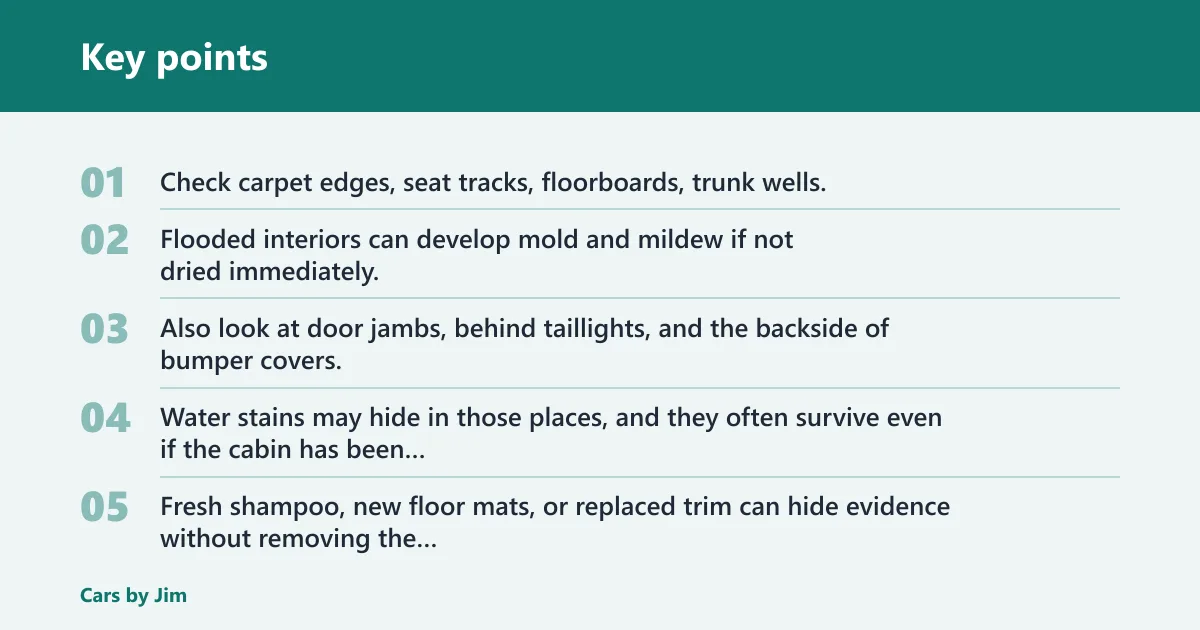
Start with the interior. Check carpet edges, seat tracks, floorboards, trunk wells, and the underside of mats for water lines or silt. Flooded interiors can develop mold and mildew if not dried immediately, and moisture can leave a musty smell that points to contamination in hidden places.
Also look at door jambs, behind taillights, and the backside of bumper covers. Water stains may hide in those places, and they often survive even if the cabin has been cleaned. Fresh shampoo, new floor mats, or replaced trim can hide evidence without removing the original problem.
How water level changes the symptom order
Water that only reached the floorboards usually leaves interior clues first. Water that reached the lower dash or fuse box shifts the order toward electrical faults. If the car was deep enough to reach the engine air intake, engine symptoms can appear early too, because water can reach the cylinders and prevent the engine from turning.
Transmission behavior also changes with water level. The transmission is one of the lowest parts of the car and can touch water first, so a low flood can contaminate the fluid even when the engine still starts normally. That is why a car can seem fine at first and still have flood damage.
Signs that mean stop driving now
Stop driving if the engine cranks but will not start, runs rough after starting, or makes a grinding sound while turning over. Stop as well if warning lights stack up at once, power windows die, the car loses key electrical functions, or you see smoke, sparks, or a burning smell.
Floodwater can cause short circuits in every fuse box in the car, and damaged wiring can fail without much warning. If the brakes, steering, or airbags start acting strangely, do not keep driving the car until it is checked.
Flood damage symptom timeline
This timeline shows the usual order of flood-damage clues. The exact sequence depends on water depth, how long the car sat wet, and whether the engine, transmission, or fuse box were submerged.
| Time window | Likely first-showing symptom | Likely affected system | What to check | Stop-driving warning |
|---|---|---|---|---|
| Immediately | Damp carpet, musty odor, mud line, standing water | Interior upholstery, floorboards, trunk wells | Lift mats, check seat tracks, press carpet edges, inspect seams and crevices | Stop if water reached electrical parts or brake components |
| Within 24 hours | Warning lights, dead accessories, power window failure | Electrical system, fuse box, switches, wiring | Test windows, locks, lights, gauge cluster, and scan for stored faults | Stop if lights flicker, systems reset, or the car stalls |
| Within days | Cranking but not starting, rough running, slipping shifts | Engine, transmission, fluid systems | Check air intake, dipstick color, transmission behavior, and fluid levels | Stop if the engine misfires, the transmission slips, or gears grind |
| Weeks later | Intermittent faults, corrosion, mold, hidden safety-system errors | Wiring, safety systems, undercarriage, body panels | Look for rust, green corrosion, lingering odor, and repeat warning lights | Stop if airbags, ABS, steering, or braking faults appear |
Which electrical problems are usually the earliest flood signs?
Broken electronics are among the first red flags of flood damage. The earliest faults are often dead accessories, flickering warning lamps, or a power window that works one day and fails the next. Those problems point to moisture in switches, connectors, fuse boxes, or wiring.
Fuse box corrosion and short circuits
Open the fuse box only if it is safe and dry enough to do so. Look for corrosion on terminals, green or white residue, and water marks in the housing. Floodwater can cause short circuits in every fuse box in the car, so a clean cover alone is not proof that the system is fine.
Intermittent electrical faults are especially important. A car may start normally, then lose a radio, power seat, or interior light later. Water in connectors can create faults that come and go until corrosion spreads.
Warning lights, dead accessories, and power window faults
Multiple warning lights at once often mean more than a single bad sensor. Check whether the windows, door locks, mirrors, and dash controls fail together. If several systems act up at the same time, flood exposure becomes more likely than an isolated component failure.
Hidden wiring damage can start later, after moisture reaches connector splices and terminals. Water can damage the wiring enough that sections may need replacement, especially if the car sat wet for hours or days.
Engine, transmission, and fluid checks
Flood damage can reach the engine and transmission even when the cabin looks only mildly affected. Water mixing with oil or transmission fluid changes how those systems work, and the damage may not appear until the car is started, shifted, or driven under load.
Hydrolock, no-start, and rough running
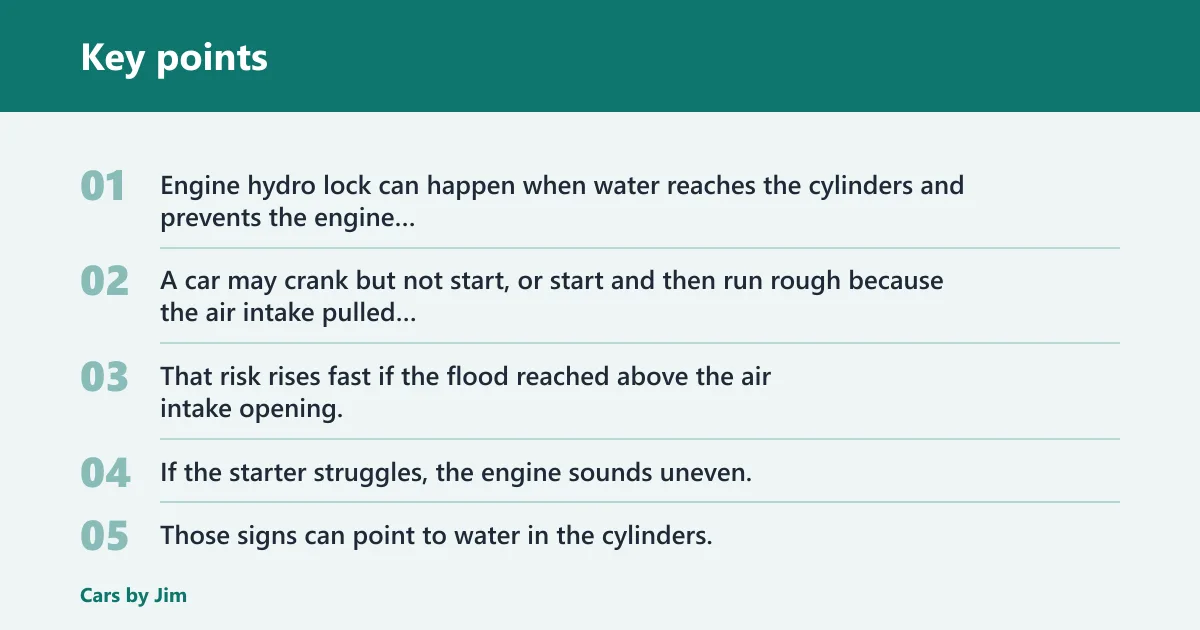
Engine hydro lock can happen when water reaches the cylinders and prevents the engine from turning. A car may crank but not start, or start and then run rough because the air intake pulled in water. That risk rises fast if the flood reached above the air intake opening.
If the starter struggles, the engine sounds uneven, or one attempt at cranking produces a sudden hard stop, shut it down. Those signs can point to water in the cylinders, and continued cranking can cause more damage.
Milky oil and contaminated transmission fluid
Pull the engine oil dipstick and inspect the fluid for a milky appearance or foam. Floodwater contamination can mix with oil, brake fluid, or power steering fluid. Any cloudy or separated fluid deserves a closer look before the car is driven farther.
Transmission fluid should also be checked. Water in transmission fluid can cause gears to slip, grind, or fail completely, and the transmission can be damaged even if the car still moves. Because the transmission sits low, it may show damage early after shallow flooding.
Grinding, slipping, and sealed housing water intrusion
Some buyers think a sealed transmission housing protects the unit. It does not stop water intrusion when seals, vents, or connectors are compromised. If the car hesitates on shifts, shudders in gear, or grinds during engagement, treat that as a serious warning.
Suppose a sedan sat in water that reached the bottom of the doors. The engine still starts, but second gear slips and the fluid looks cloudy. That pattern suggests the drivetrain may have taken water before the exterior looked badly damaged.
What parts of the interior hold floodwater signs the longest?
Carpets, seat tracks, floorboards, trunk wells, and the area under the dashboard usually hold signs the longest. Those spaces trap water and dirt after the visible surface dries, so they often keep stains, odor, or corrosion after the seats and trim have been wiped down.
Carpets, seats, and floorboards
Press the carpet at the front footwells and rear seating area. If it feels damp, heavy, or uneven, water may still be trapped below. Check the seat rails and the anchor points around them for rust or silt, since those spots often stay hidden during a quick cleanup.
Seats can be misleading if upholstery has been replaced or cleaned aggressively. A fresh seat cover or new carpet does not erase the signs under the padding, and that is where mold and mildew often begin.
Mold, stains, and musty odor
Mold and mildew can appear after only a short delay in drying. The odor may be stronger after the car sits closed up in heat, then fade when windows are opened. That makes smell useful, but not enough on its own.
Use odor with other clues. A musty smell plus water lines, stained insulation, or corroded seat hardware is much more telling than smell alone. Cleaning products can mask the scent while leaving the damage behind.
How replaced trim can hide evidence
New trim parts can hide older water marks in the same way fresh paint can hide body work. Check under the edges of panels, behind kick panels, and beneath trunk trim for mud, rust, or mismatched fasteners. Hidden stains are often more reliable than visible upholstery.
Can flood damage hide in safety systems?
Yes. Airbags, seatbelt sensors, and ABS parts can be damaged even when the car still drives. These faults may appear late because moisture, corrosion, or connector damage can sit hidden until the system runs a self-check or the car hits a road event that demands the system to activate.
Airbags and seatbelt sensor faults
Water exposure can affect airbag modules, crash sensors, and seatbelt sensors. If the airbag light stays on or comes on after a period of normal driving, do not ignore it. That can mean the car has hidden faults in a system meant to protect you during a crash.
Seatbelt pretensioners and related wiring are especially sensitive to moisture. A flood-damaged car may appear normal in the driveway and still have an unreliable restraint system underneath.
ABS problems and warning lights
ABS faults can show up as warning lights, odd brake feel, or stored fault codes. Because ABS parts sit low in the vehicle, they can be affected by splash water and mud. The system may work once, then fail later when corrosion spreads through connectors or sensors.
Why these faults may appear late
Electrical failures may appear weeks or months later after flood exposure. That delay is why a clean dashboard today does not guarantee a safe car tomorrow. Hidden moisture can keep working through wiring, modules, and connectors long after the floodwater is gone.
What to check before you buy or drive?
Check the undercarriage, title history, and fluid condition before you commit to the car. If the flood reached below the body, rust and corrosion may already be starting in hard-to-reach areas, and the paperwork may tell a different story from the visible condition.
Undercarriage rust and hidden water lines
Look under the car for fresh rust, mud in seams, and wet or discolored areas on body panels and brackets. Hard-to-reach areas can hold hidden water lines long after the exterior looks dry, especially around the underbody, wheel wells, and lower rocker areas.
Rust is a common flood consequence, especially after prolonged moisture exposure. Pay attention to fasteners, suspension parts, and backing plates, since those places often show early corrosion before the body panels do.
Vehicle history reports, title records, and auction data
A vehicle history report can help, but it will not always catch everything. Check for salvage title, flood branding, auction records, insurance claims, and DMV records. A missing entry is not proof of a clean history; it may only mean the damage was never reported in a way that appears on the report.
Picture a compact SUV with a clean-looking cabin, but the title record shows a salvage history and the auction photos list water in the footwells. That paper trail matters even if the interior has been cleaned. It also helps explain why small electrical faults may already be present.
When a mechanic inspection is the right next step
If the car shows more than one flood clue, schedule a pre-purchase inspection before you buy or keep driving it. The check should include the fuse box, air intake, fluids, underbody, and safety-system scan, because flood damage can hide in each of those places.
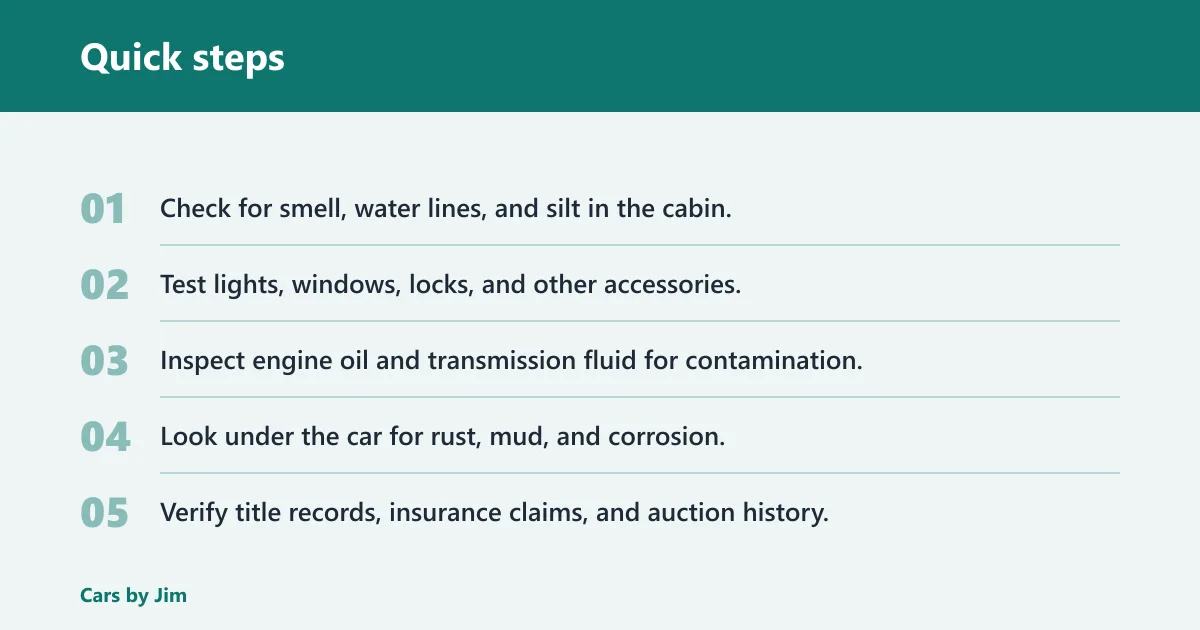
- Check for smell, water lines, and silt in the cabin.
- Test lights, windows, locks, and other accessories.
- Inspect engine oil and transmission fluid for contamination.
- Look under the car for rust, mud, and corrosion.
- Verify title records, insurance claims, and auction history.
Frequently asked questions
What shows up first on a flood-damaged car?
The first signs are usually damp carpet, a musty odor, mud or silt in seams, and visible water lines. Those clues often appear before the electrical system starts acting up. If the flood reached the floorboards or higher, the cabin usually gives the earliest warning.
Can a car seem fine at first and still have flood damage?
Yes. A flooded car can start, drive, and pass a quick walk-around while still hiding damage. Electrical failures may appear weeks or months later after flood exposure, and corrosion can keep spreading inside connectors, modules, and wiring long after the water is gone.
What fluids or smells tell you flood damage started already?
Milky engine oil, cloudy transmission fluid, or fluid that looks separated can signal water mixing with the system. A musty smell is another common clue, especially when it comes from the carpet, trunk, or under the dashboard. Those signs usually mean hidden contamination is already present.
How long after flooding do problems usually appear?
Some clues appear immediately, such as wet carpet and water lines. Electrical problems may show within 24 hours, while corrosion, mold, and intermittent faults can take days or weeks. The later the symptom appears, the easier it is for a buyer to miss the flood link.
Will a vehicle history report always catch flood damage?
No. A report may show salvage title, flood branding, auction records, insurance claims, or DMV records, but it will not catch every case. Some cars are repaired or retitled before the damage is obvious in the paperwork, so the report should support, not replace, a physical inspection.