How Is Private Party Sale Price Different From Trade-in Value?
Private-party sale price is usually higher than trade-in value, but that is not your take-home amount unless you subtract selling costs. Compare the net, not the quote. Get this wrong and you can lose money to repair bills, listing fees, missed tax savings, or weeks of extra work. This guide explains how each number is set and how to compare them on equal terms.
Trade-in vs private sale
Trade-in value is the dealer’s appraisal amount for your car. Private-party sale price is what an individual buyer may pay you. They are measured differently because the dealer is buying for resale risk at wholesale levels, while a private buyer is paying a retail market price.
Why the quotes are not the same
A dealer has to account for reconditioning, resale margin, and the chance that the car sits on the lot or sells below plan. A private seller usually sees the higher headline number first, then pays the costs of advertising, detailing, title transfer, and negotiation.
That is why the right comparison is net proceeds, not sticker price. A quote is only the starting point.
Is trade-in value lower than private party value?
Usually, yes. Trade-in value is commonly lower because the dealer is pricing for wholesale risk, not retail hope, and must leave room for reconditioning and profit. Private-party value is usually higher on paper, but it can shrink after selling costs, time, and tax effects are counted.
Trade-in value also changes with mileage, age, body condition, tires, trim level, accident history, and service records. A clean vehicle history report can help both sides, while a branded-title or salvage vehicle often loses trust and pricing power fast.
How reconditioning affects the offer
Dealers often deduct for tires, brakes, scratches, warning lights, odors, worn upholstery, and other items that make the car harder to retail. Those costs are part of the appraisal math. The dealer is not guessing at your future sale price; it is planning for what it must spend before the car is ready to sell.
Why private party price looks higher
Private-party sale price looks higher because it is closer to the retail market price an individual buyer might pay. That number still is not your net proceeds. You may pay for ads, detailing, inspection concessions, title transfer, and repair work before the buyer hands over money.
Suppose your sedan is clean and runs well, but the tires are near the wear bars and the cabin needs a full detail. A private buyer may still pay strong money, yet those prep costs come out of your pocket before the sale is done.
Costs that are unique to private sale
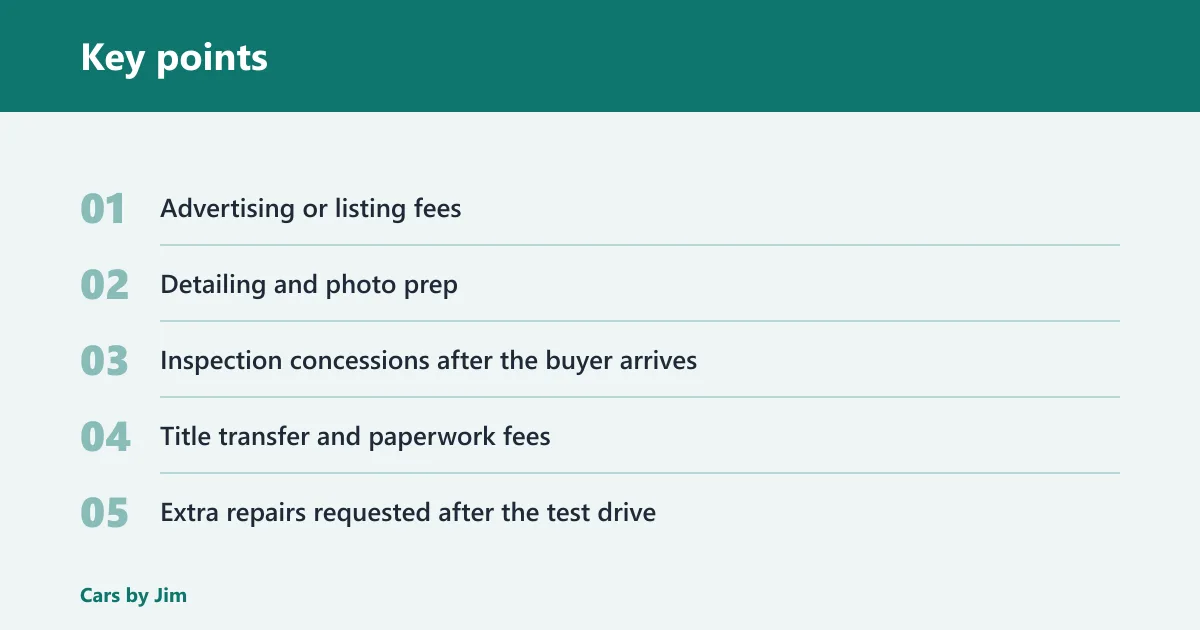
- Advertising or listing fees
- Detailing and photo prep
- Inspection concessions after the buyer arrives
- Title transfer and paperwork fees
- Extra repairs requested after the test drive
- Time spent answering messages, meeting buyers, and handling no-shows
Which number is your net?
Your net number is the amount left after all direct costs, tax effects, time, and risk. That means sale price minus ads, detailing, repairs, title fees, and concessions. If you trade in the car, the dealer’s lower offer may be partly offset by sales tax savings on the replacement vehicle in some states.
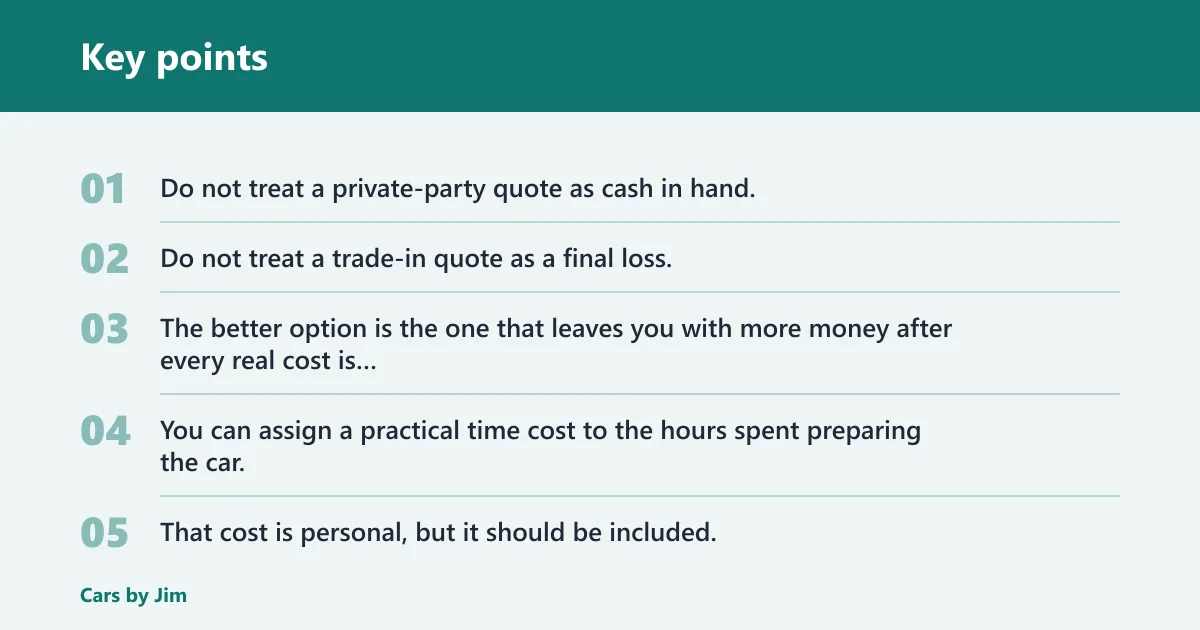
Do not treat a private-party quote as cash in hand. Do not treat a trade-in quote as a final loss. The better option is the one that leaves you with more money after every real cost is counted.
How to put a dollar value on time and risk
You can assign a practical time cost to the hours spent preparing the car, answering buyers, showing the vehicle, and closing the sale. That cost is personal, but it should be included. Risk matters too: a private sale can fall through after inspections, or bring late price changes that reduce the final amount.
A common first-timer mistake is to compare a dealer offer against a private ad price and stop there. The ad price is not the cash you keep. It is only the opening number in a longer process.
Trade-in sale worksheet
This comparison shows how the math can work with concrete numbers. It uses the figures from the example: a $12,000 private-sale value and a $10,500 trade-in offer. It also includes $200 for detailing and ads on the private sale side, plus a sales tax credit line for the trade-in where state law allows it.
| Line item | Private sale | Trade-in |
|---|---|---|
| Offer price | $12,000 | $10,500 |
| Estimated detailing | -$120 | $0 |
| Ads | -$80 | $0 |
| Inspection concessions | -$300 | $0 |
| Title/transfer fees | -$75 | $0 |
| Tax savings from trade-in | $0 | +$900 |
| Time cost estimate | -$400 | -$50 |
| Final net amount | $11,025 | $11,350 |
In this example, the private sale starts higher but ends up lower once the costs are included. The trade-in wins by $325 because the lower offer is partly offset by tax savings and lower hassle. If your state does not allow a trade-in tax credit, that result can change.
How dealers decide trade-in value
Dealers price trade-ins from wholesale risk, not retail hope. They compare your car against auction prices, current inventory, and what similar vehicles are likely to bring after reconditioning. Local demand and season also matter, so the same car can receive different offers in different markets or months.
What dealers check first
- Mileage and age
- Body condition and tires
- Accident history
- Service records
- Trim level and options
- Current inventory and auction prices
- Regional demand and season
A fuel-efficient sedan may hold up better in urban areas. A truck or AWD SUV may have stronger winter demand. That does not guarantee a high offer, but it can change the number a dealer is willing to put on the table.
Vehicle history matters
A clean vehicle history report helps buyer trust and can support a stronger appraisal. Accident damage, salvage branding, flood history, or a title brand can lower confidence for both a dealer and a private buyer. The same repair may look minor on the body and major in the pricing file.
What if your car needs repairs?
If your car needs repairs before you sell it privately, the decision depends on the repair cost, the likely price bump, and whether the vehicle will still attract enough buyers after the work. Small cosmetic fixes can help. Big mechanical work often does not pay back dollar for dollar.
Trading in can be smarter when repairs are expensive, the car is high mileage, or the title has a brand that makes private buyers cautious. A dealer may still buy it as an as-is trade, even if the offer reflects the needed work and resale risk.
Picture an older crossover with 165,000 miles, faded paint, and a check engine light. A private sale may still be possible, but each issue narrows the buyer pool and adds negotiation pressure. In that case, a trade-in can make more sense even at a lower headline number.
When repairs may help a private sale
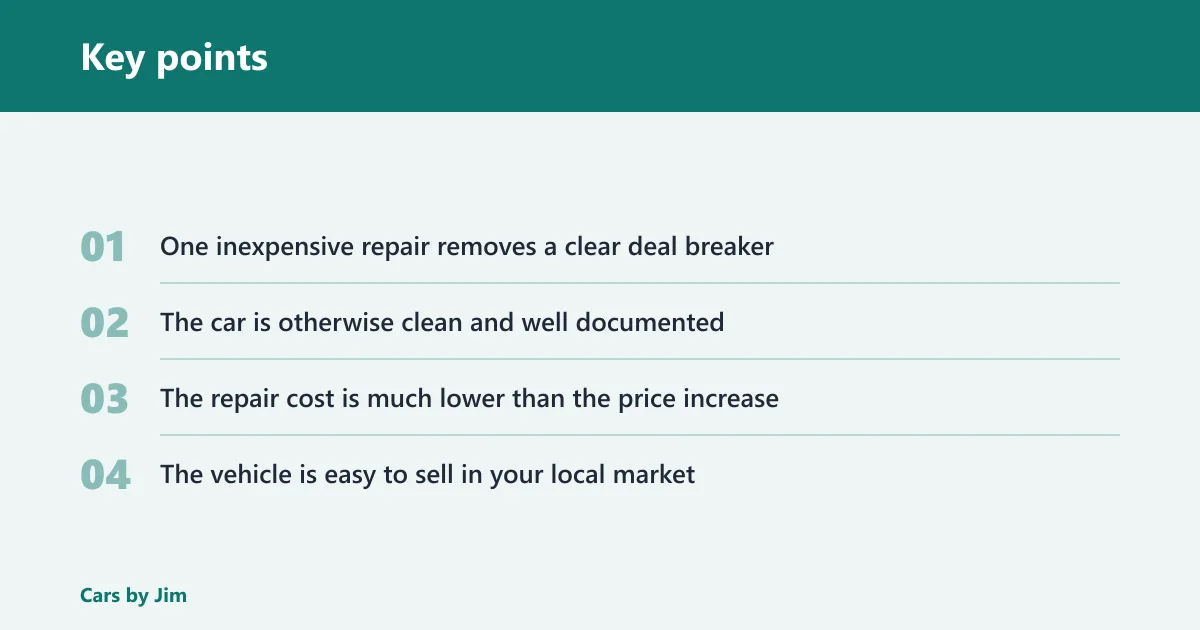
- One inexpensive repair removes a clear deal breaker
- The car is otherwise clean and well documented
- The repair cost is much lower than the price increase
- The vehicle is easy to sell in your local market
Use caution with older, high-mileage vehicles. Spending heavily on repairs before a private sale can leave you with a thinner net result than a dealer offer, especially if the car still needs tires, brakes, or other visible work.
Frequently asked questions
Why is my trade-in offer so much less than my private sale price?
Your trade-in offer is lower because the dealer is buying at wholesale risk and leaving room for reconditioning and resale margin. Your private-sale price is closer to retail, but it still is not take-home cash. Once you subtract ads, detailing, title work, and time, the gap may shrink fast.
Does trading in a car save me sales tax?
In some states, yes. A trade-in tax credit can reduce the tax on the replacement vehicle, which can narrow or even close the gap with a private sale. The exact treatment depends on state rules, so the tax line in your worksheet should be checked before you compare final net proceeds.
What costs should I subtract from a private party sale price?
Subtract advertising costs, detailing, title transfer fees, any repairs needed to attract buyers, inspection concessions, and the value of your time. If the buyer negotiates after an inspection, that reduction also belongs in the math. Those costs are part of the sale, even if they are paid before closing.
How do dealers decide trade-in value?
Dealers look at mileage, age, condition, tires, trim level, accident history, and service records, then compare your car against auction prices and local inventory. Regional demand and season matter too. A truck or AWD SUV may do better in winter markets, while a fuel-efficient sedan may draw steadier urban interest.
Which is better: trade-in or private sale?
The better choice is the one with the higher net amount after all costs, tax effects, time, and risk are counted. Private sale often wins on paper. Trade-in can win in practice when sales tax savings, convenience, and lower risk outweigh the higher headline price from a private buyer.
How much time does a private sale really take?
A private sale can take days or weeks, depending on demand, price, and condition. You may need to prep the car, answer messages, meet buyers, handle no-shows, and redo paperwork. That time has value, and it should be counted as a real cost instead of treated as free.
What if my car needs repairs before I sell it privately?
Fix only the items that are likely to raise the price more than they cost to repair. For older, high-mileage, or branded-title cars, large repairs often do not return their full cost. In those cases, a trade-in may be the cleaner exit, even with a lower offer.