What Is Trade-in Value on a Car?
Trade-in value is the amount a dealer is willing to credit you for your car, based on what it expects to resell it for after reconditioning, auction costs, and profit. If you read that number wrong, you can leave thousands on the table or chase the wrong deal structure. This article shows how dealers calculate trade-in value, which factors raise or lower it, and how to judge whether an offer is fair before you visit.
What trade-in value means
Trade-in value is the amount a dealer deducts from the price of your next car when you exchange your current vehicle as part of the deal. It is a dealer trade-in offer, not a promise of what a private buyer will pay, and it is often lower than private-party value because the dealer has to inspect, recondition, advertise, and resell the car.
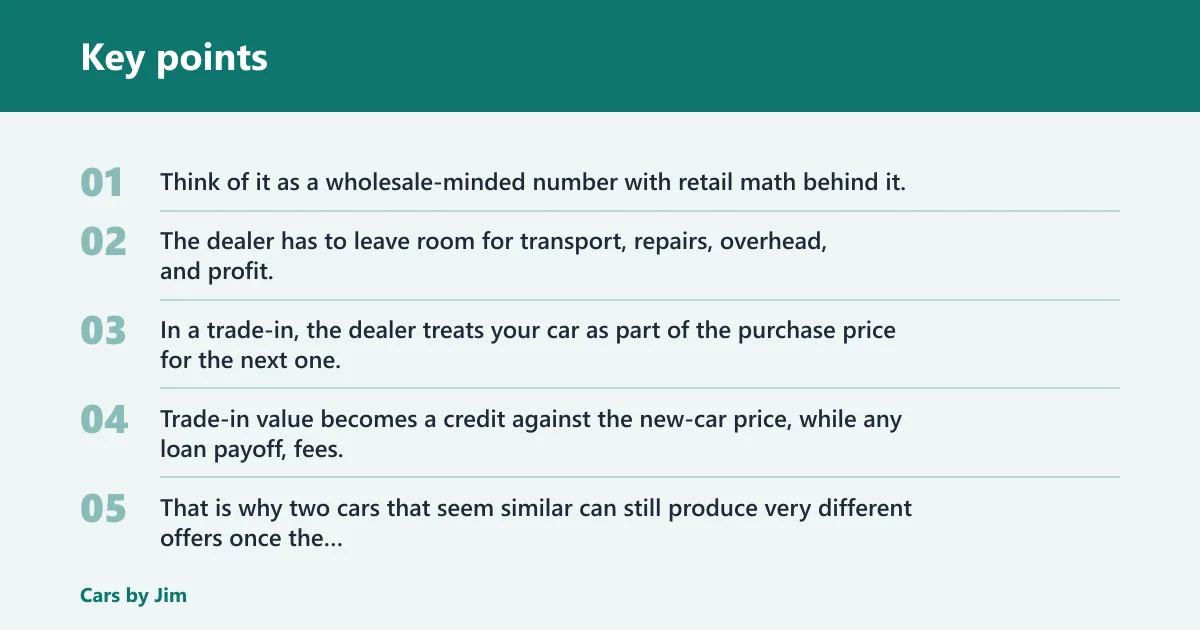
Think of it as a wholesale-minded number with retail math behind it. The dealer has to leave room for transport, repairs, overhead, and profit, so the offer is shaped by resale risk as much as by your car’s condition.
How part exchange works
In a trade-in, the dealer treats your car as part of the purchase price for the next one. Trade-in value becomes a credit against the new-car price, while any loan payoff, fees, or negative equity are handled in the same transaction. That is why two cars that seem similar can still produce very different offers once the dealer checks mileage, condition, demand, and title history.
Say your 2019 sedan has 58,000 miles, clean paint, and complete service records. A dealer may appraise it more generously than the same car with the same mileage but signs of body repair, worn tires, and missing maintenance proof, because the second car is harder to resell and may need immediate spending before it goes on the lot.
Why dealers use a lower number than private sales
A dealer is buying your car for resale, not for ownership. That means the offer has to cover inspection, cleaning, reconditioning, any needed repairs, lot time, auction fees if it is sent away, and the margin needed to keep the business profitable. Private-party value is typically higher because you do not have those dealer costs baked into the number.
Private-party sales usually involve more time, more messages, more meeting logistics, and more paperwork for the seller. Trade-in is faster and easier, but it may not produce the highest dollar amount.
How dealers calculate trade-in value
Dealers calculate trade-in value by appraising the car, checking current market demand, and estimating what they can realistically resell it for. Car and Driver says its valuation uses Black Book data dealers use to appraise vehicles, and it says those valuations are based on age, mileage, condition, options, and accident history. Location can also affect value. (Caranddriver)
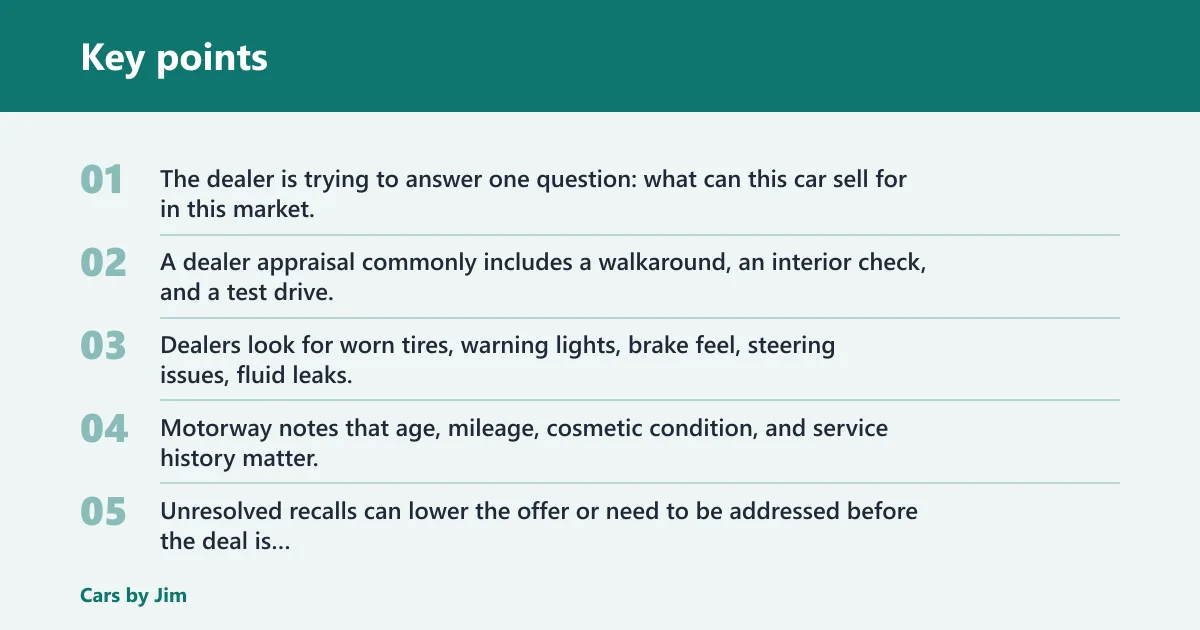
The dealer is trying to answer one question: what can this car sell for in this market, after the costs of getting it ready for the next buyer?
Inspection and test drive
A dealer appraisal commonly includes a walkaround, an interior check, and a test drive. Dealers look for worn tires, warning lights, brake feel, steering issues, fluid leaks, odor, dash damage, and signs of poor repair. Motorway notes that age, mileage, cosmetic condition, and service history matter, along with accident and repair history.
Unresolved recalls can lower the offer or need to be addressed before the deal is finalized. If a recall affects safety or the dealer’s ability to retail the car, that can change the number quickly.
Market demand and local resale data
Two identical cars can receive different offers in different cities. A dealer may pay more for an all-wheel-drive SUV in a snowy market, or less for a large sedan where demand is soft. That is why trade-in value is not fixed. It changes with region, season, inventory levels, and local resale history.
Chevrolet’s appraisal page is titled Trade-In Value with Black Book: Vehicle Appraisal, which is a useful reminder that dealer pricing starts with resale logic, not just a generic consumer estimate.
Condition, mileage, and service history
Condition often moves the number more than minor equipment differences do. Mileage matters because it affects expected wear and remaining resale life. Service records help show that the car was maintained on schedule, which can reduce buyer risk and make the dealer more confident about the resale price.
Suppose two midsize SUVs are the same trim and year. One has 41,000 miles, fresh tires, and a stack of receipts. The other has 92,000 miles, mismatched panels, and a noisy suspension. The second car is likely to draw a much lower trade-in offer because the dealer is pricing in repairs and slower resale.
Trade-in value versus other values
Trade-in value is one point in a pricing ladder. Wholesale value is the auction-equivalent benchmark dealers use in pricing logic, but it is not a consumer-facing retail quote. Retail value is the dealer selling price and includes transport, repairs, and overhead. Private-party value is usually higher than trade-in value, while scrap value is the bottom end for cars with little resale use left.
Wholesale value
Wholesale value is what a dealer may expect to get or pay in the dealer market or at auction. It helps explain the ceiling for many trade-in offers. A dealer cannot pay wholesale and then retail the car for the same amount without losing money on reconditioning and selling costs.
Retail value
Retail value is what the dealer may list the car for after it is reconditioned and ready for sale. It is higher than trade-in value because it includes the dealer’s overhead, prep work, and profit target. That gap is normal and does not mean the dealer is being inconsistent.
Private-party value
Private-party value is the amount a used-car buyer may pay you directly. It is typically higher than trade-in value because you are doing the work the dealer would otherwise do. Car and Driver says it provides both private-party-sale and trade-in values, which makes it easier to compare the dealer offer with a seller-to-seller benchmark.
Scrap value
Scrap value is what a vehicle may be worth for parts or metal when it is no longer a realistic retail car. Once rust, mechanical damage, title issues, or age make resale impractical, the number can fall far below trade-in or private-party levels.
What lowers or raises the offer
Dealers usually move the offer most on condition, mileage, accident history, title status, trim and options, and local demand. Age matters too, but age often matters because it usually comes with more wear, more mileage, and a weaker resale window. The largest swings usually come from problems that reduce confidence in easy resale.
Age and mileage
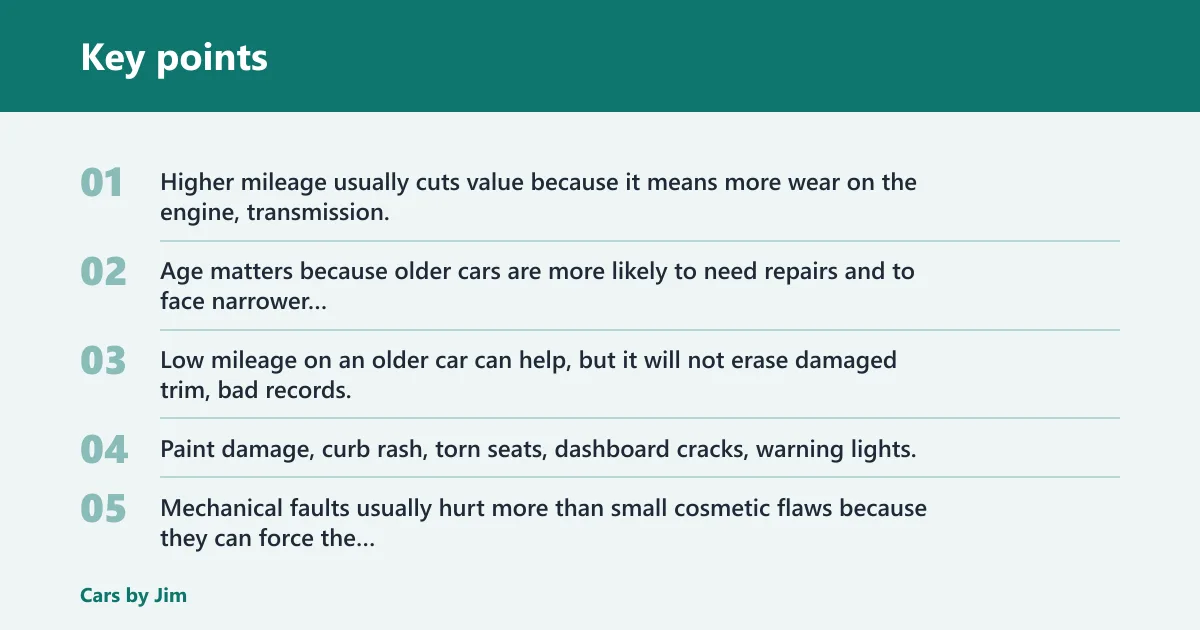
Higher mileage usually cuts value because it means more wear on the engine, transmission, suspension, and interior. Age matters because older cars are more likely to need repairs and to face narrower buyer interest. Low mileage on an older car can help, but it will not erase damaged trim, bad records, or body work.
Cosmetic and mechanical condition
Paint damage, curb rash, torn seats, dashboard cracks, warning lights, and poor braking feel can all reduce an offer. Mechanical faults usually hurt more than small cosmetic flaws because they can force the dealer to spend money before resale or reduce the pool of buyers who will consider the car.
Accident history, title status, and recalls
Accident history can lower value even after repairs, because buyers often discount repaired cars. Branded titles, salvage history, flood damage, or other title issues are even more serious and can shrink the dealer market sharply. Unresolved recalls can also lower the offer or require action before the car can be sold.
Trim, options, and modifications
Factory trim and useful options can help if they match local demand, but they do not matter as much as clean condition and normal mileage. Aftermarket modifications are mixed: a tasteful wheel upgrade may not help, and lowered suspension, tuning, or nonstandard parts can hurt if they narrow the buyer pool or raise inspection questions.
A common first-timer mistake is assuming a long options list always means a stronger trade-in. Heated seats, a larger screen, and a premium audio package may help, but a rough service record or accident history can outweigh them quickly.
Trade-in value reality check table
Use this table to sanity-check a dealer offer. The likely impact is not exact math, but it gives you a practical read on which traits usually help, do nothing, or hurt. Verify the specific item before you accept the offer, because a dealer will price what is on the car today, not what the listing once said.
| Vehicle trait | Likely dealer impact | Why it moves value | What to verify before you accept |
|---|---|---|---|
| Clean service records | Boost | Shows the car was maintained and reduces resale risk. | Bring dated receipts, digital records, or dealer service printouts. |
| Low mileage for the year | Boost | Usually means less wear and a stronger resale story. | Check the odometer against title and maintenance records. |
| High mileage | Cut | Signals more wear and more likely near-term repairs. | Confirm whether major wear items were already replaced. |
| Minor cosmetic flaws | Neutral to small cut | Small dents or scuffs may be inexpensive to fix. | Ask whether the dealer is pricing in repair cost or just noting the flaw. |
| Visible body damage | Cut | Suggests repainting, panel work, or hidden damage risk. | Look for repair invoices and ask if frame inspection is part of the appraisal. |
| Accident history | Cut | Reduces confidence in long-term resale value. | Compare the claim details, repair records, and current alignment. |
| Clean title | Boost | Gives the broadest buyer pool and easiest resale. | Make sure the title matches the VIN and has no brand marks. |
| Branded or salvage title | Cut | Limits financing, insurance, and resale options. | Ask how the brand affects the dealer’s resale route. |
| Popular trim and options | Boost | Can help if the package matches local buyer demand. | Check whether the option is factory-installed and still working. |
| Unresolved recalls | Cut | Can block sale prep or reduce dealer confidence. | Confirm recall status by VIN and ask whether it must be fixed first. |
Should you trade in a financed car?
Yes, you can trade in a financed car, but you need the payoff amount and the trade-in value before you agree to anything. The Consumer Financial Protection Bureau advises checking both numbers first. The payoff amount is the remaining balance on the auto loan, and it can differ from the statement balance because of daily interest, fees, or timing. (Consumerfinance)
If the payoff amount is higher than the trade-in value, you have negative equity. That gap can be paid off separately or rolled into the new loan, but the CFPB warns that rolling negative equity into a new loan increases total loan costs and interest.
Payoff amount versus statement balance
Your lender’s payoff figure is the number that matters at the dealership, not the monthly statement balance. The statement may not include per-diem interest, so it can understate what you must actually pay to close the loan. Always request the payoff quote before you negotiate the trade.
Negative equity and rolling it into a new loan
If you owe more than the car is worth, the dealer may still complete the trade by folding the shortfall into the next loan. That can be convenient, but it raises the amount financed and often the interest cost too. If the gap is large, it may be better to pay it down first or keep the car longer.
What changes with leased, fleet, or branded-title cars?
These are not standard trade-in cases. Leased vehicles, fleet history, and branded titles can change the dealer’s path to resale and, with it, the offer. The appraisal may still be straightforward, but the value logic is different from a clean, personally owned car with a normal title.
Leased vehicles
For a lease, the vehicle is typically tied to a lease-end payoff or purchase option rather than a standard owned-car trade. If the car is worth more than the payoff, some drivers may be able to use that equity in the transaction, but the exact process depends on the lease contract and the lender. Check the buyout figure before you assume there is value to capture.
Fleet history
Fleet cars can be well maintained, but many buyers and dealers price them cautiously because they may have heavier use and less appealing resale history. Records matter here. A tidy fleet car with documented service can do better than a neglected personal car, but fleet use can still narrow the buyer pool.
Branded titles and unresolved recalls
Branded titles such as salvage or flood history usually cut trade-in value hard because they shrink financing and resale options. Unresolved recalls can also reduce the offer or require repair before the car can be resold. Dealers may still appraise these cars, but the number will reflect the extra risk and limitation.
- Gather the title, registration, service records, and all keys.
- Check the VIN for open recalls and confirm any title brand.
- Get the payoff amount if the car is financed.
- Clean the car and remove personal items.
- Ask the dealer how it arrived at the number, not just what the number is.
Frequently asked questions
What does trade in value mean on a car?
Trade-in value is the amount a dealer credits toward your next car when you exchange your current one as part of the deal. It reflects what the dealer expects to resell the car for after reconditioning, risk, and overhead, so it is usually lower than private-party value.
How does trade in value on a car work?
The dealer inspects the car, checks mileage, condition, service history, and market demand, then makes an offer that fits expected resale. That offer becomes a credit against the next vehicle’s price. If you owe money on a loan, the payoff amount is added into the same transaction.
What is my trade in value for car?
Your trade-in value depends on the exact vehicle, mileage, condition, title status, location, and demand in your market. A clean, low-mileage car with records usually brings more than one with wear, prior damage, or missing maintenance proof. The only real check is a dealer appraisal matched against a payoff quote if needed.
What is a good trade in value for a car?
A good trade-in value is one that is close to the top of the realistic dealer range for your car, given its condition and market demand. Compare the offer with other dealers and with private-party value. If the number seems high, ask what assumptions the dealer used for reconditioning and resale.
Is trade-in value lower than private-party value?
Yes, trade-in value is typically lower than private-party value because the dealer must inspect, repair, advertise, and resell the car. Private-party sales can return more money, but they also require more time and more effort from you. Trade-in is simpler, but not usually the highest-paying route.
Should I trade in my car if it’s not paid off?
You can trade in a car that is not paid off, but you should know the payoff amount and compare it with the trade-in value first. If the loan payoff is higher, the difference becomes negative equity. Rolling that amount into a new loan can raise the total cost and interest you pay.
How do dealers calculate trade in value?
Dealers calculate trade-in value by appraising the car’s condition, mileage, age, accident history, service records, options, and title status, then comparing that with local market demand and resale data. They are estimating what the car can bring after prep, risk, and resale costs, not what a retail buyer might pay.
What is the trade in value for a car that’s leased?
A leased car is usually priced against its lease-end buyout or payoff figure rather than a standard owned-car trade. If the car is worth more than the buyout, that difference may be usable in a dealer transaction, but the lease contract controls the process. Check the lease terms before assuming there is equity.
What is trade in value on carfax?
Carfax-related valuation pages may show a trade-in estimate, but that number is still an estimate, not a dealer quote. Treat it as a comparison point, then verify the offer with a real appraisal because the dealer will still account for local demand, condition, recalls, and any title or accident history.
What is trade in value on royal caribbean cruise?
That search does not apply to cars. Trade-in value is a vehicle pricing term, so for a cruise line query you would want a different topic entirely. If you meant a car appraisal question, use the vehicle’s VIN, mileage, condition, and payoff amount to start the check.