Used Car Reliability: How to Judge It Before You Buy
Judge used-car reliability with a 100-point triage: history 35, maintenance 25, model-year risk 20, inspection 20; a common rule of thumb is buy at 80-plus, negotiate at 60-79, and walk below 60. Skip that process and a cheap listing can turn into a transmission, engine, or electrical repair bill that wipes out any savings within months. This guide shows you how to score ads, seller answers, service records, a VIN report, and a pre-purchase inspection before you pay.
What you’ll need
- VIN from the listing or windshield
- Listing details, photos, and seller contact information
- Vehicle history report from a provider such as Carfax or a similar service
- VIN recall lookup on the manufacturer site and NHTSA
- Service records, repair receipts, and the maintenance schedule for that model year
- Flashlight and tire-tread gauge
- OBD scan access if the seller allows it
- Appointment with an independent mechanic for a pre-purchase inspection
- The 20-point triage sheet below
Use a triage system, not a gut check
Reliability is the chance that the car avoids frequent repairs and avoids the kind of single expensive failure that changes the deal. That is different from safety, and different again from total ownership cost. A car can be mechanically decent yet still be a poor buy because it lacks key safety equipment or because one overdue repair erases the price advantage.
The opening 100-point split is the weighting. In practice, shopping with a 20-point sheet is easier, so each point on the sheet equals five points in the larger framework. You keep the same buy, negotiate, and walk-away logic while using something practical on a listing, at the seller’s driveway, and during inspection.
A smooth ten-minute drive proves less than most shoppers assume. One weak system can outweigh an otherwise good impression: a CVT with no service history, a turbo engine with long oil intervals, a hybrid with battery-cooling neglect, or an EV with charging faults. Those are repair-risk signals, not minor annoyances.
Step-by-step reliability triage

Build a model-year shortlist first
Start by comparing the exact model year and generation, not just the nameplate. Reliability often shifts after a redesign, powertrain change, or major electronics update. A car from the middle of a generation can share little more than styling with one from the first year after a full redesign.
Use reliability ratings to narrow the list, then verify the exact car. Consumer Reports says it analyzed survey data from more than 300,000 vehicles, which makes member-survey data useful for spotting broad patterns. Owner satisfaction helps too, especially the “would buy again” measure, but satisfaction can track comfort, styling, or performance more than repair frequency.
Ratings also vary by source. Driver Power reliability scores for the top 10 most reliable cars are expressed as percentages. In Auto Express’s 2026 list, the Toyota Aygo X scores 94.09%, the Mazda CX-30 93.37%, the Tesla Model 3 92.28%, the BMW 1 Series 91.79%, the Volkswagen T-Roc 91.53%, the Ford Kuga 91.29%, the Tesla Model Y 90.76%, and the Toyota Corolla 90.63%. Useful data, but none of those percentages removes the need to check the exact year, trim, powertrain, and service file in front of you.
Set a safety baseline while you shortlist. Electronic stability control should be non-negotiable, and ESC became standard on all new passenger vehicles sold in the U.S. for the 2012 model year. If two cars score similarly on reliability, the better safety pick is the one with ESC plus newer features such as automatic emergency braking with pedestrian detection, blind spot warning, and rear cross traffic warning.
Picture two same-nameplate cars parked side by side: a first-year redesign with a new turbo engine and touchscreen-heavy controls, and a later car from the same generation after early bugs were sorted. The badge matches. The risk profile may not.
Ask the seller questions before you go
Use a short script and write down the answers. Ask for the oil-change interval in miles or months, the date and mileage of the last service, whether the transmission was ever serviced, whether the cooling system has had a radiator, water pump, thermostat, or hose repair, the battery age, the tire age from the DOT date code, the reason for sale, whether any warning lights are on now, and whether any warning lights were recently cleared or the battery was recently disconnected.
Also ask if the seller has receipts with odometer readings, whether the car comes with more than one key, whether recalls were completed, and whether they will allow a pre-purchase inspection. Vague answers, changing answers, or refusals to answer should lower the score before you ever see the car.
Check the use pattern, not mileage alone
Calculate miles per year: current odometer divided by age. Around 20,000 miles per year is a high-use flag. Around 5,000 miles per year can also be a concern because long idle periods can mean dry seals, aged tires, stale fluids, weak batteries, and corrosion in places that do not show up in a quick drive.
Highway miles often wear a car less than short-trip, stop-and-go use, repeated cold starts, or years of sitting. A 120,000-mile car with complete records, one or two long-term owners, and steady highway use can be a safer bet than a 45,000-mile car that sat for months at a time and has patchy maintenance.
Say your shortlist includes a ten-year-old sedan with 110,000 miles. That sounds high until the records show one owner, annual transmission service notes where applicable, regular coolant work, and mostly interstate commuting. Change only one variable to missing records, and the same odometer reading becomes much harder to trust.
Count ownership changes and verify recalls by VIN
Ownership changes matter because repeated turnover can point to chronic faults, deferred maintenance, or a car that keeps disappointing the next buyer. Check the history report for how many owners the car had, how long each kept it, and how quickly it changed hands. Four owners in six years deserves more scrutiny than one owner over eight years, especially if the short ownership periods line up with repair gaps or inconsistent registration history.
Then run the VIN through the manufacturer site and NHTSA, and compare the results with any recall paperwork in the file. Open safety recalls should be completed before purchase. An unresolved recall may not make the car unreliable, but it can make it a bad transaction and, in some cases, an unsafe one.
Inspect the records for proof of care
Look for receipts, not promises. Good records show dates, repair orders, odometer readings, and maintenance intervals that make sense for the model. They also expose repeat repairs, which can point to an unsolved fault rather than normal upkeep.
Check whether oil changes happened at believable intervals, whether brake fluid, coolant, spark plugs, filters, and transmission service appear when expected, and whether tire replacements line up with mileage. Odometer readings on invoices should climb consistently.
Repeated minor faults matter. Three invoices for coolant top-offs, thermostat work, and hose replacements can be more revealing than one expensive repair because they suggest a longer-running issue. The same goes for repeated battery replacements, recurring check-engine work, and alignment-related tire wear.
Use the 20-point sheet on the specific car
Score the car only after the shortlist, seller call, and records review. This is where scattered clues become one buying decision. The table below weights history, service records, mileage pattern, ownership changes, recall status, inspection findings, and model-year risk into a single score.
Reliability triage sheet
Category 0 points 1 point 2 points 3 points Max Vehicle history report Title brand, odometer issue, structural damage, or seller claims do not match report Accident history with unclear repair detail or registration gaps Minor issues only, claims mostly verified Clean title, consistent odometer, claims verified, no major red flags 3 Service records No records or obvious deferred maintenance Partial records with long gaps Mostly complete receipts and sensible intervals Full file with receipts, dates, odometer entries, and preventive work 3 Mileage pattern Use pattern suggests neglect, long sitting, or extreme stop-and-go wear 20,000-plus miles per year or less than 5,000 per year without explanation Mixed use with believable maintenance support Steady annual use, mostly highway or consistent commuting, records match pattern 3 Ownership changes Multiple owners in a short span with weak explanation Several owners over time Two owners with reasonable timeline One long-term owner or very stable ownership 3 Recall status Open safety recall not completed Recall history unclear Completed recalls shown, one item still pending paperwork VIN clear or recall work documented as completed 2 Inspection findings Major fault, rust concern, crash-repair issue, or costly repair risk Several moderate faults or stored codes Minor wear items only Clean inspection with no immediate repair pattern 3 Model-year risk First-year redesign or weak powertrain pattern for that year Mixed reliability record, powertrain-specific concern Above-average year but some known trouble spots Proven year within a stable generation 3 Total score: 0-20 points.
Green: 16-20 = buy if price is fair and safety baseline is met.
Yellow: 12-15 = negotiate, then re-score after recall work, records, or inspection repairs are addressed.
Red: 0-11 = walk away unless the issue is minor, documented, and fully priced in.
A practical top-up rule helps when a seller fixes one concrete issue. Add 1 point per completed item for any of these: open safety recall completed, missing maintenance receipt produced, or a mechanic-confirmed minor fault repaired. Then recheck the threshold. Do not add points for verbal promises.
What does the vehicle history report really tell you?
A vehicle history report can confirm title status, odometer consistency, accident entries, and registration pattern, but it cannot prove a car is clean. Use it to verify seller claims and to spot deal-breakers such as title brands, mileage issues, or structural-damage history that should push the car toward walk-away status.
What to read line by line
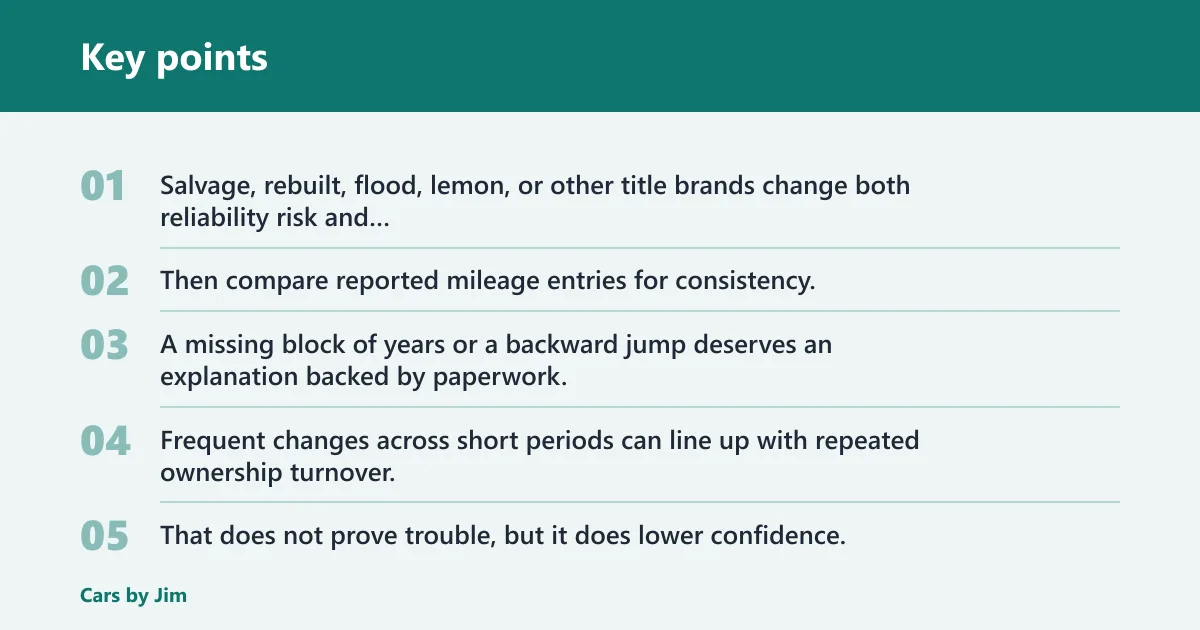
Check title status first. Salvage, rebuilt, flood, lemon, or other title brands change both reliability risk and resale value. Then compare reported mileage entries for consistency. A missing block of years or a backward jump deserves an explanation backed by paperwork.
Registration pattern matters too. Frequent changes across short periods can line up with repeated ownership turnover. That does not prove trouble, but it does lower confidence.
What accident entries can and cannot prove
An accident line does not tell the whole story. A minor parking-lot hit with proper repair is different from airbag deployment or structural work, yet some reports stay vague. Just as important, a clean report is not proof of a clean car because not every repair reaches a database.
Suppose a history report shows no accident entry, but the mechanic finds overspray inside the door jamb, nonfactory weld marks under the trunk floor, and one rear tire wearing faster than the other. Trust the physical evidence over the database summary.
How to verify seller claims against the report
Match the seller’s story to the report and the receipts. If the ad says “one-owner, no accidents, dealer serviced,” the report and invoices should support all three claims. If they do not, lower the score and ask why before spending money on inspection.
How strong are the service records?
Service records are one of the best reliability signals because they show what was done, when it was done, and at what odometer reading. A stack of dated receipts can offset higher mileage. Missing records do the opposite, especially on engines, transmissions, hybrids, and turbocharged models that depend on timely fluid service.
What should appear in a healthy file?
Look for routine oil service, filters, brake work, coolant replacement when due, spark plugs when due, tire replacement, alignments, and any model-specific items the maintenance schedule calls for. Receipts with VINs and odometer entries are better than a handwritten notebook.
How records expose deferred maintenance
Deferred maintenance shows up as absence, delay, or bunching. If five years pass with little more than tires and a battery, expect catch-up costs. If several wear items were done only after a warning light or breakdown, the owner may have followed symptoms rather than schedule.
What to ask when the file is incomplete
Ask where the car was serviced, whether digital records exist, and whether the seller can provide the shop name so you can confirm dates and mileage. Ask directly about oil-change interval, transmission service, cooling-system work, and the age of the 12-volt battery or hybrid battery service history where relevant.
What should a mechanic inspect before you buy?
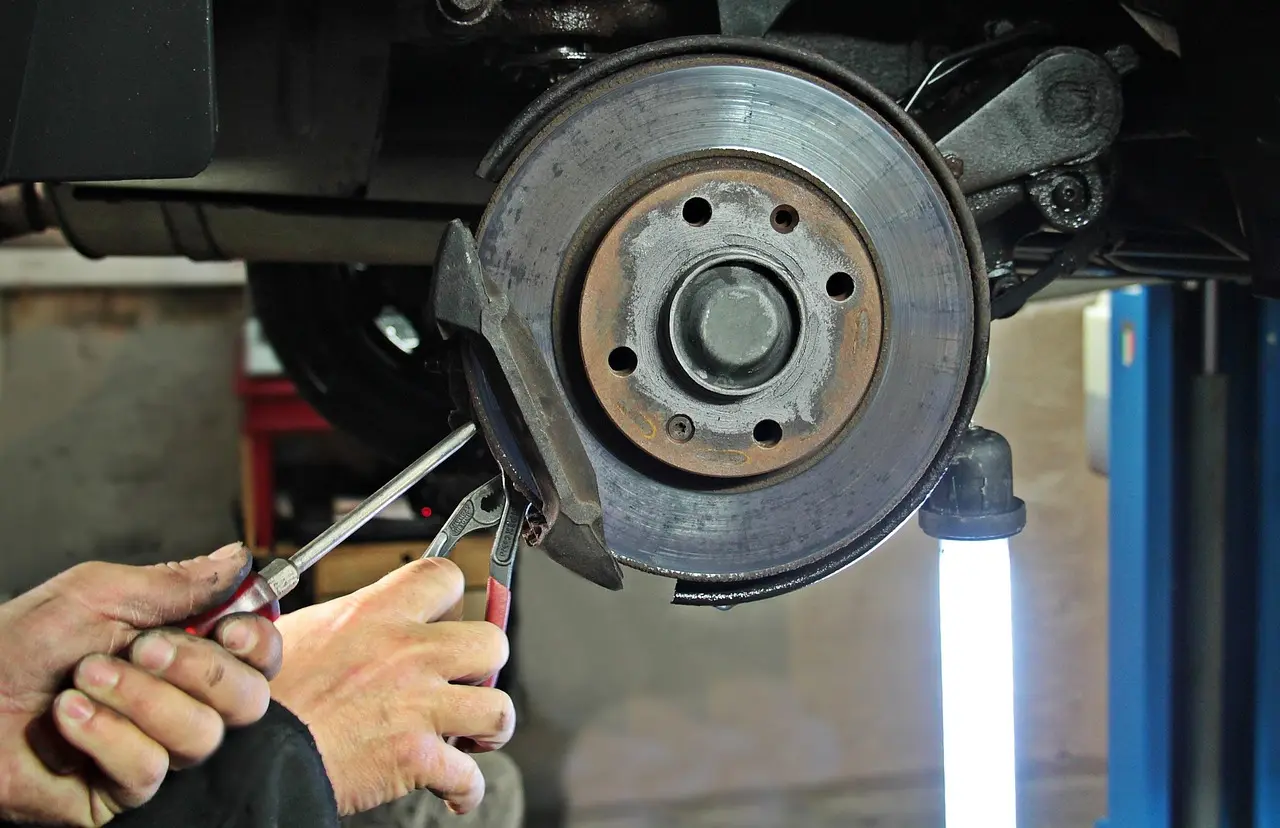
A pre-purchase inspection should look under the car, scan its computers, and search for early signs of expensive faults that a short drive often misses. Have an independent mechanic check leaks, cooling parts, suspension, brakes, tires, battery and charging condition, rust, prior crash repair, and powertrain-specific trouble spots.
Mechanical and structural checks that matter
The undercarriage check is where hidden costs show up. Ask for a look at oil leaks, coolant seepage, transmission seepage, rust on structural points, bent suspension parts, and signs of prior crash repair. Brakes, tires, and uneven wear patterns help reveal alignment, suspension, and body issues.
Electronic and code checks that a test drive misses
Scan-tool codes matter even when the dash is clear. Stored but not active fault codes can show intermittent transmission behavior, misfires, charging problems, or emissions faults that were recently cleared. Battery and charging-system testing should be part of the inspection, especially on cars with start-stop systems.
Powertrain-specific traps
For hybrids, ask about battery cooling, battery state, and signs of coolant or fan neglect. For turbo engines, oil-service history matters more because missed intervals can shorten turbo life. For CVTs, service-history dependence is a real risk signal. For EVs, battery-health reporting, charging speed consistency, and charging-system faults deserve specific attention.
How to turn findings into repair-cost risk
Separate minor wear from system risk. Worn tires and brake pads affect price. Coolant seepage, oil-consumption evidence, intermittent shifting, flood traces, rust in structural areas, or crash-repair signs affect the deal itself. Those are the findings most likely to move a car from negotiate to walk away.
Step 6: decide whether to buy, negotiate, or walk away
Use the score first, then apply judgment to the expensive items. A strong model year, stable ownership, complete records, and a clean inspection can offset higher mileage. Missing records, open recalls, and ordinary wear justify a lower offer. Title issues, structural damage, or major mechanical faults should end the deal.
When higher mileage is still acceptable
Higher mileage can still fit a buy decision when the generation is proven, the model year is strong, the records are consistent, the ownership is stable, and the inspection is clean. The key is predictable wear, not a magic odometer number.
When certified pre-owned is worth the premium
CPO cars usually bring an inspection process, refurbishment, warranty coverage, and often roadside assistance. That reduces some risk, but it does not erase a weak model year or a troublesome powertrain. If the regular used car scores green and the CPO version scores only slightly better, the price premium may not pencil out. If both cars are close but the CPO adds warranty protection on expensive electronics or hybrid components, the premium can make sense.
If the car lands in yellow
Start with the cheapest verified fix and re-score. Complete the open recall. Get the missing receipt. Replace aged tires only if the seller agrees in writing or reduces the price. If the score cannot reach green without guessing about hidden issues, treat yellow as a pass rather than a project.
Common mistakes
Letting low mileage overrule weak evidence
Very low miles are not automatically safer. Sitting can age tires, seals, fluids, and batteries faster than the odometer suggests. A low-mileage car with no records often deserves more skepticism, not less.
Ignoring model-year changes inside the same nameplate
Do not compare unlike cars. A redesign year, a new hybrid setup, a new turbo engine, or a major infotainment and electronics change can shift reliability inside the same model family.
Skipping the recall check because the car drives well
A mechanically decent car can still fail the safety test. ESC is the minimum baseline, and newer safety features such as AEB with pedestrian detection, blind spot warning, and rear cross traffic warning can be meaningful tie-breakers.
Confusing a smooth drive with proven reliability
Short drives rarely reveal coolant seepage, oil consumption, intermittent transmission faults, flood traces, or stored codes. That is why the inspection score carries so much weight.
Prevention
Once you buy, keep every receipt and log the date and odometer reading on each service. That record is one of the easiest ways to protect both reliability and resale value on the next sale.
Frequently asked questions
How can I tell if a used car is reliable before I buy it?
Score it instead of guessing. Start with model year and generation, then check the history report, service records, miles-per-year pattern, ownership changes, recall status, and a mechanic’s inspection. On the 20-point sheet, 16-20 is buy, 12-15 is negotiate, and 0-11 is walk away.
What questions should I ask the seller about reliability and maintenance?
Ask for oil-change interval, transmission-service history, cooling-system work, battery age, tire age, reason for sale, current warning lights, and whether any codes were recently cleared. Then ask for receipts with odometer readings and confirm the seller will allow an independent pre-purchase inspection.
How important are service records when judging used car reliability?
They are core evidence. Records show dates, mileage, intervals, and whether maintenance was preventive or delayed until something failed. A higher-mileage car with organized receipts can be a safer buy than a lower-mileage car with no paperwork, especially if the powertrain depends on fluid-service timing.
Should I trust reliability rankings when shopping for a used car?
Use rankings to narrow the list, not to make the purchase call. Member-survey data can spot stronger and weaker model years, but averages can hide bad powertrains, first-year redesign issues, and neglected examples. Always bring the ranking back to the exact year, engine, and service history.
What mileage is too high or too low for a used car?
There is no universal cutoff. Around 20,000 miles per year is a high-use flag, while around 5,000 miles per year can signal long sitting and age-related trouble. Judge mileage with records, use pattern, owner count, and inspection results rather than with one odometer number.
What safety checks matter even if a used car seems mechanically reliable?
Start with ESC as the minimum. In the U.S., ESC became standard on all new passenger vehicles sold for the 2012 model year. After that, look for AEB with pedestrian detection, blind spot warning, and rear cross traffic warning, then verify recall completion by VIN before you pay.