How Accurate Are Accident History Reports for Used Cars?
Accident history reports are useful evidence, but they can be incomplete. Treat them as reliable only when the report is current, source-complete, and matches the car’s physical condition. A thin or stale report can leave you paying full price for a car with hidden frame damage, airbag deployment, or poor repairs. Accident history can also affect price and safety. This guide explains what these reports usually catch, what they miss, and how to compare them with the car itself.
This guide is part of our Accident history: how to check and trust the report series.
What accident history reports actually show
A vehicle history report is a background check tied to the 17-character VIN, the Vehicle Identification Number. It can pull together accident and damage entries, ownership history, odometer history, title brands, stolen status, and recall status. The accident section is useful, but it is a summary of records, not proof that every crash or repair is listed.
Accident and damage entries
In the accident history section, a report may list the number of incidents, accident dates, point of impact, damage severity, and in US reports, repair dollar amounts. That field set helps you judge whether the car had a minor bumper hit or something more serious. It does not prove the full repair scope, and it does not prove the car is structurally sound.
Accident and damage are related, but they are not the same. A report may show damage from an insurance claim, a police record, or a salvage event even if no crash report is present. It may also show a crash entry with little repair detail if the source only reported part of the event.
Title brands, theft, and mileage records
Reports often include title status, such as clean title, salvage title, rebuilt title, and other brands like flood, fire, junk, and lemon. They may also show theft status and mileage history, including odometer readings that help spot rollbacks or jumps. Those records matter because accident history alone does not tell you whether the car has title problems or mileage issues.
What the VIN links together
The VIN links one car to records from insurers, police and government databases, auctions, repair shops, and title agencies. A clean lookup depends on how well those sources reported the car. If the chain is weak at any point, the report can miss an event or show it late.
Why a clean report can still miss damage
Yes, a car can have accident damage that does not show on a history report. The main reasons are often delayed reporting, incomplete source coverage, regional differences, private-pay repairs, and cosmetic fixes that can hide structural damage. A report can look clean while the car still shows clear signs of a crash or poor repair.
Delayed reporting and stale data
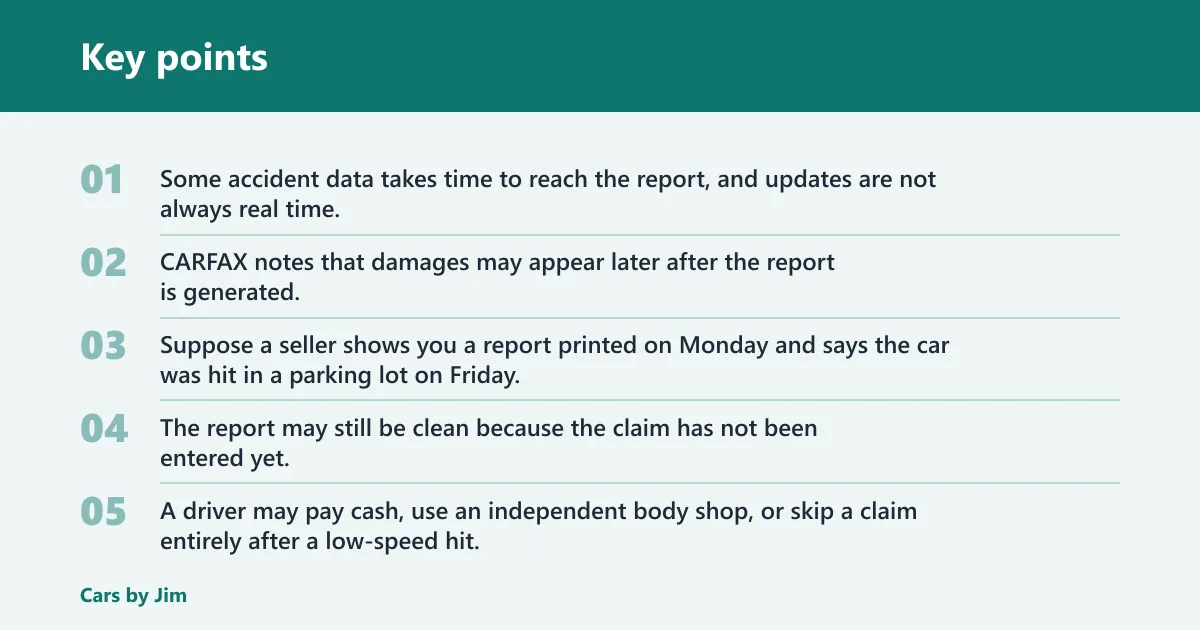
Some accident data takes time to reach the report, and updates are not always real time. CARFAX notes that damages may appear later after the report is generated. A report pulled today can miss a crash from last week, especially if the claim, title, or repair record has not yet moved through the system.
Suppose a seller shows you a report printed on Monday and says the car was hit in a parking lot on Friday. The report may still be clean because the claim has not been entered yet. That does not mean the car is fine; it means the data may simply be late.
Private repairs and cash claims
Many repairs never become insurer records. A driver may pay cash, use an independent body shop, or skip a claim entirely after a low-speed hit. In those cases, the accident can leave paint, glass, clip, seam sealer, or alignment clues without creating a strong paper trail.
A common mistake is to assume a clean accident history report guarantees the used SUV has never had hidden frame or body repairs. A bumper cover can be replaced, a fender can be repainted, and a hood can be aligned after a crash with no clear history entry if the repair stayed outside the main reporting path.
Regional coverage gaps
Police and government databases do not cover every area in the same way. Some states and local agencies report more detail than others, and timing varies. Insurance claims records also have coverage gaps, because not every claim gets shared in the same format or on the same schedule.
What sources feed the report?
Different sources carry different weight. Insurance claims records, police and government databases, title records, auction records, and repair-shop records each tell part of the story. Carfax and AutoCheck may not show the same accident history because they may not receive the same data from the same places at the same time.
Insurance claims records
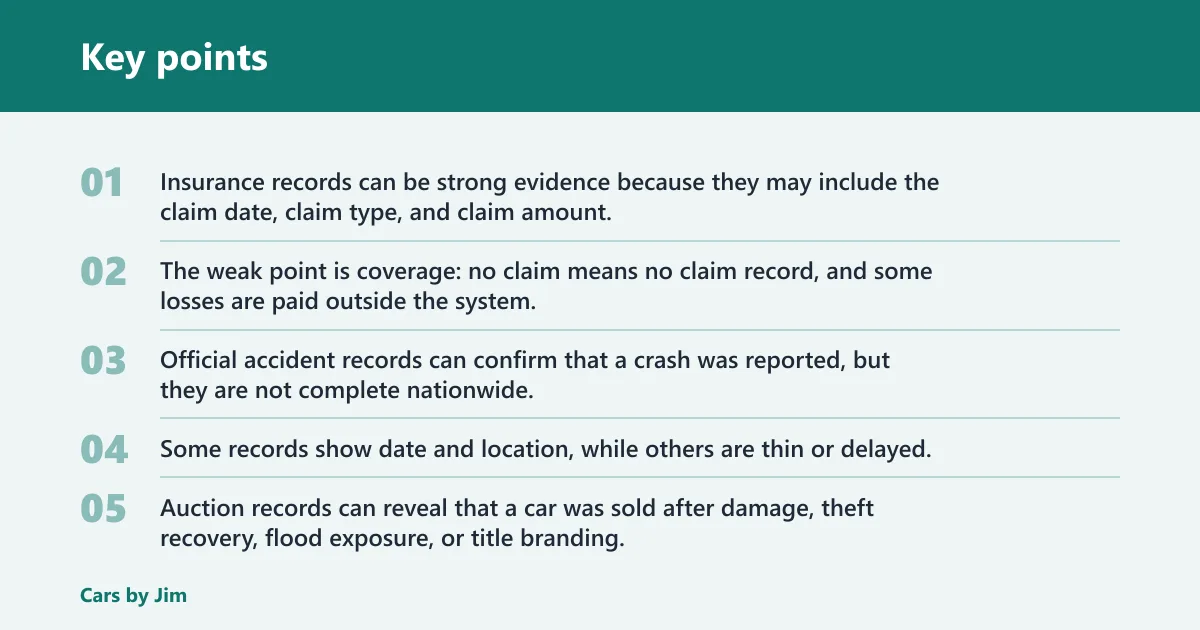
Insurance records can be strong evidence because they may include the claim date, claim type, and claim amount. They can also support accident severity when a paid claim lines up with visible repairs or later title action. The weak point is coverage: no claim means no claim record, and some losses are paid outside the system.
Police and government databases
Official accident records can confirm that a crash was reported, but they are not complete nationwide. Some records show date and location, while others are thin or delayed. A police report can support the fact of a crash without telling you everything about the repair, cost, or final condition.
Auction, dealer, and repair-shop data
Auction records can reveal that a car was sold after damage, theft recovery, flood exposure, or title branding. Repair-shop data can support that work was done, but it may not show whether the repair was done well. Dealer-supplied or seller-provided reports are helpful only when they can be checked against the VIN, the title, and the car itself.
Carfax vs. AutoCheck
Carfax and AutoCheck are examples of report sources, not final truth. One may list an accident that the other misses, or one may show a title event before the other does. That difference usually comes from source coverage, update timing, and how each service classifies the same record.
Do not pick the cleaner of two reports and assume it is more correct. Compare both against the physical car, the title, the odometer reading, and any repair paperwork. Overlap matters more than brand preference.
Accident report trust checklist
This checklist helps you judge whether a report entry looks well supported. The more sources that point to the same event, the higher the confidence. A single weak record can still matter, but a report entry backed by multiple independent sources is stronger.
| Claim on the report | What source usually backs it | What visible or document evidence should match it | Confidence rating |
|---|---|---|---|
| Accident date | Police report, insurer claim, auction entry | Repair invoice date, title event date, service order timeline | High when two or more sources overlap |
| Severity | Insurer claim, police record, auction condition notes | Frame rail repair evidence, parts replaced, alignment issues | Medium to high with repair records |
| Airbag deployment | Insurance claim, repair-shop record, auction note | New airbag modules, steering wheel trim, dash work, SRS light history | High when repair and parts records match |
| Repair cost | Insurance claim amount, insurer estimate, auction note | Body-shop invoice total, parts list, supplement paperwork | Medium if only one source lists a dollar figure |
| Point of impact | Police report, insurer claim, damage appraisal | Paint mismatch, replaced panels, glass replacement, bumper or rail repairs | High when body clues match the stated area |
| Title brand | Title agency, DMV record, auction record | Title document, brand notation, seller disclosure form | High if the title document matches the report |
| Mileage consistency | Odometer history, service records, inspection records | Dashboard reading, service stickers, inspection paperwork | High when multiple readings progress normally |
What does the report prove, and what does it not?
A report can prove that a record exists, but it does not prove the full condition of the car. It may show the accident date, severity, point of impact, airbag deployment, repair amount, and mileage history. It does not prove that every defect was reported, every repair was done properly, or every structural issue was listed.
Accident date and severity
The date helps you match the record to service invoices, auction paperwork, or title events. Severity gives context, but it is still a summary. Detailed Vehicle History notes that accident severity may be shown, which is useful, yet severity labels can be broad and depend on the source that reported the event.
Airbag deployment and repair cost
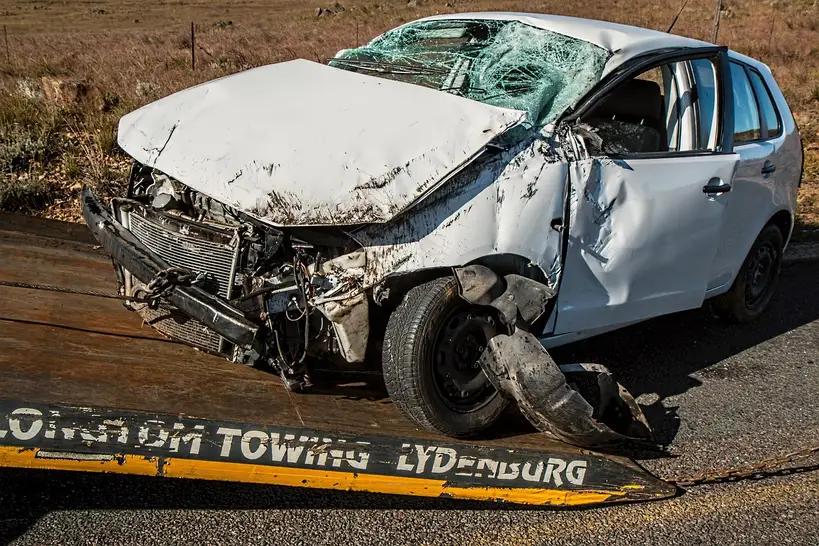
Airbag deployment is a serious clue because it usually means a meaningful impact. Repair cost helps you judge scale, but cost alone does not tell you if the car was repaired well. A low repair figure can still hide a bad structural repair, and a high figure does not guarantee quality.
Point of impact and mileage consistency
Point of impact can help you compare the report with the car’s bodywork. If the report says front-end damage but the rear quarter panel shows fresh paint, something is missing. Mileage consistency matters too, because odometer jumps or gaps can point to data issues, fraud, or a record that is not current.
How to check the car against the report
Use the report as a map, then inspect the car for clues that should agree with it. A clean report is not enough. A report and a physical inspection should support each other, especially on private sales where disclosure risk is higher and paperwork can be thinner.
Body and paint clues
Look for panel gaps, overspray, replaced glass, mismatched fasteners, fresh seam sealer, and uneven tire wear. Those clues can point to collision repair, windshield work, or alignment problems. None of them proves hidden damage by itself, but several together deserve a closer look.
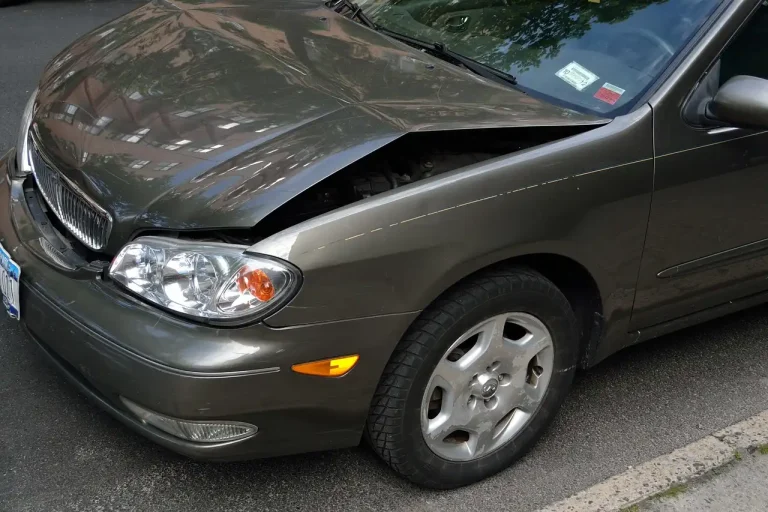
Picture a sedan with a clean report, but the hood gap is wider on one side, the left fender bolts show tool marks, and the front tire wears faster on the inner edge. That combination does not prove a crash on its own, yet it is enough to question whether the report missed a front-end repair.
Title and odometer documents
Check the paper title, registration, and odometer disclosures. Compare the VIN on the windshield, door jamb, and documents. If the title shows salvage, rebuilt, flood, fire, junk, or lemon branding, that should match the report. If it does not, stop and verify before you buy.
Lift inspection and repair verification
- Match the VIN. Check the 17-character VIN on the dash, door sticker, and documents. Use the same VIN for every lookup so you do not compare the wrong car.
- Review the report first. Note the accident dates, title brands, mileage readings, and any repair amounts or impact points. Mark anything that needs a visual check.
- Inspect body clues. Walk the car for panel gaps, overspray, glass markings, fastener marks, seam sealer, and tire wear. These are often the first signs that the report is missing something.
- Put the car on a lift. Ask for a lift inspection so a mechanic can check underbody damage, bent brackets, repaired rails, and fluid leaks. CarBuyingTips specifically advises a lift check because hidden repairs often show up underneath.
- Verify repair evidence. Ask for invoices, parts lists, and photos from the repair. Compare the paperwork with the affected area, the date, and the reported severity. If the story still does not fit, walk away or price it as a risk car.
Should you trust a clean report before buying?
No. A clean accident report is useful, but it should not end the inspection. Treat it as one input, not a guarantee. Private-sale cars carry more disclosure risk because the seller may know about prior damage that never reached a report. Dealer-sale cars often have more paperwork, but they still can rely on stale data.
Private sale risk
Private sellers may have less documentation, and a report may be the only paper they offer. That is not enough. If the report is clean but the paint, glass, tires, or underbody look inconsistent, assume the file may be incomplete until you verify the car yourself.
Dealer sale risk
Dealer inventory often comes with a report, but a printed report can still be old or incomplete. A seller-provided report can also be altered, out-dated, or fake, as CarBuyingTips warns. Cross-check the VIN, title, and vehicle condition before you accept the paperwork.
When to walk away
Walk away if the car shows clear crash clues and the seller cannot explain them with documents. Walk away if the title brand does not match the report. Walk away if the seller will not allow a pre-purchase inspection. A cheap price rarely makes up for structural damage or bad repairs.
Frequently asked questions
How accurate are accident history reports for used cars?
They are accurate when the event has been reported, shared, and updated across multiple sources. They are less accurate when reporting is delayed, regional coverage is thin, or the repair was paid outside insurance. Use the report as evidence, then confirm it with the car’s condition and paperwork.
Can a car have accident damage that doesn’t show on a history report?
Yes. Low-speed hits, cash repairs, private body-shop work, and cosmetic fixes can leave damage clues without creating a visible report entry. A clean report does not rule out frame damage, airbag deployment, or poor repairs. That is why a body check and lift inspection matter.
Why would an accident not show up on a vehicle history report?
Common reasons include late reporting, incomplete insurer coverage, police records that never reached the database, or repairs that were never claimed. Some reports also lag behind recent events. A missing entry can mean a data gap, not necessarily a clean past.
Do Carfax and AutoCheck show the same accident history?
Not always. They draw from overlapping but different sources, so one may show an incident that the other misses or lists later. If both reports agree, confidence rises. If they disagree, use the VIN, title, and physical inspection to sort out the gap.
Should I trust a clean accident history report before buying?
Trust it only as part of the whole file. A clean report is helpful, but it does not prove the car avoided a crash or a bad repair. Check the title, odometer history, and body condition, and get a mechanic inspection before you commit.
What should I do if the seller’s report and the car’s condition don’t match?
Pause the deal and ask for documents that explain the mismatch, such as repair invoices, title records, or insurer paperwork. If the seller cannot support the story, get a pre-purchase inspection on a lift. When the evidence still conflicts, the safest move is to walk away.