Should You Test Drive Before or After a Pre-purchase Inspection?
Test drive first, then book the pre-purchase inspection before you negotiate seriously or sign anything. The drive screens for obvious deal-breakers, and the PPI verifies the car you still want. Skip that order, and you can spend inspection money on a car you would have rejected in ten minutes, or miss a costly defect until after you buy. Here’s when each step should happen and what to do if the seller resists.
Should you test drive before or after a pre-purchase inspection?
As a general rule, test drive first and then arrange the pre-purchase inspection. The first drive is a quick screen for obvious problems, while the PPI is a third-party evaluation done before purchase to look for deeper issues. That order keeps you from paying for an inspection on a car that fails an easy road test.
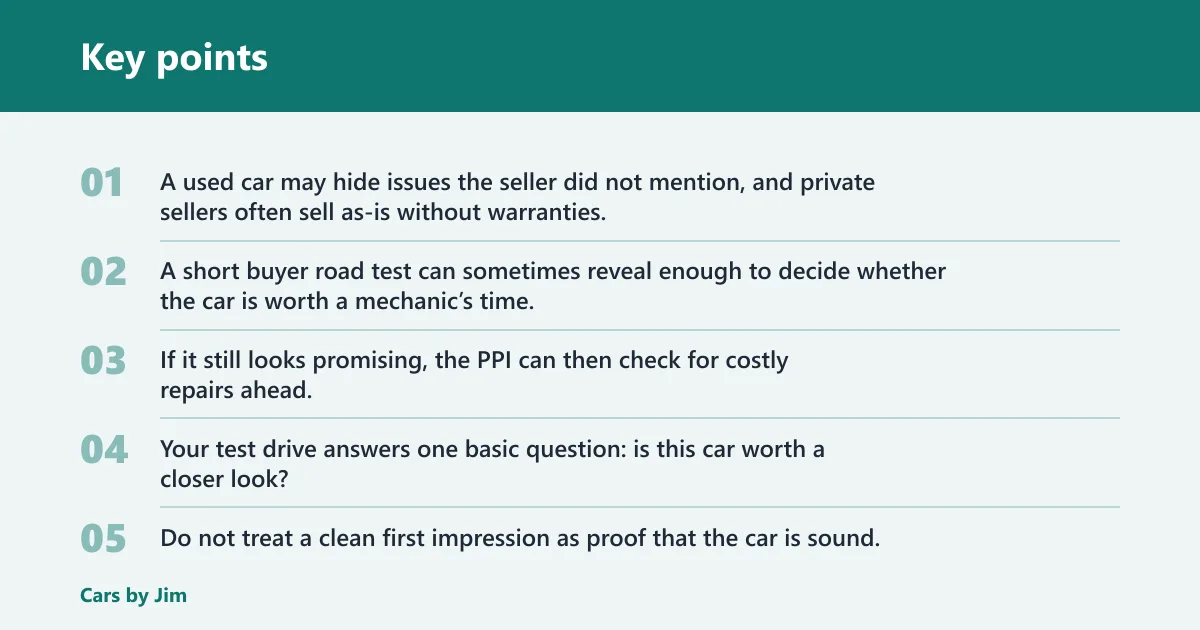
A used car may hide issues the seller did not mention, and private sellers often sell as-is without warranties. A short buyer road test can sometimes reveal enough to decide whether the car is worth a mechanic’s time. If it still looks promising, the PPI can then check for costly repairs ahead.
Why is the first drive for screening?
Your test drive answers one basic question: is this car worth a closer look? You are listening for odd noises, feeling for brake or steering problems, and checking whether the transmission behaves normally. That is different from a mechanic’s inspection drive, which is aimed at diagnosis.
Do not treat a clean first impression as proof that the car is sound. A short drive can miss hidden defects, especially if the seller has pre-warmed the car, limited the route, or pulled your attention away from warning signs. The point is to screen, then verify.
When is a quick road test enough to walk away?
If the car has obvious noise, pulls hard under braking, shudders during shifts, or shows warning lights, keep looking. In those cases, a PPI is often a bad spend because the car has already answered the question you needed answered.
Suppose a sedan makes a grinding sound at low speed and the steering wheel shakes at 40 mph. That is enough to pause. You do not need to pay for a full inspection just to confirm that the car has a problem worth avoiding.
Pre-purchase inspection basics
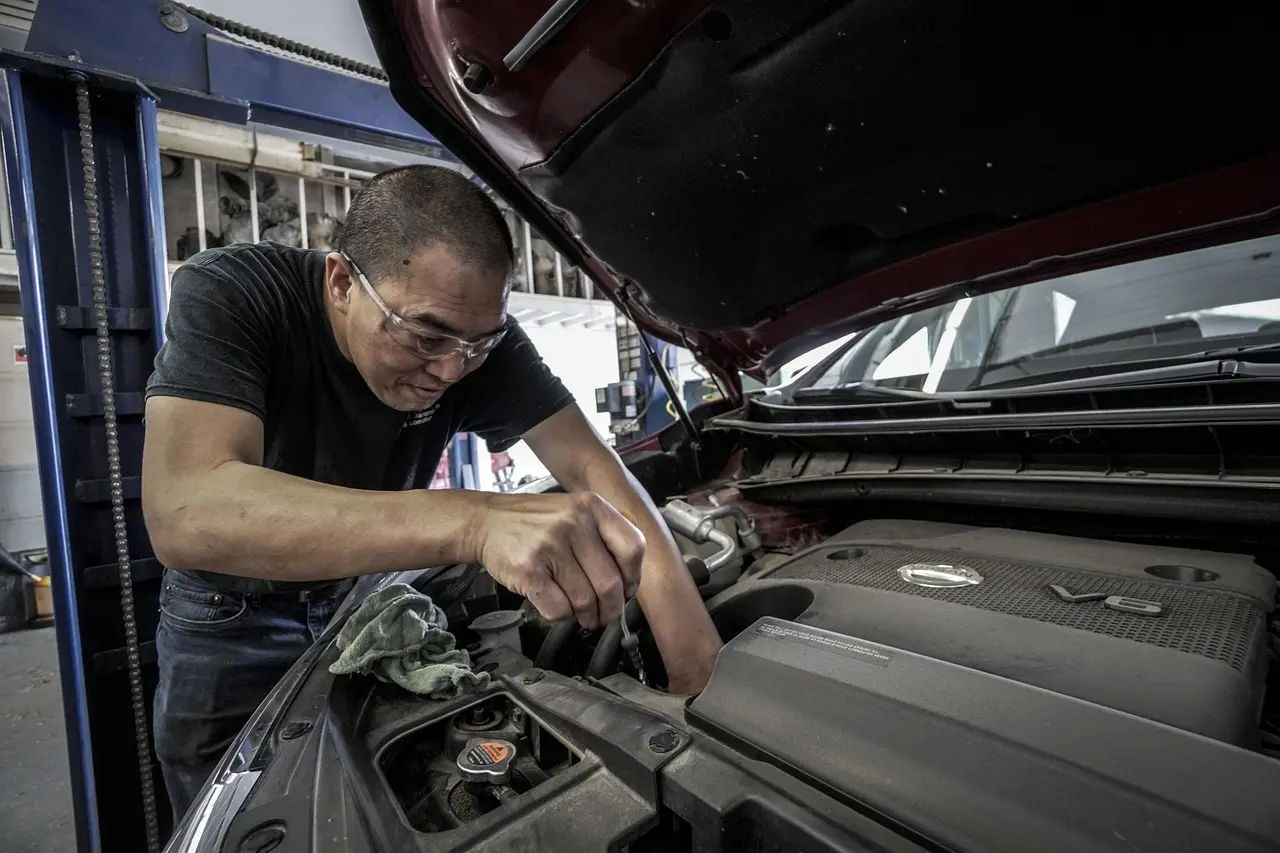
A pre-purchase inspection is a third-party evaluation of a used car to identify potential issues before you buy it. Most mechanics can do one, and dealership service centers may also perform them, especially for brands they service. The goal is to find problems before money changes hands.
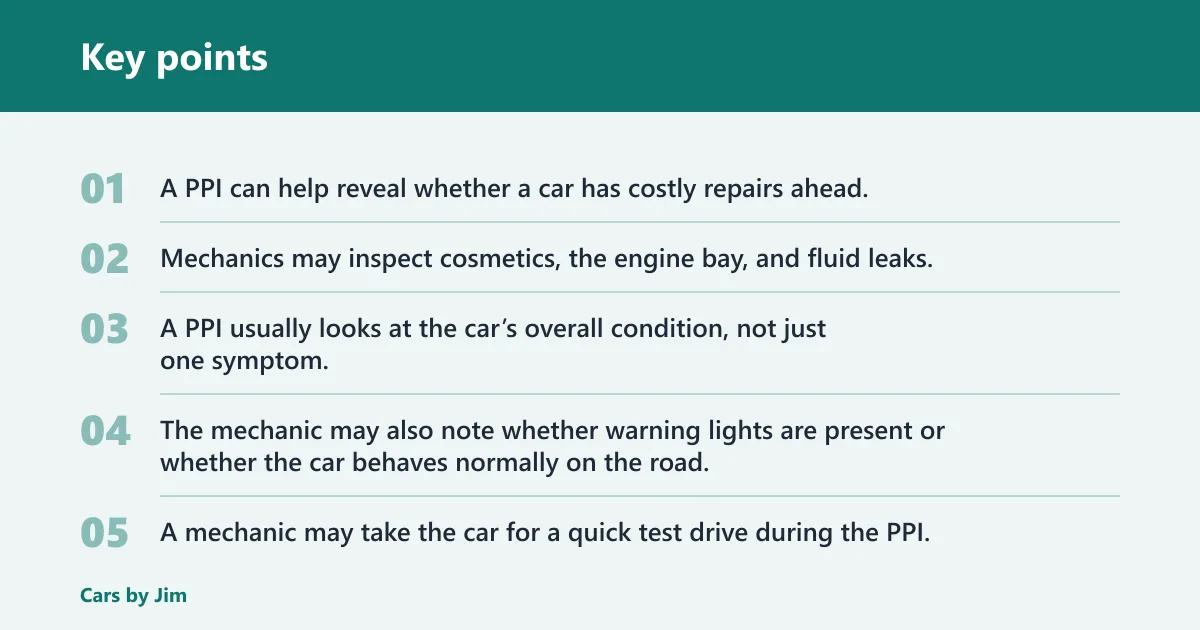
A PPI can help reveal whether a car has costly repairs ahead. Mechanics may inspect cosmetics, the engine bay, and fluid leaks. They may also run the engine and check basic mechanical condition, then decide whether the car is worth further negotiation.
What gets checked during a PPI?
A PPI usually looks at the car’s overall condition, not just one symptom. Expect attention to visible wear, leaks, fluid condition, engine operation, brakes, tires, steering, suspension, and signs of recent damage or poor repairs. The mechanic may also note whether warning lights are present or whether the car behaves normally on the road.
How can a mechanic use a short diagnostic drive?
A mechanic may take the car for a quick test drive during the PPI. That drive is not the same as your own test drive. It is a diagnostic step used to look for suspension, braking, tires, and transmission issues.
That road test can be brief and focused. The mechanic may want to feel for clunks, vibration, delayed shifts, brake fade, or unusual tire wear behavior at speed. If the seller allows it, this is one of the most useful parts of the inspection.
Where can you get one done?
You can usually arrange a PPI through a trusted independent mechanic or a dealership service center. Choose a shop that can inspect the brand if possible, because model-specific problems are easier to spot when the inspector knows the platform well. The best option is the one that can inspect the car before you commit.
Where do dealership service centers fit in?
A dealership service center may also conduct a PPI, and it may inspect brands it services. That can be useful when the car is a brand the dealer knows well. It can also help if you want a factory-focused look at common failure points for that make.
Still, the core logic does not change. You still test drive first, then book the inspection if the car earns a second look. The inspection should confirm the car you already want, not decide whether it deserves your first look.
Test drive first or PPI first?
Test drive first in most cases. Move straight to a PPI only when access is tightly controlled, the seller is forcing a short window, or the car has already shown a warm-start-only problem that needs to be seen by a mechanic. Otherwise, the buyer’s road test should come first.
| Seller type | Initial symptoms noticed | Recommended order | What to do next |
|---|---|---|---|
| Private seller | No obvious issues on the first look | Test drive first | If it still feels right, book the PPI before any serious negotiation. |
| Dealer | Clean first impression, but you want verification | Test drive first | Ask for an inspection slot or a dealership service center PPI before committing. |
| Warm-start-only car | Starts and runs only when already warm | PPI first | Arrange a mechanic’s inspection immediately, since the seller may be masking a starting issue. |
| Obvious mechanical noise | Grinding, clunking, or heavy vibration on the drive | Test drive first, then stop | Walk away or ask the seller to fix the issue before any inspection spend. |
| Clean first impression | No warning signs in the first few miles | Test drive first | Schedule the PPI next and make your offer contingent on passing inspection. |
Why does buyer-first usually win?
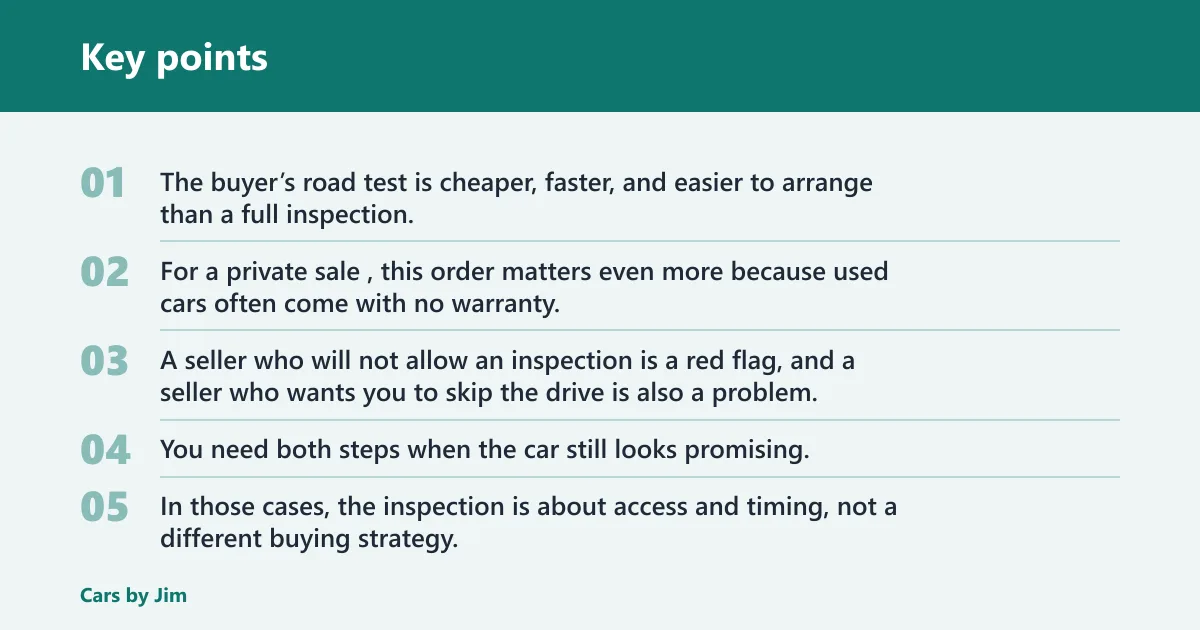
The buyer’s road test is cheaper, faster, and easier to arrange than a full inspection. It tells you whether the car is worth paying a trusted mechanic to examine. That matters because inspection cost usually runs a couple of hundred dollars, and it can be higher for sports cars and classic cars.
For a private sale, this order matters even more because used cars often come with no warranty. A seller who will not allow an inspection is a red flag, and a seller who wants you to skip the drive is also a problem. You need both steps when the car still looks promising.
When should the PPI come first?
There are exceptions. If the seller will only allow a short, rushed visit, or the car has an intermittent issue that appears only when hot, a mechanic may need to see it before your own road test. In those cases, the inspection is about access and timing, not a different buying strategy.
Picture a vehicle that starts fine after a long drive but cranks slowly after sitting for about 20 minutes. If the seller arrives with the engine already warm, the problem may be harder to spot on your own drive. A mechanic can document that behavior and decide whether further diagnosis is needed.
What a mechanic checks on the road
During the inspection drive, the mechanic is not judging comfort or color. The goal is to find signs of suspension trouble, brake problems, tire wear clues, and transmission issues that may not show up in the parking lot. That is why the mechanic’s drive is part of the PPI, not a substitute for your own.
What do suspension and braking checks look for?
On the road, a mechanic may listen for knocks over bumps, pull during braking, wandering at highway speed, or a soft brake pedal. Those clues can point to worn components or uneven wear that were not obvious before the car moved.
What tire and alignment clues matter?
Tire noise, steering wheel vibration, and a car that drifts off center can suggest alignment or tire issues. Even if the seller says the tires are new, abnormal road feel can hint at damage, poor alignment, or a suspension problem that still needs money.
What transmission and engine warning signs matter?
A mechanic may also look for delayed shifts, harsh engagement, hesitation, or surging. Those are the kinds of clues a casual buyer can miss during a short loop around the block. A quick diagnostic drive helps tie the symptom to the likely system.
Who pays for the inspection?
The buyer usually initiates and pays for the PPI. That is normal because the inspection is there to protect the buyer before the purchase closes. The cost is usually small compared with the price of buying a car with hidden damage.
Can the seller pay for the PPI?
Sometimes a seller may agree to cover the inspection, but that is not the norm. The buyer usually arranges the inspection and chooses the mechanic, because the report is meant to support the buyer’s decision. If the seller offers to pay, make sure you still control the shop and the findings.
Should you make the offer contingent on inspection?
Yes, if the seller will accept it. You can make your offer contingent on the vehicle passing inspection, which gives you a way to negotiate without fully committing before the mechanic weighs in. If the PPI finds a major issue, the contingency gives you room to walk or reopen the price.
- Set the inspection condition. Tell the seller that your offer depends on a passing PPI before you finalize anything. Keep the language simple so there is no confusion about timing.
- Book the mechanic. Arrange the inspection with a trusted mechanic or dealership service center after the first test drive. Choose a shop that can inspect the brand, if possible, because model-specific issues are easier to spot.
- Review the findings. Use the report to decide whether to buy, renegotiate, or walk away. If the inspection reveals costly repairs ahead, that is the moment to adjust the offer.
What if the seller refuses?
If the seller refuses a pre-purchase inspection, treat that as a red flag. That is true for private sellers and dealers alike, but it matters even more in private-party sales where warranties are rare. Refusal can mean the seller does not want a third party to uncover a problem.
Why is private seller refusal a red flag?
With a private seller, refusal is especially hard to ignore because the car may be sold as-is. If the seller will not let a mechanic inspect it before you buy, you should assume the car may have something to hide. Walk away unless the risk is clearly acceptable to you.
What should you do if a dealer pushes back?
A dealer may try to steer you toward an in-house inspection or limit where the car can go. That is not automatically a deal-breaker, but you should still get a real PPI before you commit. If the dealer controls the timing, push for a nearby dealership service center or another mechanic who can inspect that brand.
What can warm-start-only behavior mean?
A car that starts only when warm can hide a hard-start problem, fuel issue, or sensor fault. If the seller arrives after driving it, or only offers a short warm-running window, the timing itself becomes a clue. In that case, a mechanic should evaluate it before you rely on your own brief drive.
Frequently asked questions
Can a mechanic do a pre-purchase inspection and a test drive?
Yes. A trusted mechanic can often run the engine and take a quick test drive as part of the PPI. That drive is diagnostic, so it helps identify suspension, braking, tire, and transmission issues that are harder to confirm while the car is parked.
Do you need to test drive a car before paying for an inspection?
Usually, yes. A basic test drive is the faster way to catch deal-breakers and decide whether the car deserves a full inspection. If access is limited or the car only shows a problem when warm, that can be a reason to change the order.
What should happen during a pre-purchase inspection test drive?
The mechanic should focus on symptoms, not comfort. Expect checks for brake feel, suspension noise, tire behavior, steering pull, and transmission response. The goal is to connect what the car does on the road with what may need repair soon.
Who pays for a pre-purchase inspection?
The buyer usually pays for the inspection. That is the standard arrangement because the PPI is for the buyer’s protection before purchase. If the seller offers to cover it, make sure the inspection is still independent and that you receive the full findings.
Where should you get a pre-purchase inspection done?
A trusted independent mechanic or a dealership service center can both be reasonable choices. The best option is usually the one that can inspect the car’s make before you commit and has the right tools to spot model-specific issues.
What gets checked during a pre-purchase inspection?
A PPI usually covers the car’s overall condition, including visible wear, leaks, fluid condition, engine operation, brakes, tires, steering, suspension, and warning lights. On the road, the mechanic is also looking for noise, vibration, pull, hesitation, and other signs that the car may need repair soon.
What if the seller refuses a pre-purchase inspection?
Refusal is a red flag. If a private seller will not allow an inspection, treat that as a strong warning sign because the car may be sold as-is and may hide defects. A dealer who resists inspection should also make you slow down and reconsider.
How much does a pre-purchase inspection cost?
Inspection cost is typically a couple of hundred dollars, but it varies by locality. Sports cars and classic cars may cost more because they require specialized knowledge. That extra spend is often worth it if the car is expensive or likely to need repairs soon.