How to Set a Private Party Price for a Niche Car
Start with the nearest real sale, then adjust by about 5% to 20% for originality, mileage, options, and documentation. If fewer than three solid private-party comps are available, anchor the price to verified auction results. Price it badly, and you lose buyers fast or leave money on the table. This guide shows a repeatable method for building a defensible asking price from scarce comps, auction evidence, and condition-based adjustments.
Private party price basics
A niche enthusiast car needs a wider evidence trail than an ordinary used car. Start with the closest verified sale, then move outward only when that sale does not fit your car well enough. Buyers push back less when your number follows a clear comp chain instead of a guess.
The same rule applies whether the car is a limited-production trim, a discontinued model, or a modified example with thin sales history. Use local and national listings, but do not treat asking prices as sold prices. A private-party number should reflect what a prepared buyer can verify, then negotiate from.
Rare cars also need more context than a guidebook can provide. Production count matters, but so does how many examples still have original paint, matching drivetrain parts, or intact records. A 2,000-mile car with a known history and a clean title can price very differently from a similar car that sat outdoors for years.
How do you build a comp set when direct sales are scarce?
Start with the nearest real sale, then move outward in controlled layers: same model first, then same-generation variants, then auction results, then adjacent models, then an expert appraisal if the evidence still feels thin. If the first layer exists, use it. If it does not, widen one tier at a time.
-
Find same-model sales first.
Look for the exact model, trim, drivetrain, and body style before anything else. Match sale date recency, mileage band, and condition grade as closely as possible, because those factors shape the sale more than a broad model name does. -
Widen to same-generation variants.
If the exact car has no recent sales, use a variant from the same generation with similar mechanicals. A standard trim can sometimes stand in for a special trim, but only after you score the feature gap for factory options, originality, and drivetrain differences. -
Use adjacent models carefully.
If the platform, engine family, or market audience overlaps, adjacent-model comps can help. A successor or predecessor generation may be useful when the market treats it as a close substitute, but you should apply a liquidity discount or a feature-by-feature adjustment if buyers clearly prefer one version.
Suppose a seller has a 1991 two-door sports coupe with rare factory wheels and 68,000 miles, but the closest exact sale is 26 months old. A same-generation variant with the same engine and similar mileage can still help, yet the old sale date means you should check current market direction with fresher auction evidence or live listings.
Niche car pricing worksheet
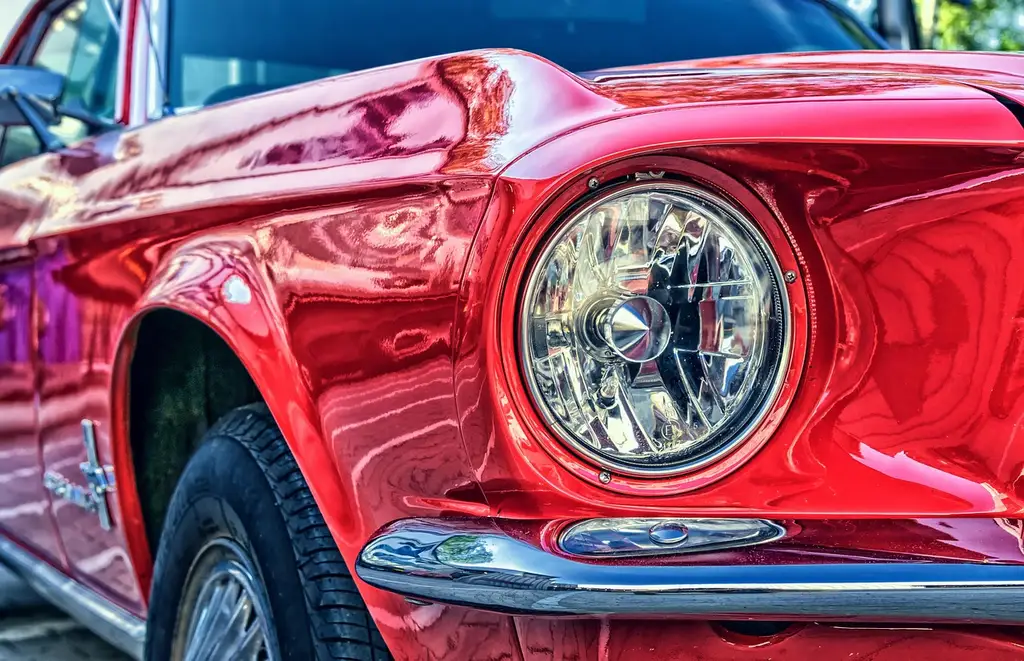
This worksheet gives you a repeatable pricing file for a rare or enthusiast car. Fill it out before you set the asking price, because the sheet forces you to separate hard evidence from wishful thinking. It also gives buyers a path to follow, which makes your number easier to defend.
| Field | What to record | Example entry |
|---|---|---|
| Rarity and production | Known production count, special package, or registry data | Limited-run trim, 1,250 built |
| Originality | Stock paint, stock engine, stock wheels, stock interior, matching numbers if known | Mostly original, aftermarket exhaust only |
| Mileage band | Below-market, average, or high for age; add use-intensity notes if relevant | 42,000 miles, below market for age |
| Condition grade | Cosmetic and mechanical condition on a simple scale such as excellent, good, fair, or project | Good cosmetic, very good mechanical |
| History | Service records, ownership count, rust, corrosion, accident, or title history | Full records, clean title, no accident history |
| Asking range | Recommended asking price and minimum acceptable price | Ask $34,500; minimum $31,000 |
A common first-timer mistake is treating a rare badge as automatic proof of value. A better approach is to record what makes the car rare, then prove how much of that rarity still exists in your example. A stored, original car with records usually belongs at the top of its band; a modified one often does not.
Rarity and production data
Write down the production figure only if it comes from a credible registry, factory record, or recognized model source. Production count alone does not set price, but it helps buyers understand scarcity. A 1-of-50 color can matter more than a 1-of-5,000 trim if that color is highly desired and the market recognizes it.
Originality and modification check
List every deviation from stock that could help or hurt the sale. Minor period-correct changes may have little effect, while a swapped engine, cut springs, or aftermarket bodywork can reduce the number sharply because buyers must reverse the work or accept the compromise. Original parts in hand can soften the hit.
Mileage and use-intensity notes
Mileage matters, but context matters too. A 60,000-mile weekend car with regular warm-ups and records can price better than a 40,000-mile example that spent years parked with stale fuel and dried seals. If the car has an engine-hour meter or clear track use, mention that alongside the odometer.
Condition and history fields
Separate cosmetic condition from mechanical condition. Paint chips and tired trim affect buyers differently than compression issues, leaking seals, or rusty floors. Add service records, ownership count, accident history, and title status because those items shape trust, and trust shapes the price.
Asking-price range and minimum acceptable price
Set two numbers. The asking price is the anchor price, while the minimum acceptable price is the point where you would rather keep the car or try a different channel. The gap between them should leave room for inspection findings, buyer skepticism, and a realistic negotiation cushion.
How do auction results fit private-party pricing?
Auction results help when private sales are scarce, but you must separate hammer price from buyer premium. Use the net sale evidence, not the headline total, because the premium is a venue cost, not extra car value. After that, adjust for venue, condition, and how well the auction audience matches your buyer pool.
-
Record the hammer price.
Capture the final bid before buyer premium, because that is the cleaner sale signal. If the listed total includes fees, strip them out before using the figure in your comp set. -
Check venue fit.
A specialist auction can bring stronger money for an unusual trim, while a broad auction may draw casual bidders who pay less. Match the venue to the audience that would likely buy your car. -
Adjust for public-sale pressure.
Auction cars often get more eyes, more urgency, and more bidding heat than a private listing. If the venue was especially active, a small liquidity discount can help translate the result into a private-party number.
If a 1970s grand touring coupe brought a strong hammer at auction, that does not mean a local buyer will pay the same amount in a driveway sale. The auction result may still be the best evidence available, but the private-party ask should usually sit below the net auction result unless the car has unusually strong documentation and presentation.
How do condition, mileage, and history change the number?
Condition, mileage, and history often move the number more than the badge does. A clean, documented, low-mile car with original major components can justify a premium. A similar car with rust, incomplete records, or an accident history usually needs a discount, even if the model itself is scarce.
Cosmetic and mechanical condition
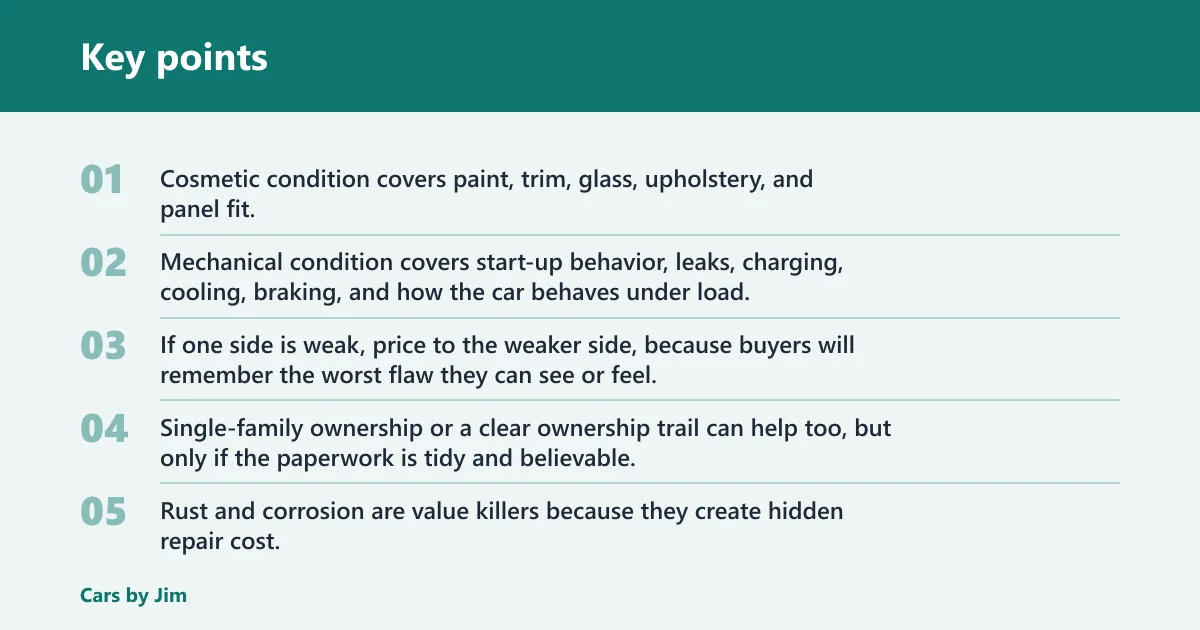
Cosmetic condition covers paint, trim, glass, upholstery, and panel fit. Mechanical condition covers start-up behavior, leaks, charging, cooling, braking, and how the car behaves under load. If one side is weak, price to the weaker side, because buyers will remember the worst flaw they can see or feel.
Service records and ownership history
Records reduce uncertainty. Oil changes, timing service, brake work, coolant service, and major repairs help buyers believe the car has been maintained instead of merely stored. Single-family ownership or a clear ownership trail can help too, but only if the paperwork is tidy and believable.
Rust, corrosion, accident, and title issues
Rust and corrosion are value killers because they create hidden repair cost. Accident repairs can be acceptable when documented well, but poor repairs or title problems scare away serious buyers fast. Clean title status and no structural corrosion are worth far more in a niche market than a cosmetic accessory.
Fresh restorations and storage damage
A fresh restoration is not automatically worth top money. Quality varies, and buyers will inspect for wrong fasteners, inconsistent gaps, and hidden corrosion. Long-term storage damage can also surprise sellers; dry seals, flat-spotted tires, brittle hoses, and stale fluids make a “low-mile” car less valuable than the odometer suggests.
How should you adjust for rarity and modifications?
Rare cars do not always price higher. Rarity helps only when the market wants that exact version. Factory options, trim hierarchy, color, and originality can move the car up or down inside the same model family, while modifications usually add less value than the work cost unless the market actively prefers them.
Factory options and trim hierarchy
Sort the car within its own model tree. A desirable factory package, limited color, performance brakes, or a higher-spec drivetrain can justify a premium over a base car, but only if buyers in that niche recognize the difference. Keep a separate note for each option that changes desirability, not just horsepower.
Originality premium versus modification discount
Original cars often sell faster because they are easier to evaluate and easier to insure or preserve. Modified cars need a discount unless the work is period-correct, documented, and desired by the market. The more a change can be reversed with parts and labor, the smaller the discount may be.
Collector demand and liquidity discount
Collector demand is not the same as liquidity. A car can be admired and still take months to move. If the audience is small, apply a liquidity discount to account for longer marketing time, more questions, and a narrower buyer pool. That discount is often the difference between a quick sale and a stale listing.
How do you set the asking price and negotiation room?
Set the asking price as an anchor, not a wish. It should be high enough to leave room for inspection findings and polite bargaining, but not so high that it signals a seller who is disconnected from the market. A realistic ask invites dialogue; an inflated one closes it off.
-
Choose your anchor price.
Start from the strongest verified comp and adjust for originality, mileage, condition, and documentation. If your car is stronger than the comps, price above them modestly; if it is weaker, price below them and explain why. -
Build inspection room.
Leave a buffer for tires, brakes, fluids, detailing, small leaks, or record gaps a buyer may discover. A common rule of thumb is a few thousand dollars on enthusiast cars, but the exact cushion should match the likely repair exposure. -
Check local and national demand.
Compare local classifieds, model-specific Facebook groups, club forums, Cars & Bids, and Bring a Trailer results. A car may command more in a national audience if it is unusual, but local buyers may pay more if they can inspect it in person and avoid transport risk. -
Set the floor price.
Decide the minimum acceptable price before the first inquiry arrives. That keeps emotion out of the deal and stops a seller from chasing the market downward after weeks of silence.
Picture a modified turbo coupe with 84,000 miles, fresh suspension bushings, and partial records. If exact comps are missing, the seller can anchor to a verified same-generation sale, then discount for the non-stock exhaust, reward the documented maintenance, and leave room for the first inspection to expose any hidden issues.
If the listing sits for weeks with only low offers, the market is telling you something. Slow-selling enthusiast cars usually need a larger liquidity discount or a lower anchor price. That does not mean the car is worth less to the right buyer; it means fewer buyers can act at once.
Frequently asked questions
How do I price a niche car when there are almost no comps?
Start with the closest verified sale and widen the set one layer at a time: same model, same-generation variant, auction result, adjacent model, then appraisal if needed. Use mileage, originality, condition, and history to adjust each layer. If the evidence still feels thin, keep the asking price conservative.
What if my car is modified, rare, or a limited production model?
Document every factory option and every non-stock change, then price the car as a variant within its own market. Rarity can support value, but only if buyers want that exact specification. Heavy modifications often reduce liquidity, so the price may need to sit below original examples.
How do I use condition, mileage, and ownership history to set price?
Treat condition, mileage, and history as separate adjustments, not one combined guess. Low mileage helps most when the car also has strong records and no storage damage. A clean title, documented service, and solid cosmetics can support a higher ask than mileage alone would justify.
Should I price above or below similar cars that are not exact matches?
Price above only when your car is clearly stronger on originality, mileage, options, or documentation. Price below when the substitute comp has a stronger audience, cleaner history, or better condition. The number should follow evidence, not the badge alone, and buyers should see why the comparison changed.
How much should I discount for a slow-selling enthusiast car?
Use a liquidity discount when the buyer pool is thin or the model has a long time-on-market history. The exact cut depends on how niche the car is, but a meaningful discount is often needed if the car has modifications, older records, or a very limited audience.
How do I know whether my asking price is realistic?
Your price is realistic if the strongest comps, current listings, and recent auction evidence point to the same general band after adjustment. If only one source supports your number, recheck the assumptions. A realistic price can be explained in a few sentences without stretching the evidence.